Description
System Architecture & Operational Principle
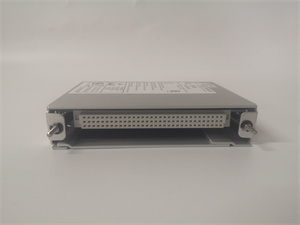
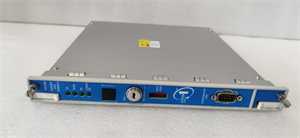
The IC693PBS201-EB is functionally identical to the base IC693PBS201 module. It occupies a single slot in any 90-30 baseplate (except slot 1 of modular CPU baseplates) and operates as a PROFIBUS DP Slave, responding to polling from an external master device. The module interfaces with the PLC CPU via the backplane, mapping data between %I/%Q memory and the PROFIBUS network’s cyclic data exchange.
Revision EB Purpose and Impact
The -EB revision is specifically a hardware change to resolve component obsolescence issues. According to manufacturer documentation, there are “No changes to features, performance or compatibility” compared to earlier revisions. This is a direct replacement module—no software updates, no configuration changes, no behavioral differences. The EB revision substitutes components that reached end-of-life in the supply chain, ensuring continued module availability for long-life GE 90-30 installations.
Slave Operation Model
The module operates exclusively in slave mode—responding to master polling requests without bus access rights. It cannot initiate communication or broadcast SYNC/FREEZE commands (a limitation inherent to all IC693PBS201 revisions). Data exchange is cyclic: the master polls the EB revision at configured intervals, and the slave acknowledges received messages or transmits data upon request. The Slave Status Word provides diagnostic information including slave state, master availability, and error conditions—functionally identical to earlier revisions.
Configuration and Software Requirements
The -EB revision maintains identical configuration requirements: Proficy Machine Edition Logic Developer version 2.6 or later, CPU firmware version 8.00 or later. Configuration involves specifying the station address (1-125), baud rate, and mapping input/output data areas. No changes to GSD files or parameterization procedures are required when upgrading from earlier AA/BB/CB revisions to EB. The module’s GSD description file remains unchanged—any external master (Siemens S7, ABB DCS, etc.) sees the EB revision as an identical IC693PBS201 device.
Data Exchange and Memory Mapping
The EB revision supports up to 244 bytes of input data and 244 bytes of output data per scan cycle—unchanged from earlier revisions. Data flows between the PLC CPU and PROFIBUS network via the backplane: input data from local I/O modules in the 90-30 rack is formatted into PROFIBUS telegrams and transmitted to the master, while output commands from the master are received and made available to the CPU in %I memory. The mapping to %I/%Q addresses is configurable through Proficy Machine Edition with no differences from earlier revisions.
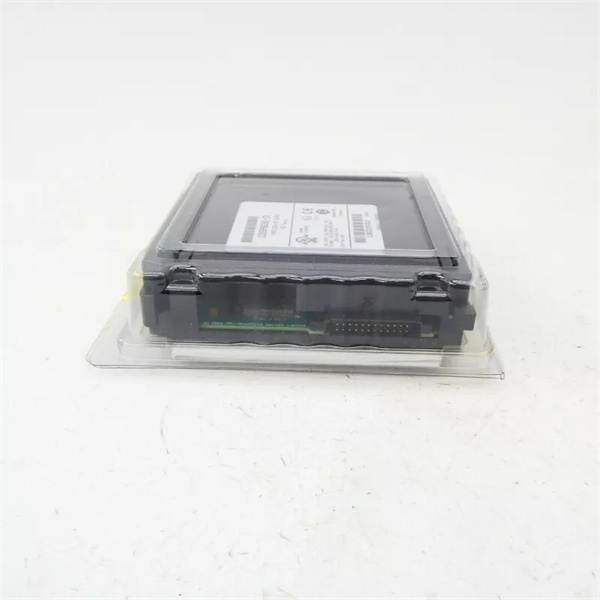
GE IC693PBS201
Core Technical Specifications
- Physical Interface: Single-slot width, 9-pin male D-shell RS-232 service port, 9-pin female D-shell PROFIBUS slave port (identical to base revision)
- Protocol Support: PROFIBUS DP-V0 Slave, RS-485 physical layer (unchanged)
- Network Role: Slave only (no bus access rights), responds to master polling (unchanged)
- Data Capacity: 244 bytes input + 244 bytes output per scan (488 bytes total I/O exchange, unchanged)
- Baud Rates: 9.6K, 19.2K, 93.75K, 187.5K, 500K, 1.5M, 3M, 6M, 12 Mbps (unchanged)
- Address Range: Station address 1-125 (addresses 126 and 127 reserved, unchanged)
- LED Indicators: SYS (system status), COM (communication activity, unchanged)
- Service Port: RS-232 for firmware upgrades (male 9-pin D-shell, unchanged)
- PROFIBUS Port: Female 9-pin D-shell for network connection (unchanged)
- Operating Temperature: 0°C to 60°C (industrial temperature range, unchanged)
- Storage Temperature: -40°C to 85°C (unchanged)
- Backplane Current: 450mA @ 5VDC (typical, unchanged)
- Configuration Software: Proficy Machine Edition Logic Developer v2.6 or later (unchanged)
- CPU Compatibility: 90-30 CPUs with firmware v8.00 or later (unchanged)
- Mounting Location: Any Series 90-30 baseplate slot except slot 1 of modular CPU baseplates (unchanged)
- Diagnostics: Slave Status Word, diagnostic data accessible via COMMREQ instructions (unchanged)
- Functional Exclusions: Does NOT support SYNC/FREEZE modes (unchanged from base revision)
- Revision-Specific Changes: Hardware change to resolve component obsolescence issue; no changes to features, performance, or compatibility (per manufacturer documentation)
- Isolation: Backplane isolation specification consistent with base revision (not detailed in available documentation)
- Network Topology: Daisy-chain (linear) RS-485 bus with terminating resistors at both ends (unchanged)
- Maximum Segment Length: Up to 1200 meters with copper cable at 9.6 Kbps; up to 6 km with fiber media converter (unchanged)
- Compatible Cables: Belden 3079A, Siemens 6XV1 series, Bosch Profibus cable (copper); fiber optic with media converter for long distances (unchanged)
Customer Value & Operational Benefits
Component Obsolescence Resolution for Long-Term Availability
The primary value of the EB revision is resolving component obsolescence issues that threatened module availability. Facilities with GE 90-30 systems expecting 15-20 year lifecycles cannot tolerate unpredictable spare shortages due to discontinued components. The EB revision substitutes obsolete components with current alternatives, ensuring continued manufacturing and availability. In critical infrastructure applications (power generation, water treatment, oil & gas), where spare module availability is contractual requirement for maintenance agreements, the EB revision eliminates supply chain risk. No functional changes mean no revalidation or recertification is required when upgrading from earlier AA/BB/CB revisions—critical for regulated industries where control system changes trigger extensive documentation and testing.
Drop-In Replacement Eliminates Engineering Overhead
The EB revision’s complete functional and electrical compatibility enables direct replacement without engineering changes. Maintenance technicians can replace a failed AA/BB/CB revision with an EB revision during scheduled maintenance without involving controls engineers. No program modifications, no configuration updates, no GSD file changes at the master end are required. This drop-in capability reduces maintenance downtime to the physical replacement time—typically 15-30 minutes—compared to hours or days if reconfiguration were required. For facilities with hundreds of GE 90-30 slave nodes, the cumulative maintenance cost savings are substantial, especially when replacing modules during shutdowns where every minute of downtime costs thousands of dollars.
Preserved Investment in Training and Documentation
Since the EB revision introduces no functional changes, existing operator training, maintenance procedures, and documentation remain fully applicable. Facilities that have developed extensive training programs for IC693PBS201 operation and troubleshooting do not need to update curriculum or retrain personnel. Existing troubleshooting guides, standard operating procedures (SOPs), and maintenance manuals referencing AA/BB/CB revisions apply identically to EB. This preservation of institutional knowledge reduces the total cost of ownership and minimizes risk of errors during personnel transitions or when new maintenance teams are brought onboard.
Environmental and Reliability Consistency
The EB revision maintains identical operating temperature range (0°C to 60°C), storage temperature range (-40°C to 85°C), and backplane current consumption (450mA @ 5VDC). This ensures the EB revision operates within existing cabinet environmental specifications without requiring additional cooling or power supply upgrades. Facilities have validated their cabinet thermal designs for AA/BB/CB revisions, and the EB revision performs identically—no thermal reanalysis or derating is required. The electrical consistency ensures power supply loading calculations remain valid, preventing unexpected power budget overruns when replacing modules in fully populated racks.
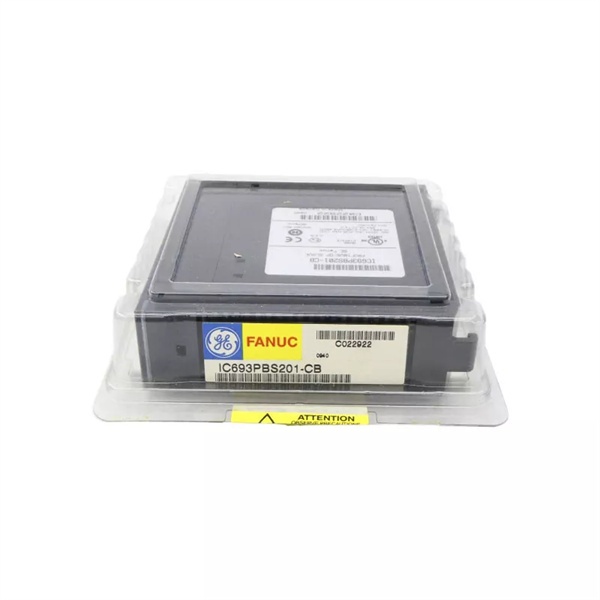
GE IC693PBS201
Field Engineer’s Notes (From the Trenches)
The EB revision is marketed as resolving component obsolescence, and from my field experience, this means the board layout and component markings may differ from AA/BB/CB revisions. I’ve noticed that some electrolytic capacitors and IC packages have different form factors on EB revision boards. While functionally identical, these physical differences can confuse technicians who use board silhouettes or component markings for troubleshooting. When replacing modules, focus on the catalog number label (IC693PBS201-EB) and confirm the revision from the module side label—don’t rely on visual board matching alone. The firmware revision displayed in the module header may also be different; this is normal as GE updates firmware to accommodate component substitutions.
I’ve encountered a misconception that the EB revision introduces “improved reliability” due to newer components. This is not necessarily true—newer components do not automatically mean better mean time between failures (MTBF). The EB revision’s purpose is obsolescence resolution, not reliability enhancement. In fact, some facilities report mixed results: newer components may have different failure modes than their predecessors. Treat the EB revision as a direct replacement with identical specified reliability—do not assume it’s “better” or “worse” than AA/BB/CB. If you’re establishing preventive maintenance intervals based on historical failure data, continue using the same replacement intervals until you accumulate sufficient field data specific to EB revision.
When mixing EB with earlier AA/BB/CB revisions in the same network, the master sees all as identical devices. However, I’ve observed slight variations in boot-up timing—EB revisions may enter data exchange state 50-100ms faster than older AA revisions. This is negligible for most applications but can be significant if your program has tight timing dependencies on network initialization. For example, a Siemens S7 master with OB1 blocks configured to transfer data immediately upon detecting slave presence may complete initial transfer faster with EB slaves. Verify your program’s timing allowances accommodate this minor variation—most applications won’t be affected, but critical startup sequences should be tested after introducing EB revisions.
Firmware upgrades to EB revision modules follow the same procedure as earlier revisions: use the RS-232 service port with Proficy Machine Edition. However, I’ve found that EB revisions accept firmware updates more reliably than some older AA revisions that occasionally experienced upgrade failures due to aging flash memory. The EB revision’s newer components likely include improved flash devices that handle firmware upgrades more robustly. Despite this improved reliability, continue following best practices: verify RS-232 cable continuity (null modem crossover), confirm master station address is not conflicting with other network devices during upgrade, and ensure stable power supply during the upgrade process. The improved upgrade success rate is a side benefit of the component substitution, but don’t become complacent about upgrade procedures.
The EB revision’s service port pinout is standard RS-232 (9-pin male D-shell), identical to earlier revisions. However, when upgrading from AA/BB/CB to EB, I’ve encountered facilities that have accumulated a mix of RS-232 cables over years of maintenance. Some cables labeled as “service cables” were actually crossover cables intended for other equipment. Always verify cable continuity with a multimeter before connecting to the EB revision’s service port—newer components may be more sensitive to incorrect pin voltage levels. Incorrect RS-232 cabling won’t damage the module, but it will prevent firmware upgrades and may cause the module to appear unresponsive during upgrade attempts.
Real-World Applications
Automotive Assembly Line Slave Migration to EB Revision
An automotive assembly facility with 45 GE 90-30 PLCs acting as PROFIBUS slaves to a central Siemens S7-1500 master systematically replaced aging AA/BB revision modules with EB revisions over a 6-month period. The zero-impact migration was executed during scheduled weekend maintenance windows—each replacement took approximately 20 minutes including verification. The facility preserved existing operator training and troubleshooting procedures; maintenance personnel followed identical SOPs for EB revisions as for earlier revisions. The migration eliminated supply chain risk for spare modules, as AA/BB revisions were increasingly difficult to source. The facility avoided revalidation efforts because the EB revision’s functional identity meant control system behavior remained identical—critical for a safety-critical assembly line where any functional change would trigger comprehensive retesting and safety recertification.
Water Treatment Plant Modernization with Mixed Revisions
A municipal water treatment plant completed a control system upgrade adding new treatment stages while preserving existing equipment. New GE 90-30 slave PLCs were installed with EB revision modules, while existing equipment continued operating with AA and BB revision modules. The Siemens S7-400 master treated all GE slaves identically—no GSD file changes or configuration modifications were required. The mixed-revision network operated seamlessly because the EB revision introduced no functional differences. The plant benefited from improved spare availability for EB revisions while gradually phasing out older AA/BB modules during scheduled maintenance over time. This staged modernization approach minimized upfront capital expenditure while ensuring long-term component availability as older revisions reached end-of-life.
Packaging Machine OEM Standardization on EB Revision
A packaging machine OEM standardized all new machine production on GE 90-30 PLCs with -EB revision modules, while continuing to support legacy machines in the field with AA/BB revisions. The standardization simplified supply chain management—the OEM could order EB revisions with confidence in availability and consistent pricing. Service technicians maintained a single set of spare EB revision modules rather than stocking multiple revision variants. When servicing legacy machines, technicians could install EB revisions as drop-in replacements, reducing spare inventory complexity over time. The OEM’s customer documentation referenced “” generically, and the EB revision’s functional identity ensured all documentation remained accurate regardless of which specific revision was installed—simplifying technical publication management.
Oil & Gas Platform Critical Control System Spares
An offshore oil & gas platform with GE 90-30 slave PLCs controlling critical safety systems (fire suppression, emergency shutdown) established a preventive maintenance program replacing AA/BB revisions with EB revisions on a scheduled basis before component end-of-life threatened availability. The zero-impact replacement was executed during scheduled platform maintenance windows, avoiding costly unscheduled downtime. The platform’s regulatory compliance documentation did not require updates because the EB revision introduced no functional changes—critical for safety-critical systems where modifications trigger extensive recertification. The preventive replacement program eliminated risk of component obsolescence during the platform’s remaining operational life, which extended beyond the expected end-of-life for original AA/BB components.
High-Frequency Troubleshooting FAQ
Q: Can I mix IC693PBS201-EB with earlier AA/BB/CB revisions in the same network?
A: Yes, the EB revision can coexist with earlier revisions on the same PROFIBUS network. Since the EB revision is functionally identical and introduces no changes to protocol behavior or data exchange parameters, the master device treats all revisions as identical slaves. No GSD file changes or master reconfiguration is required when mixing revisions. However, be aware that minor variations in boot-up timing (50-100ms faster for EB) may exist, though these are negligible for most applications. If your program has extremely tight timing dependencies on network initialization, verify behavior after introducing EB revisions. For diagnostic purposes, track which physical slaves are EB revisions versus earlier revisions—this aids troubleshooting if behavioral anomalies arise.
Q: What changed in the EB revision compared to earlier AA/BB/CB revisions?
A: According to manufacturer documentation, the EB revision is a hardware change to resolve component obsolescence issues with “no changes to features, performance or compatibility.” The specific component substitutions are not publicly detailed, but they may include integrated circuits, capacitors, or connectors that reached end-of-life. These substitutions are internal to the module and do not affect external behavior, data exchange capacity, protocol support, or configuration requirements. The EB revision maintains identical specifications (244 bytes I/O, baud rates, diagnostic capabilities) and functional limitations (no SYNC/FREEZE support). The revision is purely a manufacturing change to ensure continued module availability.
Q: Do I need to update GSD files or reconfigure the master when upgrading to EB revision?
A: No, GSD file updates or master reconfiguration are not required. The EB revision’s GSD device description is identical to earlier AA/BB/CB revisions. The master sees the EB revision as the same device with the same data exchange parameters and diagnostic capabilities. Your existing hardware configuration in the master’s engineering software remains valid. The station address, baud rate, input/output data areas, and diagnostic mapping all transfer directly. Simply replace the physical module and restart the network—the master will poll the EB revision exactly as it polled the earlier revision without any configuration changes.
Q: Does the EB revision have different firmware requirements than earlier revisions?
A: The EB revision’s firmware requirements are identical to earlier revisions: Proficy Machine Edition Logic Developer version 2.6 or later, CPU firmware version 8.00 or later. The EB revision may ship with a different firmware version from what is installed on your older modules, but this firmware version is backward compatible and does not require program changes. You can upgrade the EB revision’s firmware to match your fleet’s standard firmware version using the same RS-232 service port procedure as earlier revisions. The EB revision’s newer components may accept firmware upgrades more reliably than older revisions with aging flash memory, but the upgrade procedure itself is unchanged.
Q: Why did GE introduce the EB revision if there are no functional changes?
A: The EB revision was introduced to resolve component obsolescence issues in the supply chain. As electronic components age, manufacturers discontinue production and replacement availability becomes uncertain. GE substituted obsolete components with current alternatives to ensure continued manufacturing and availability of the module. This is standard practice for long-life industrial control products where customers expect spare availability for decades. The absence of functional changes is intentional—it ensures drop-in replacement capability and eliminates revalidation efforts for customers. The EB revision exists solely to preserve module supply chain integrity, not to introduce new features or improvements.
Q: Can I use EB revision documentation (manuals, specifications) for earlier revisions?
A: Yes, the EB revision documentation applies to earlier AA/BB/CB revisions because functional specifications are identical. The GE GFK-2121A User Manual for PROFIBUS Slave Module covers all revisions including EB. You can use EB revision specifications for troubleshooting earlier revisions and vice versa. However, be aware that the EB revision’s component substitution may result in different board layouts or component markings than earlier revisions. For troubleshooting procedures that reference specific board locations or component markings, verify the physical appearance of the specific revision you’re servicing. For functional troubleshooting (configuration, diagnostics, network behavior), documentation is fully interchangeable across all revisions.
Commercial Availability & Pricing
Please note: The listed price is not the actual final price. It is for reference only and is subject to appropriate negotiation based on current market conditions, quantity, and availability.