Description
System Architecture & Operational Principle
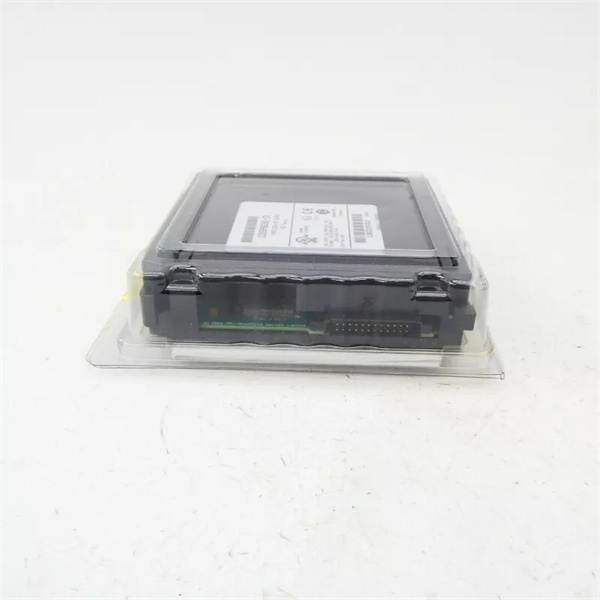
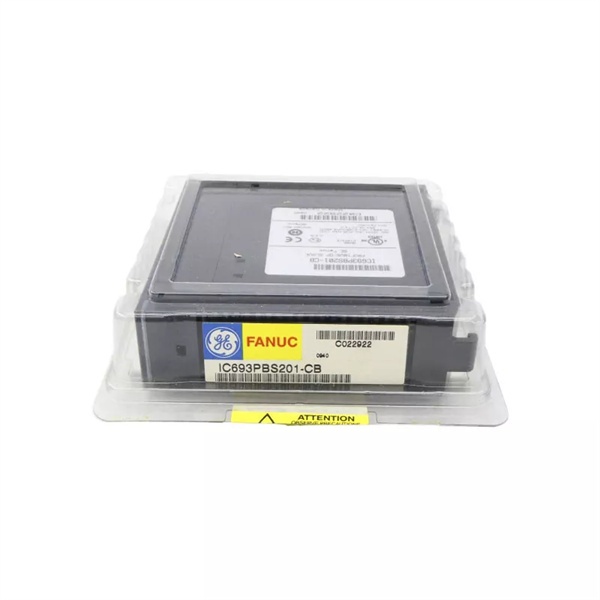
The IC693PBS201 is a PROFIBUS DP Slave module designed for the GE 90-30 PLC platform. It occupies a single slot in any 90-30 baseplate (except slot 1 of modular CPU baseplates) and enables the PLC to participate as a slave device on a PROFIBUS DP network controlled by an external master. The module interfaces with the PLC CPU via the backplane, mapping data between the PLC’s %I/%Q memory and the PROFIBUS network’s cyclic data exchange.
Slave Operation Model
Unlike master modules that initiate bus communication, the IC693PBS201 operates in slave mode—responding to requests from the bus master. The module has no bus access rights and cannot initiate communication independently. It acknowledges received messages and transmits data to the master only upon request. The master polls the slave at configured intervals, exchanging cyclic I/O data and diagnostic information. This architecture is ideal for scenarios where GE 90-30 PLCs must integrate into larger PROFIBUS networks controlled by non-GE masters, such as Siemens S7 PLCs in automotive assembly lines or ABB/Emerson DCS systems in process plants.
Data Exchange and Memory Mapping
The module supports up to 244 bytes of input data (from slave to master) and 244 bytes of output data (from master to slave) per scan cycle. Data flows between the PLC CPU and the PROFIBUS network via the backplane—input data from slaves (which may be local I/O modules in the 90-30 rack) is formatted into PROFIBUS telegrams and transmitted to the master, while output commands from the master are received and made available to the CPU in %I memory. The Slave Status Word provides diagnostic information including slave state, master availability, and error conditions. The module’s mapping to %I/%Q addresses is configurable through Proficy Machine Edition Logic Developer software.
Configuration and Software Requirements
The IC693PBS201 requires Proficy Machine Edition Logic Developer version 2.6 or later for configuration (same as base IC693PBM200 master). CPU firmware version must be V8.00 or later. Configuration involves specifying the station address (1-125), baud rate, and mapping input/output data areas. Unlike master modules that require extensive slave device configuration, the slave module configuration is simpler—primarily defining the station number and data exchange size. The module’s GSD (General Station Description) file is provided to the master for proper parameterization.
Important Functional Limitations
The IC693PBS201 does NOT support SYNC and FREEZE modes—a critical distinction from the IC693PBM200 master module. SYNC/FREEZE functionality enables coordinated multi-slave operations where the master commands simultaneous data capture (SYNC) or output freeze (FREEZE) across multiple slaves. Since slave modules do not control bus access or initiate commands, they cannot implement these modes. Applications requiring synchronized multi-device control require a master configuration, not slave mode.
GE IC693PBS201
Core Technical Specifications
- Physical Interface: Single-slot width, 9-pin male D-shell RS-232 service port, 9-pin female D-shell PROFIBUS slave port
- Protocol Support: PROFIBUS DP-V0 Slave, RS-485 physical layer
- Network Role: Slave only (no bus access rights), responds to master polling
- Data Capacity: 244 bytes input + 244 bytes output per scan (488 bytes total I/O exchange)
- Baud Rates: 9.6K, 19.2K, 93.75K, 187.5K, 500K, 1.5M, 3M, 6M, 12 Mbps (supports all standard rates)
- Address Range: Station address 1-125 (addresses 126 and 127 reserved)
- LED Indicators: SYS (system status), COM (communication activity)
- Service Port: RS-232 for firmware upgrades (male 9-pin D-shell)
- PROFIBUS Port: Female 9-pin D-shell for network connection
- Operating Temperature: 0°C to 60°C (industrial temperature range)
- Storage Temperature: -40°C to 85°C
- Backplane Current: 450mA @ 5VDC (typical)
- Isolation: Backplane isolation (specification not detailed in available documentation; typical for GE 90-30 modules)
- Configuration Software: Proficy Machine Edition Logic Developer v2.6 or later
- CPU Compatibility: 90-30 CPUs with firmware v8.00 or later (CPU311/313/323/331/341/350/352/360/363/364)
- Mounting Location: Any Series 90-30 baseplate slot except slot 1 of modular CPU baseplates
- Diagnostics: Slave Status Word, diagnostic data accessible via COMMREQ instructions
- Functional Exclusions: Does NOT support SYNC/FREEZE modes
- Network Topology: Daisy-chain (linear) RS-485 bus with terminating resistors at both ends
- Maximum Segment Length: Up to 1200 meters with copper cable at 9.6 Kbps; up to 6 km with fiber media converter (repeater/segment rules apply per baud rate)
- Compatible Cables: Belden 3079A, Siemens 6XV1 series, Bosch Profibus cable (copper); fiber optic with media converter for long distances
Customer Value & Operational Benefits
Seamless Integration into Multi-Vendor PROFIBUS Networks
The IC693PBS201 enables GE 90-30 PLCs to participate as slave devices in PROFIBUS networks controlled by external masters from Siemens, ABB, Emerson, or other vendors. In brownfield installations where legacy GE 90-30 systems must integrate into larger modernization projects, the slave module provides a standardized interface without replacing the existing GE PLC. An automotive assembly line with a new Siemens S7-1500 master can control legacy GE 90-30 PLCs as slaves, preserving existing control logic while modernizing the network architecture. This compatibility reduces capital expenditure by extending the life of existing GE 90-30 investments and avoiding complete system replacement.
Simplified Configuration Compared to Master Implementation
Slave module configuration is significantly simpler than master configuration. The IC693PBS201 requires only station address specification and data area mapping—no complex slave device parameterization, no GSD file management for numerous slaves, and no SYNC/FREEZE mode configuration. For applications where the GE 90-30 PLC is not the network controller (e.g., remote I/O adapter role), the slave module reduces engineering time. A process plant with an ABB 800xA DCS master can integrate GE 90-30 PLCs as slaves with minimal configuration effort—the DCS handles network management while the slave modules respond to polling and exchange data transparently.
Diagnostic Transparency via Slave Status Word
The module provides comprehensive diagnostic information through the Slave Status Word and COMMREQ instructions. The SYS and COM LEDs indicate module status and communication activity, while the Slave Status Word provides detailed diagnostics including slave state, master availability, and error conditions. COMMREQ commands enable the PLC program to retrieve diagnostic data on-demand, enabling proactive fault detection and troubleshooting. In material handling systems with multiple GE 90-30 slave PLCs, the master can query each slave’s diagnostic status via network polling while the PLC program locally monitors the Slave Status Word, providing dual-layer visibility into communication health and enabling rapid isolation of network faults.
Distributed I/O Architecture with Remote Rack Capability
The enables distributed I/O architecture where a GE 90-30 PLC with the slave module acts as a remote I/O adapter, hosting local I/O modules that exchange data with the network master. This architecture reduces cabling by locating the PLC rack close to field devices while communicating with the central controller via PROFIBUS. In a conveyor system spanning multiple floors, remote GE 90-30 racks with slave modules can host local motor starters and sensors, exchanging I/O data with a central PLC master over PROFIBUS. The 244-byte bidirectional data capacity supports dense I/O configurations, and the 1200-meter copper cable range (or 6 km with fiber) provides extensive coverage without requiring multiple master nodes.
GE IC693PBS201
Field Engineer’s Notes (From the Trenches)
The absence of SYNC/FREEZE support is a critical limitation that many engineers overlook when specifying slave modules. I’ve encountered a packaging machine upgrade where a Siemens S7 master attempted to implement synchronized multi-PLC operation using SYNC mode. The GE 90-30 PLC with simply ignored SYNC commands, causing asynchronous actuator timing that resulted in package misalignment. The solution required either installing a GE master module (IC693PBM200) and reconfiguring the network topology, or redesigning the control logic to use master polling intervals instead of synchronization commands. Before specifying slave mode, verify that your application does not require coordinated multi-device operation—SYNC/FREEZE functionality is exclusively a master capability.
Station address conflicts are the most common cause of commissioning failures. PROFIBUS networks do not support duplicate station addresses, and the slave module will not communicate if its address conflicts with another device. I’ve spent hours troubleshooting a GE 90-30 slave that wouldn’t join a Siemens-controlled network, only to discover that the station address was set to 5—same as a Siemens ET200 remote I/O rack. Always verify the complete network address map before installation. Use the Master’s network diagnostic tools to scan for occupied addresses and document the address assignment matrix. The slave module does not have a built-in address conflict detection—it simply appears as “not responding” to the master.
The service port pinout is standard RS-232 (9-pin male D-shell), but watch your cable orientation. I’ve seen engineers mistakenly use a straight-through cable intended for a 9-pin female port, which swaps TX/RX and causes firmware upgrade failures. The service port requires a female-to-female null modem cable with TX/RX crossover. Always verify cable continuity with a multimeter before attempting firmware upgrades—the module will not respond to corrupted upgrade commands and may become unresponsive if the upgrade process is interrupted. Keep a verified service cable in your PLC maintenance kit—don’t rely on cables borrowed from IT departments for RS-232 console connections.
COMMREQ diagnostic retrieval is a powerful feature that many programmers underutilize. The basic Slave Status Word provides summary diagnostics, but COMMREQ Command Code 3 (Get Slave Status) retrieves detailed diagnostic data including frame error counters, parity errors, and master polling intervals. I’ve implemented diagnostic programs in GE 90-30 slave PLCs that periodically execute COMMREQ commands and log the results to %R memory for historical trending. This enables predictive maintenance—for example, increasing frame error rates indicate deteriorating cable connections before complete communication failure occurs. The diagnostic data retrieved by COMMREQ provides visibility into network health from the slave’s perspective, complementing the master’s network diagnostics.
Termination on slave segments is often misunderstood. Many engineers assume only the master end requires termination, but PROFIBUS requires 120-ohm termination at both physical ends of the RS-485 bus segment. If your GE 90-30 slave is located at the far end of the network (daisy-chained from the master), you must enable termination on the slave module’s PROFIBUS port. The does not have a built-in termination switch—you must install an external terminator resistor at the connector. I’ve resolved multiple intermittent communication faults simply by adding missing terminators at remote slave nodes. Don’t assume termination is only at the master—identify the physical bus ends based on cable routing and terminate both.
Real-World Applications
Automotive Assembly Line Integration with Siemens S7 Master
In an automotive assembly plant, a modernization project replaced a legacy GE 90-30 distributed control system with a new Siemens S7-1500 master. To preserve existing GE 90-30 PLCs controlling individual assembly stations (welding robots, conveyor drives, and quality inspection equipment), slave modules were installed in each GE 90-30 rack. The Siemens S7 master polls each GE 90-30 slave at 12 Mbps, exchanging up to 244 bytes of I/O data per station including robot status, conveyor speed references, and quality sensor data. The slave mode integration required no changes to existing GE 90-30 control logic—only configuration of station addresses and data area mapping in Proficy Machine Edition. The modernization reduced total project cost by 65% compared to replacing all GE 90-30 PLCs with Siemens equipment.
Water Treatment Plant Distributed Control with ABB DCS
A municipal water treatment facility implemented distributed control architecture using an ABB 800xA DCS as the network master and multiple GE 90-30 PLCs as remote I/O adapters. slave modules in each GE 90-30 rack enable communication with the DCS over PROFIBUS, exchanging data from process sensors (flow meters, pressure transmitters, chlorine analyzers) and receiving control commands for pumps, valves, and dosing systems. The 1200-meter copper cable range covers the facility’s intake, filtration, disinfection, and distribution areas without requiring fiber media converters. The Slave Status Word diagnostics enable the DCS to monitor communication health, while local GE 90-30 PLCs continue autonomous control loops for critical processes. The architecture reduced installation cost by 40% compared to hardwired I/O to the DCS and simplified expansion by adding new remote GE 90-30 nodes without reconfiguring the master.
Packaging Machine OEM Integration into Customer Master Networks
A packaging machine OEM designed equipment with GE 90-30 PLCs for motion control and sequencing. To support customers with diverse DCS/PLC platforms (Siemens, ABB, Emerson), the OEM implemented the machine’s PLC as a PROFIBUS slave using . The customer’s master controller exchanges data with the machine’s PLC via PROFIBUS, providing recipe parameters, production commands, and receiving machine status and production data. The slave mode design eliminates the need for customers to adapt their network architecture to accommodate a GE master—the OEM’s PLC seamlessly integrates as a slave on existing networks. The 244-byte bidirectional data capacity supports complex recipe data and comprehensive machine diagnostics, while the absence of SYNC/FREEZE support is acceptable for packaging applications where machine synchronization is managed via production sequence commands rather than coordinated bus-level synchronization.
High-Frequency Troubleshooting FAQ
A: Yes, (slave) and IC693PBM200 (master) modules can coexist on the same PROFIBUS network, but they operate in fundamentally different roles. The network can have only ONE master device—the master initiates all communication and polls slaves. If you have both modules in the same network, one must be configured as master and the other as slave. You cannot have two masters on the same network segment. A common architecture is a GE 90-30 PLC with IC693PBM200 as the master controlling a network that includes slaves in other GE 90-30 racks. However, if your network has an external master (e.g., Siemens S7), all GE 90-30 PLCs must be configured as slaves (), and you cannot use IC693PBM200 in that network unless you restructure the network to use the GE module as the master.
A: SYNC and FREEZE are PROFIBUS DP master functions that require bus access rights to initiate coordinated commands across multiple slaves. The SYNC command instructs all slaves to capture their input data simultaneously, while the FREEZE command freezes output states. These commands must be broadcast by the master device to all slaves simultaneously. Since slave modules do not have bus access rights and cannot initiate communication, they cannot implement SYNC/FREEZE functionality. The slave module simply responds to master polling—it cannot broadcast commands to other devices. Applications requiring synchronized multi-device control (e.g., coordinated motion, multi-axis positioning) must use a master configuration where the GE 90-30 PLC operates as the network controller using , or the external master must implement SYNC/FREEZE commands that the slave modules will acknowledge.
A: The RS-232 service port (9-pin male D-shell) is used exclusively for firmware upgrades of the module. It does not participate in PROFIBUS network communication and cannot be used for data exchange with the master or for PLC programming. The PROFIBUS port (9-pin female D-shell) is the actual network interface that connects to the RS-485 PROFIBUS bus for data exchange with the master. When connecting the module to the network, use the PROFIBUS port with appropriate PROFIBUS cabling and termination. The RS-232 service port should only be accessed during scheduled firmware maintenance using the correct null modem cable and Proficy Machine Edition software. Do not connect the RS-232 port to the PROFIBUS network or attempt to use it for PLC program downloads—PLC programming is done via the CPU’s programming port, not the slave module’s service port.
A: Diagnostic information is available through two mechanisms: (1) Slave Status Word available in the module’s data area, and (2) COMMREQ instructions for detailed diagnostic retrieval. The Slave Status Word provides summary diagnostics including module state, communication status, and error flags. For detailed diagnostics, use COMMREQ Command Code 3 (Get Slave Status) to retrieve comprehensive diagnostic data including frame error counters, parity errors, and master polling intervals. The COMMREQ block sends a command to the module, and the module returns diagnostic data in specified memory locations. Implement periodic COMMREQ execution in your PLC program to log diagnostic data for trending analysis and predictive maintenance. Refer to the GE GFK-2121A User Manual for detailed COMMREQ programming examples and reply data formats.
A: PROFIBUS networks do not support duplicate station addresses—if two devices (including the master) have the same address, communication will fail. The does not have built-in duplicate address detection; it will simply appear as “not responding” to the master. The master will poll the duplicate address and receive responses from both devices, causing collisions and communication errors. Symptoms include intermittent communication, complete network failure, or diagnostic errors indicating multiple responses. Always verify the complete network address assignment before commissioning. Use the master’s network diagnostic tools to scan for occupied addresses and document the address matrix. If you experience unexplained communication faults after adding a new slave, immediately check for address conflicts as a potential cause.
A: No, cannot be used for peer-to-peer communication because it does not have bus access rights and cannot initiate communication. Both PLCs configured as slaves would require an external master to poll them, which defeats the purpose of direct PLC-to-PLC communication. For peer-to-peer communication between GE 90-30 PLCs, you have two options: (1) Use master modules in one or both PLCs (one PLC acts as master, the other as slave), or (2) Use alternative communication methods such as GE Ethernet modules (IC693CMM321), serial communication, or global memory via backplane (if PLCs are in the same rack or connected via Genius bus). Slave mode is exclusively for slave-to-master communication, not for establishing direct communication between PLCs.
Commercial Availability & Pricing
Please note: The listed price is not the actual final price. It is for reference only and is subject to appropriate negotiation based on current market conditions, quantity, and availability.