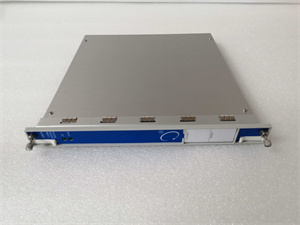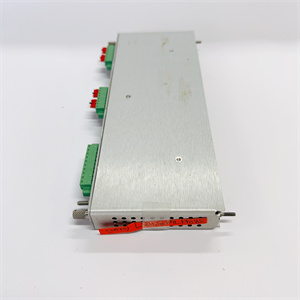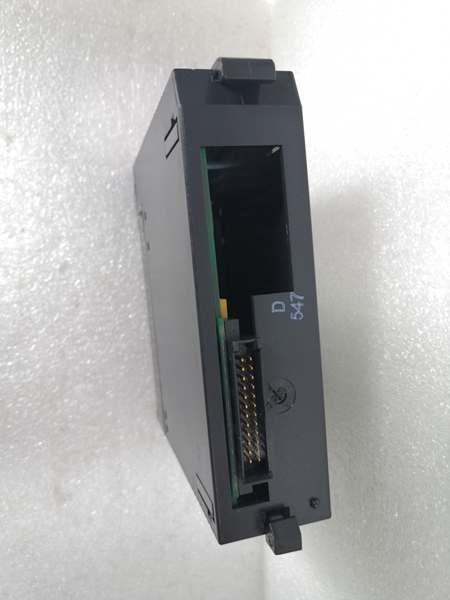
Description
System Architecture & Operational Principle
The IC693NIU004 occupies a single slot on the GE 90-30 backplane (typically Slot 1) and functions as an Ethernet Network Interface Unit that enables distributed I/O architecture over standard Ethernet. Unlike a standard Ethernet communication module that provides HMI/SCADA connectivity, the NIU operates as an Ethernet Global Data (EGD) station, capable of exchanging input and output data directly with other PLCs or controller systems without requiring a CPU in the remote rack.
At the Purdue Model Level 0-1 (Sensory/Basic Control), the IC693NIU004 interfaces with local I/O modules in remote baseplates. Upstream, it exchanges I/O data over Ethernet using EGD protocol—publishing its local inputs and subscribing to outputs from master controllers. Downstream, it reads local I/O modules (discrete and analog) and writes output states based on data received from the network. The module features dual 10/100 Mbps Ethernet ports that function as a built-in switch, sharing a single IP address. This allows flexible network topologies—linear daisy-chain, star, or ring configurations—without requiring external switches in many applications.
The IC693NIU004 does not require a CPU in the remote rack when operating in stand-alone NIU mode. Instead, it manages I/O scanning independently, making it ideal for distributed control systems where remote I/O racks are located far from the main CPU rack. The module supports up to 8 baseplates (1 CPU baseplate + 7 expansion/remote) per system, with expansion via I/O bus cables. It also supports SRTP (Service Request Transport Protocol) server functionality, enabling HMI/SCADA systems to read/write I/O and register data directly.
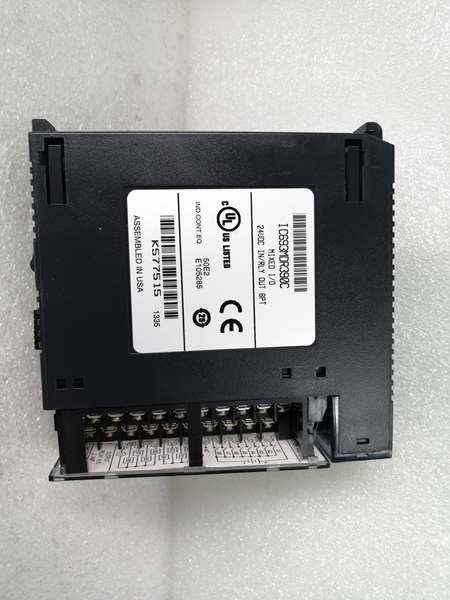
GE IC693MDR390
Core Technical Specifications
- Physical Interface: Single-slot width, 1.81 lbs (0.82 kg), RJ-45 Ethernet ports (2), RS-232 Station Manager port (6-pin RJ-11)
- Memory Storage: RAM and Flash memory
- I/O Capacity:
- Discrete Inputs (%I): 2048 points
- Discrete Outputs (%Q): 2048 points
- Analog Inputs (%AI): 1268 words
- Analog Outputs (%AQ): 512 words
- Internal Coils (%M): 4096 (reserved for system use)
- Temporary Coils (%T): 256 bits
- Register Memory (%R): 9,999 words
- Ethernet Ports: Two (2) 10/100 Mbps auto-sensing RJ-45 ports, auto-negotiation (speed/duplex), auto-crossover detection
- Network Protocols: SRTP server, Ethernet Global Data (EGD), SNP/SNPX (via power supply RS-485 port)
- IP Addressing: Single IP address for both ports (embedded switch functionality)
- Backplane Current Draw: 7.4W @ 5V DC (requires high-capacity power supply such as IC693PWR330)
- System Capacity: Up to 8 baseplates (1 CPU + 7 expansion/remote)
- LED Indicators: EOK (Ethernet OK), LAN (traffic activity), STAT (module status), PS PORT (power supply traffic), plus per-port LINK/ACT and 100Mbps indicators
- Restart Button: Ethernet restart push button for module re-initialization without power cycling
- Environmental: 0°C to 60°C operating temperature (IP20 for cabinet installation)
- Battery Backup: Uses internal battery in power supply (1.2 months typical, 15 months with external battery IC693ACC302)
- Configuration Software: CIMPLICITY Machine Edition Logic Developer / Proficy Machine Edition
- Station Manager: RS-232 port for terminal access to Station Manager software for diagnostics and testing
- MAC Address Label: Externally accessible on module for network identification
Customer Value & Operational Benefits
Built-in Ethernet Switch Reduces Network Infrastructure Costs
The IC693NIU004’s dual Ethernet ports function as an integrated 2-port switch sharing a single IP address. This design eliminates the need for external industrial switches in linear or daisy-chain network topologies. In a distributed I/O system with multiple remote NIU stations, you can connect the upstream device to Port 1 and the downstream device to Port 2, creating a ring or daisy-chain without additional hardware. This reduces network equipment costs by $300-800 per installation (cost of an industrial Ethernet switch) and simplifies cabinet layout—critical in space-constrained control panels.
CPU-Less Remote I/O Architecture Enables Distributed Control
Unlike traditional remote I/O modules that require a CPU in every rack, the IC693NIU004 can operate in stand-alone mode as a pure EGD station. The module scans local I/O modules independently, exchanging data with master controllers over Ethernet without a local CPU. This is particularly valuable for applications like water treatment plants or conveyor systems where remote I/O cabinets are distributed across a facility. By eliminating CPUs at remote locations, you reduce hardware costs (CPU modules cost $2,000-5,000 each) and simplify maintenance—remote cabinets contain only I/O modules and power supplies.
High I/O Capacity Supports Large-Scale Distributed Systems
With support for 2048 discrete inputs, 2048 discrete outputs, 1268 analog inputs, and 512 analog outputs per NIU, the IC693NIU004 can handle substantial I/O loads in remote stations. Combined with the ability to support up to 7 expansion baseplates (for a total of 8 baseplates per system), a single can manage extensive I/O distributed across multiple racks. This makes it suitable for large-scale process control applications in industries such as water treatment, power generation, and oil & gas where I/O points are spread over wide geographic areas.
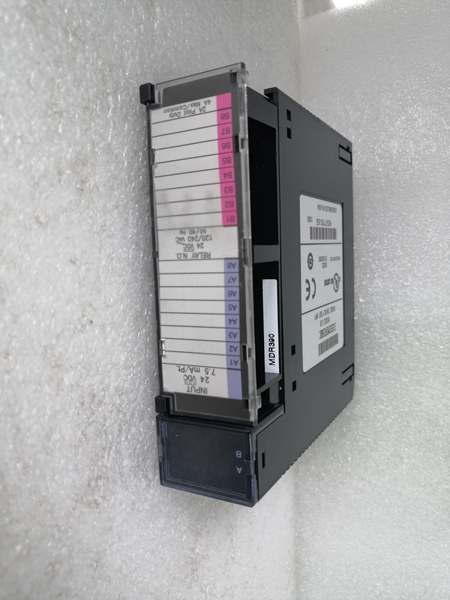
GE IC693MDR390
Field Engineer’s Notes (From the Trenches)
The ‘s power draw is a critical constraint that’s often overlooked. The module requires 7.4W from the 5V backplane supply—you must use a high-capacity power supply like the IC693PWR330 (PWR321/322 won’t cut it). I’ve seen technicians install NIU004s in racks with standard power supplies, only to have the entire rack become unstable or the NIU fail to boot. The symptom? The EOK LED never comes on, or the module repeatedly restarts. Always calculate your power budget before installation—the 7.4W adds up quickly, especially if you’re also powering multiple analog modules.
Another gotcha: the Ethernet restart button. It’s convenient for resetting the module without power cycling, but pressing it during production will disrupt all Ethernet communications through that module—including traffic to devices daisy-chained through the second port. This can cause cascading communication failures if you have multiple NIU stations in a ring topology. Use the restart button only during scheduled maintenance outages, not for troubleshooting active systems. For non-disruptive diagnostics, use the Station Manager via the RS-232 port instead.
The single IP address for dual ports is both a feature and a potential pitfall. It enables seamless daisy-chaining, but don’t connect both ports to the same switch—this creates a spanning tree loop and will cause network storms. The ports are designed for linear (A-to-B-to-C) or ring topologies, not parallel connections to the same network device. Also, remember that the 10/100 ports don’t support gigabit speeds. If you’re migrating to a gigabit backbone, you’ll need to step down to 100 Mbps at the NIU, which can become a bottleneck if you’re pushing high volumes of analog data or frequent EGD exchanges.
Finally, don’t forget the MAC address label. It’s physically printed on the outside of the module, and you’ll need it for network registration, firewall rules, or troubleshooting IP conflicts. The label can fade or become unreadable in harsh environments—I’ve had to use Wireshark to identify a module by its MAC when the label was illegible. Record the MAC address during installation and store it in your asset management system.
Real-World Applications
Water Treatment Plant Distributed I/O Network
In municipal water treatment facilities, the enables distributed I/O architecture across multiple process areas (intake, filtration, disinfection, distribution). Each area has a remote baseplate with local I/O modules for sensors (flow meters, pressure transmitters, chlorine analyzers) and control devices (pump starters, valve actuators). The NIU004 exchanges EGD data with a central PLC rack containing the main CPU and HMI server. The dual Ethernet ports create a fault-tolerant ring topology—if one cable is cut, communications automatically reroute through the alternate path, ensuring continuous operation. The CPU-less remote design eliminates the need for expensive PLC CPUs at each process area, significantly reducing hardware costs while maintaining reliable control.
Automotive Assembly Line Material Transfer System
In automotive assembly plants, the manages distributed I/O for conveyor systems, automated guided vehicles (AGVs), and robotic workstations along the production line. Each assembly station has a remote rack with discrete I/O for sensors (photoeyes, proximity switches) and outputs for indicator lights and valve control. The NIU004 exchanges production data (counters, station status, fault signals) via EGD with a central supervisory PLC running the line coordination logic. The module’s high I/O capacity supports the dense sensor arrays typical in automotive assembly, while the built-in Ethernet switch enables daisy-chaining stations without external switches, simplifying network infrastructure in cable trays and underfloor raceways.
Power Substation Remote Monitoring and Control
In electrical utility substations, the enables remote monitoring of breaker status, transformer conditions, and protection relays. Remote equipment cabinets located at high voltage points (transformers, capacitor banks, circuit breakers) contain analog input modules for CT/PT readings and discrete modules for breaker position indication. The NIU004 transmits this data over Ethernet to a SCADA system at the control center, often over fiber optic links for isolation. The SRTP server protocol allows the SCADA system to read I/O values directly without requiring a PLC at the substation. The extended temperature capability (0-60°C) and the support for external battery backup (IC693ACC302 for 15-month retention) ensure reliable operation in outdoor substations subject to temperature extremes.
High-Frequency Troubleshooting FAQ
A: Yes, the can operate in stand-alone mode as a pure EGD station without a CPU. In this configuration, the module scans local I/O modules independently and exchanges data over Ethernet using EGD protocol with other controllers. However, the rack still requires a power supply (must be high-capacity like IC693PWR330 due to the 7.4W backplane current draw). This CPU-less operation is a key advantage for distributed I/O applications where you want to reduce hardware costs at remote locations.
A: Ethernet Global Data (EGD) is a deterministic protocol optimized for cyclic I/O data exchange between PLCs and NIU stations. It’s used for real-time control data where timing consistency is critical—like exchanging inputs and outputs between distributed I/O racks. SRTP (Service Request Transport Protocol) is a GE-proprietary protocol used primarily for HMI/SCADA connectivity and on-demand data reads/writes. The supports both: EGD for controller-to-controller I/O exchanges, and SRTP server functionality for HMI/SCADA systems to access I/O and register data. You can use both protocols simultaneously on the same module—EGD for control communications and SRTP for supervisory access.
Q: Why does my NIU004 show an EOK LED but no LAN activity?
A: The EOK LED indicates the Ethernet interface hardware is initialized and the module has a valid IP configuration. If the LAN LED (amber) remains off or doesn’t blink, there’s no network traffic. Common causes: (1) No devices are communicating with the NIU—EGD producers aren’t publishing data, or no SRTP clients are connected; (2) The EGD exchange configuration hasn’t been set up in Proficy Machine Edition—verify EGD exchanges are defined and active; (3) A firewall or switch is blocking traffic—check that the NIU’s IP is reachable and ports aren’t filtered. Use the Station Manager via the RS-232 port to view packet statistics and verify connectivity.
Q: What happens if I press the Ethernet restart button during operation?
A: Pressing the Ethernet restart button re-initializes the Ethernet interface, disrupting all active communications. The module’s LEDs will momentarily all illuminate (LED test), then the interface software restarts. During this process (typically 5-10 seconds), all EGD exchanges and SRTP connections are terminated. Any devices daisy-chained through the second Ethernet port will also lose connectivity temporarily. This can cause communication faults in upstream PLCs or SCADA systems, potentially triggering process alarms or safety shutdowns. Use the restart button only during scheduled maintenance. For diagnostics during operation, use the Station Manager (RS-232 port) or SNMP monitoring tools instead.
A: EGD exchange configuration is done using Proficy Machine Edition Logic Developer software. Connect to the project containing the NIU004, open the Ethernet configuration, and define EGD exchanges. Each exchange specifies: (1) Exchange rate (production period in milliseconds); (2) Data source (NIU I/O memory %I/%Q/%AI/%AQ or %R registers); (3) Destination IP address (consumer PLC or HMI); (4) Data length (number of words). The NIU004 can both produce (publish) and consume (subscribe) EGD exchanges. After configuration, download the settings to the module. The exchange rate determines how often data is transmitted—typical rates range from 10 ms for high-speed control to 1000 ms for slow supervisory data. Remember that faster exchange rates increase network load; balance speed with available bandwidth.
Commercial Availability & Pricing
Please note: The listed price is not the actual final price. It is for reference only and is subject to appropriate negotiation based on current market conditions, quantity, and availability.