Description
System Architecture & Operational Principle
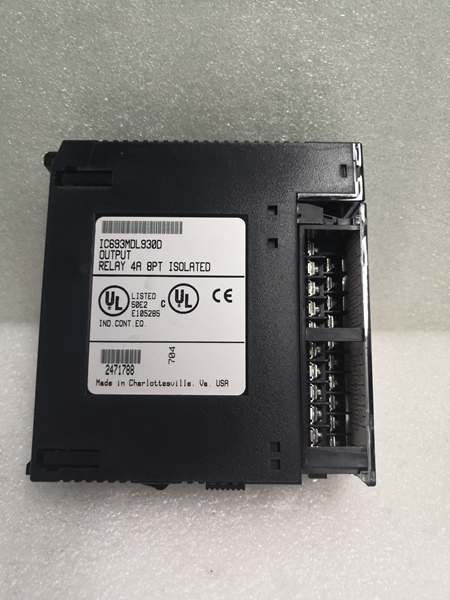
The IC693MDL930F occupies a single slot on the GE 90-30 universal backplane, functioning as a discrete AC input interface at Level 1 of the Purdue Model (Basic Control). It receives 120V AC signals from field devices (dry contacts, limit switches, pushbuttons) and converts these signals into logic levels readable by the CPU. Upstream, the CPU reads the input state via %I memory mapping during each scan; downstream, the module provides optical isolation and zero-crossing detection to prevent false triggering from contact bounce or voltage transients.
The -F suffix indicates a late-production revision of the IC693MDL930 platform, representing the cumulative engineering improvements from earlier revisions while preceding the final production revision (-K). This revision incorporates enhanced manufacturing consistency and component reliability improvements based on field feedback from the -A through -E iterations. The module retains the core architecture of 8-point isolation groups and zero-crossing detection, making it particularly suitable for brownfield installations with mixed electrical infrastructure and noisy environments.
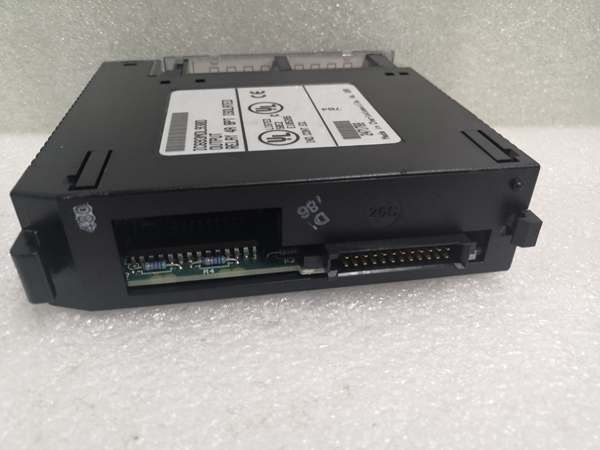
GE IC693MDL930
Core Technical Specifications
- Specific Revision: Late-production revision (-F) with enhanced component reliability and manufacturing consistency vs. earlier -A to -E revisions
- Physical Interface: 40-pin terminal block (2 connectors, 16 points each) or front-facing removable terminal block option
- Internal Bus: 90-30 universal backplane (5V DC power, signal exchange via %I memory)
- Input Type: 32-point discrete input, 120V AC, isolated inputs (8-point groups)
- Input Voltage Range: 90-132V AC at 47-63 Hz (platform rated; verify specific module labeling)
- Input Current: 12mA per point at 120V AC
- Isolation: 1500V RMS optical isolation between field side and backplane; 间隔离: 250V RMS isolation between input groups (8 points per group)
- Backplane Current Draw: Approximately 480mA @ 5V DC
- Response Time: 20-40ms typical (zero-crossing detection adds inherent delay)
- LED Indicators: Individual LEDs per input point (ON when input energized) plus module status LEDs
- Environmental: Operating temperature 0°C to 60°C (32°F to 140°F), humidity 5-95% non-condensing
- Letter Code: Revision letter F indicates a late-production iteration; verify physical label to confirm LED layout and feature set
- Terminal Block: 40-pin plug-in terminal block, supports wire gauges 22-14 AWG
- Field Wiring: Each 8-point group requires a dedicated neutral connection; inputs accept dry contacts or sourcing 120V AC signals
- Diagnostic Capabilities: Limited diagnostics beyond LED indication; non-intelligent discrete module
- Zero-Crossing Detection: Input state changes recognized only at AC zero-crossing points (every 8.3ms at 60Hz)
- Revision Status: Late-production iteration with improved reliability vs. earlier revisions
Customer Value & Operational Benefits
Improved Reliability from Late-Production Engineering
The IC693MDL930F incorporates manufacturing consistency and component reliability improvements based on years of field operation from earlier revisions. This late-production iteration addresses known stress points from the -A through -E revisions, resulting in a module with enhanced durability and longer service life. Facilities installing -F modules benefit from cumulative engineering refinements that reduce the likelihood of premature failure, particularly in demanding environments with temperature cycling, electrical noise, or high-frequency switching.
Isolated Input Groups Eliminate Ground Loop Issues
The IC693MDL930F’s 8-point isolation groups prevent ground loops when inputs are sourced from different 120V AC circuits or referenced to different grounds. In brownfield installations with expanded electrical infrastructure over decades, it’s common to find inputs referenced to multiple grounded neutrals or ungrounded systems. Non-isolated modules would exhibit false triggering or input flickering in these environments. The -F revision’s group isolation allows mixing inputs from different electrical systems without concerns about common-mode noise or ground conflicts, reducing installation complexity and improving reliability in legacy facility retrofits.
Zero-Crossing Detection Provides Noise Immunity
The zero-crossing detection circuitry ensures that input state changes are only recognized when the AC waveform crosses zero volts, providing inherent immunity to voltage spikes and contact bounce. In noisy electrical environments (near large motors, transformers, or welding equipment), DC inputs or non-isolated AC inputs may false-trigger from反馈: from transient noise. The -F revision’s zero-crossing requirement means that momentary voltage spikes occurring during the AC waveform’s peak are ignored—the input only recognizes sustained signals that span multiple zero-crossings. This reduces nuisance faults and eliminates the need for external filters or signal conditioners in many applications.
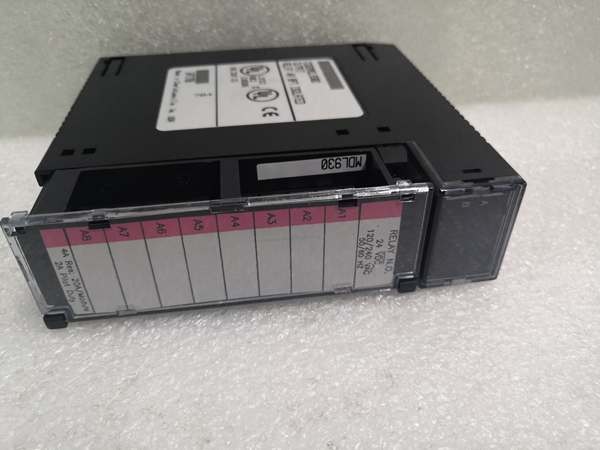
GE IC693MDL930
Field Engineer’s Notes (From the Trenches)
Here’s the reality check on the -F revision: it’s a solid late-production unit, but don’t assume it has the individual point LEDs of the final -K variant. I’ve encountered -F modules with both configurations—some with 32 individual point LEDs, others with group-level indication. The lesson? Verify your specific -F module’s LED layout before commissioning, especially if you’re relying on per-point indication for rapid troubleshooting. Also, the neutral connections are not shared across all 32 inputs—each 8-point group has its own neutral terminal. I’ve seen techs assume there’s a single common neutral for the entire module and wire all 32 inputs to one neutral, which causes intermittent behavior. The lesson? Verify your terminal block wiring diagram before connecting power. Each group of 8 inputs requires its own neutral connection from the 120V AC source. Finally, the -F revision’s response time of 20-40ms with zero-crossing detection is significantly slower than DC inputs. I’ve seen applications where techs specified a 930F for a high-speed counter input on a conveyor system, then wondered why counts were being missed. The -F revision, like all 930 variants, is not suitable for high-speed applications requiring sub-20ms response. Use DC input modules (like the IC693MDL753 series) for photoeyes or encoder inputs where response time matters.
Real-World Applications
Legacy Manufacturing Equipment Retrofit with Extended Service Life
In older manufacturing facilities where reliability is paramount, the IC693MDL930F provides enhanced durability for monitoring limit switches, pushbuttons, and selector switches installed decades ago. The -F revision’s improved component reliability addresses premature failure modes seen in earlier revisions, making it ideal for facilities planning long-term operation of legacy 90-30 systems. The isolated input groups accommodate the facility’s mixed electrical infrastructure—some inputs referenced to a grounded neutral from the original installation, others to an ungrounded system added during expansions. The zero-crossing detection provides noise immunity in environments with large induction motors and legacy transformers.
Wastewater Treatment Plant with Extended Operational Requirements
In municipal wastewater treatment facilities with long operational lifecycles (20-30 years), the IC693MDL930F monitors 32 discrete inputs from pump status contacts, valve position switches, and level switches across multiple treatment stages. The -F revision’s enhanced reliability is critical for these remote facilities where module replacement logistics are challenging and downtime is costly. The isolated input groups accommodate inputs from different 120V AC control transformers at each pump station, preventing ground loop issues. The zero-crossing detection eliminates false triggers from contact bounce on mechanical level switches and from electrical noise generated by VFD-driven pumps.
High-Frequency Troubleshooting FAQ
What is the difference between IC693MDL930F and earlier 930 revisions?
The IC693MDL93F is a late-production revision of the 930 platform, incorporating manufacturing consistency and component reliability improvements compared to earlier revisions (A through E). Functionally, the modules are identical—32 input points, 120V AC, 8-point isolation groups, identical response times and current draw. The -F revision addresses known stress points from earlier iterations, resulting in enhanced durability and longer service life. No programming changes, wiring modifications, or configuration updates are required when upgrading from earlier revisions—the -F is a drop-in replacement with functional parity.
Yes, the final production revision IC693MDL930K is fully compatible and will operate interchangeably in a GE 90-30 system. The -K revision incorporates all engineering improvements from the -F iteration plus additional optimizations for long-term component availability. No programming changes or wiring modifications are required when upgrading—the module is recognized identically in the PLC configuration. For facilities planning long-term operation of 90-30 systems, upgrading to -K during scheduled outages may provide incremental reliability benefits and align with GE’s final production standard.
Not necessarily. Some late-production -F modules may feature individual point LEDs, while others retain group-level indication from earlier iterations. The LED configuration can vary within the -F revision based on manufacturing date and sub-batch. Always verify the LED layout on your specific module before commissioning, especially if you’re relying on per-point indication for rapid troubleshooting. If your -F module has group-level LEDs only, you’ll need to use the PLC software or a multimeter to identify which specific input within a group is causing issues.
How do I wire the neutral connections for each 8-point group?
The ‘s terminal block includes separate neutral terminals for each 8-point input group (typically labeled N1, N2, N3, N4). Connect the neutral conductor from your 120V AC source to the appropriate neutral terminal for each group of 8 inputs. Do not daisy-chain neutrals between groups or use a single neutral for the the entire module—this violates the isolation design and can cause ground loop issues or intermittent behavior. Each group operates as an independent input circuit with its own reference.
Commercial Availability & Pricing
Please note: The listed price is not the actual final price. It is for reference only and is subject to appropriate negotiation based on current market conditions, quantity, and availability.