Description
System Architecture & Operational Principle
The IC693CPU374 sits at Purdue Model Level 1 as the primary controller in a GE 90-30 distributed control system. It receives upstream commands via its serial ports or Ethernet modules (if installed) from SCADA/HMI systems, then executes ladder logic or structured text programs at deterministic scan times. Downstream, the CPU communicates across the Genius Bus or remote backplane I/O via rack-based I/O modules, sending control signals to actuators and receiving status from field devices.
Its built-in serial ports support Modbus RTU master/slave communications, SNP protocol for GE-specific HMIs, and programming via LogicMaster. The backplane architecture enables hot-swapping of I/O modules without disrupting CPU operation, which is critical in continuous process environments. The CPU374’s advantage lies in its robust handling of mixed I/O densities (discrete, analog, specialty) while maintaining sub-millisecond response times for safety-critical interlocks.
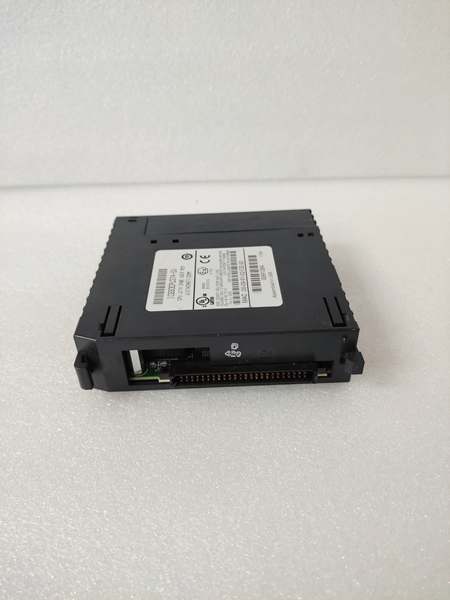
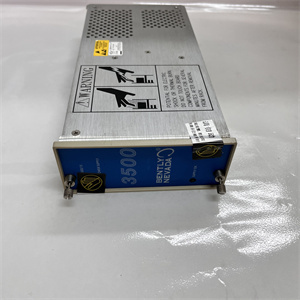
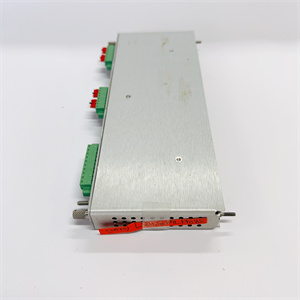
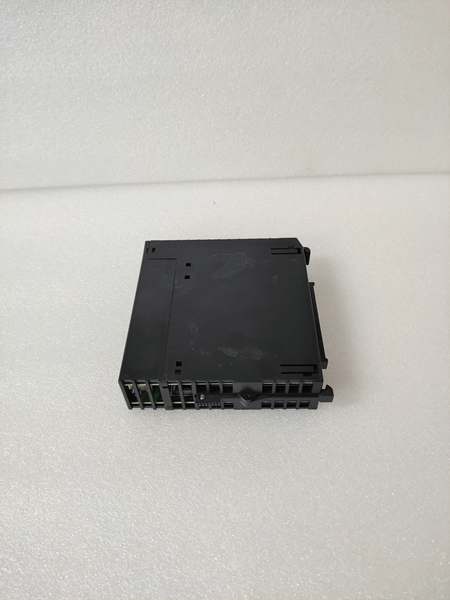
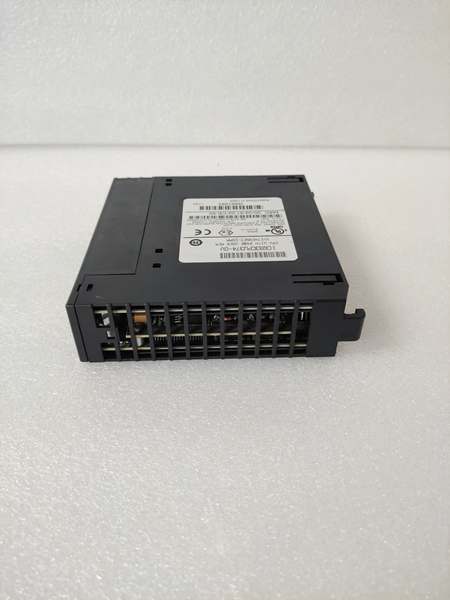
GE IC693CPU374
Core Technical Specifications
- Physical Interface: 12-slot backplane mounting, standard GE 90-30 form factor
- Processor Type: 80386EX-based, 16 MHz clock speed
- User Memory: 240K bytes (configurable for program/variable storage)
- Communication Ports: 4 × serial (3 × configurable RS-232/485, 1 × dedicated RS-232 for programming)
- Network Support: Ethernet via IC693PCM311 or Genius Bus via IC693BEM331
- I/O Capacity: Up to 32 racks, 4096 discrete I/O points, 2048 analog I/O channels
- Environmental Tolerance: Operating temp 0-60°C, storage -40-85°C, 5-95% non-condensing humidity
- Power Draw: 1.2A @ 5VDC from backplane
- Scan Time: Typical 1-2 ms per K of logic
- Firmware Compatibility: Supports GE LogicMaster 90-30 and PACSystems Machine Edition
Customer Value & Operational Benefits
Reduced MTTR Through Serial Port RedundancyWith four onboard serial ports, the CPU374 eliminates the need for external communication modules in many applications. If one port fails during operation (common in harsh industrial environments with voltage surges), the remaining ports can be reconfigured for HMI or programming access, avoiding a full CPU swap. This redundancy slashes Mean Time To Repair from hours to minutes in field scenarios.
Scalable I/O ArchitectureThe ability to control up to 32 racks allows this CPU to scale from small machine control (1-2 racks) to mid-sized process plants without hardware changes. This modularity means plants can expand I/O incrementally—adding a rack for new sensors without replacing the CPU—protecting capital investment over 10-15 year lifecycles.
Legacy Protocol Bridge CapabilityThe serial ports’ support for SNP and Modbus RTU makes the CPU374 a natural bridge between legacy GE equipment (older 90-30 HMIs) and modern systems via Ethernet gateways. Field engineers often repurpose this CPU in brownfield upgrades to retain existing field wiring while enabling new SCADA connectivity.
Field Engineer’s Notes (From the Trenches)Backplane power budgeting trips up even seasoned engineers. The CPU374 draws 1.2A at 5V, and in racks stuffed with high-density analog modules (like the ALG220 series), you can easily exceed the 8A backplane limit. I’ve seen plants where intermittent CPU resets traced back to power-starved backplanes, not firmware bugs. Rule of thumb: For every IC693ALG220 or high-current module, subtract 0.5A from your remaining budget. Also, firmware version 9.00+ added Ethernet timeout handling—if you’re field-upgrading from v7.x, don’t skip this or you’ll chase ghost faults when Ethernet switches reboot.
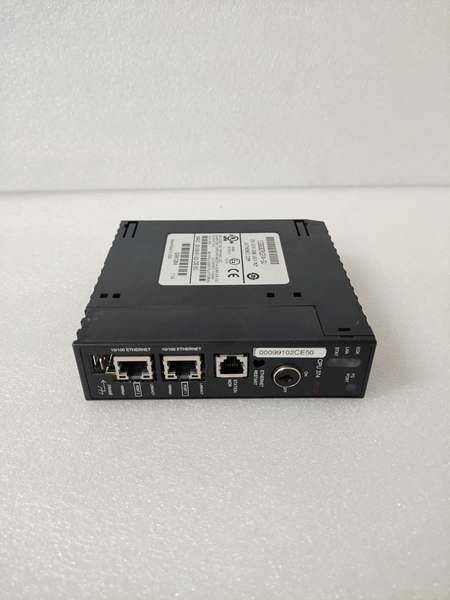
GE IC693CPU374
Real-World Applications
- Overspeed Protection on Gas Turbines: In GE Frame 5/6 turbine packages, the CPU374 executes overspeed trip logic by reading pulse inputs from magnetic pickups (via IC693APU300 modules) and comparing against setpoints. Its fast scan time (sub-2ms) ensures trip commands are sent within 50ms of detection, meeting API 670 requirements for turbine safety.
- Batch Interlock Logic in Pharmaceutical Reactors: For reactor temperature/pressure interlocks, the CPU374 processes analog inputs from RTDs and pressure transmitters, then outputs to solenoid valves (via IC693MDL740 discrete outputs). Its memory capacity stores multiple batch recipes, while serial ports feed batch progress data to pharmaceutical MES systems via Modbus RTU.
High-Frequency Troubleshooting FAQ
Q: Will an IC693CPU374 replace my IC693CPU364 without program changes?A: Yes, with caveats. Both CPUs use the same instruction set, but the has more memory and faster processing. You can migrate the program via LogicMaster’s “Save As” function, but verify that any floating-point math operations aren’t affected by the 80386EX’s precision differences. Test in a dev rack first.
Q: Why do my serial ports fail after lightning storms?A: The RS-232 ports lack galvanic isolation in earlier firmware. Install serial port surge protectors (like MTL4000 series) on all field-connected lines. If ports still die, check grounding—common mode voltage differences between panel ground and field devices cause port chip failures.
Q: What does a steady red CPU LED with green RUN indicate?A: That’s a non-fatal error, usually a watchdog timeout or configuration mismatch. Press the ESC+DEL combo on the CPU front to view the fault code. Code 0x3F means backplane communication lost—check for loose cables or a failed rack power supply.
A: Never. Unlike I/O modules, the CPU controls the backplane arbitration. Removing it mid-operation will crash all I/O communications. Schedule controlled shutdowns, and always pull the 24VDC power lead before extracting the CPU.
Please note: The listed price is not the actual final price. It is for reference only and is subject to appropriate negotiation based on current market conditions, quantity, and availability.