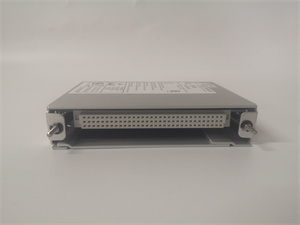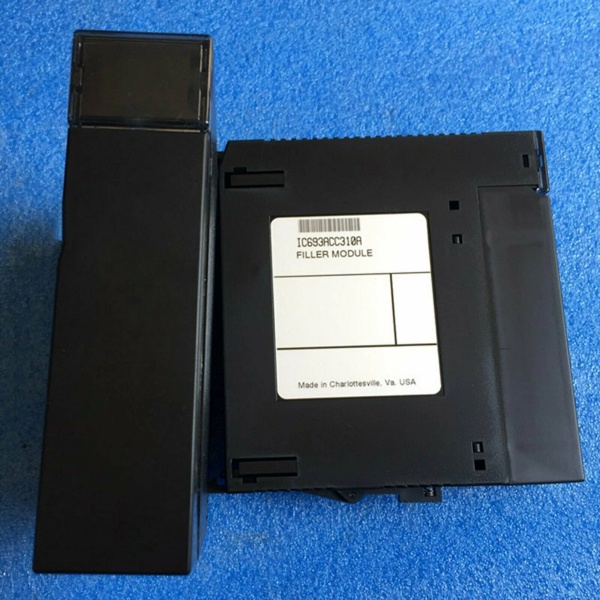
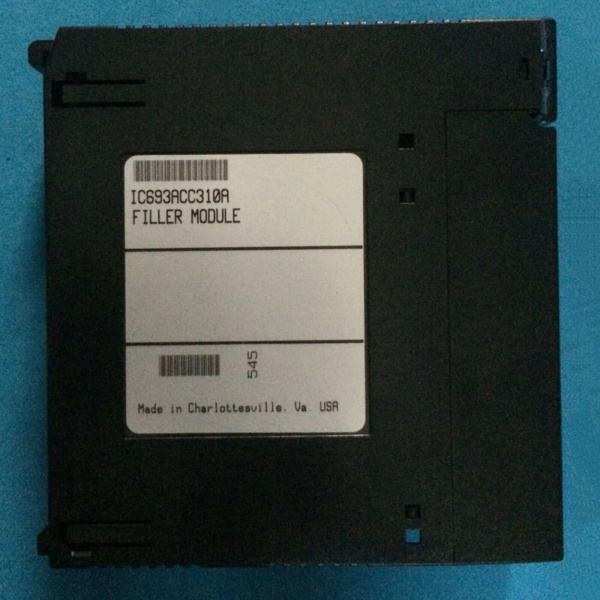
Description
Hard-Numbers: Technical Specifications
- Cable Length: 15 feet (4.6 meters)
- Connector Type: 25-pin D-sub male on both ends (M/M)
- Termination: No built-in termination resistors (requires IC693ACC307 on final baseplate)
- Conductor Configuration: Shielded multi-conductor (specific pinout matches Series 90-30 I/O bus)
- Cable Gauge: 24 AWG signal conductors, 18 AWG power conductors (typical)
- Shielding: Braided copper shield with drain wire
- Operating Temperature: 0°C to +55°C (+32°F to +131°F)
- Storage Temperature: -40°C to +85°C (-40°F to +185°F)
- Connector Material: Nickel-plated contacts, thermoplastic housing
- Locking Mechanism: Screw-lock (4-40 UNC threads)
- Maximum System Length: 15 feet per cable segment when properly terminated
- Compatibility: IC693CHS391, IC693CHS392, IC693CHS393 baseplates
- Lifecycle Status: Discontinued

GE IC693ACC310A
The Real-World Problem It Solves
You’ve got a Series 90-30 system where the I/O needs to be near the process, not stuffed into one overcrowded control cabinet. The IC693ACC310A lets you remote expansion racks up to 15 feet from the CPU rack—or daisy-chain multiple racks—without running miles of individual field wiring back to the main cabinet.
Where you’ll typically find it:
- Multi-rack process skids: Paper machines, offshore platforms, and refinery units where I/O racks are distributed along the process
- Remote enclosure installations: Motor control centers and junction boxes located far from the main PLC cabinet
- Space-constrained panel retrofits: Older control rooms where adding a larger cabinet isn’t an option
Bottom line: The IC693ACC310A is your physical link for distributed I/O—it puts expansion racks where you need them, not where you can fit them.
Hardware Architecture & Under-the-Hood Logic
The IC693ACC310A is a passive extension cable that carries serial I/O bus signals, power distribution, and ground references between Series 90-30 baseplates. It contains no active electronics—just copper conductors, shielding, and connectors. The cable routes bidirectional I/O bus communication (data, clock, and control signals) plus DC power from the main rack to expansion racks.
-
Signal Path Routing:
- Serial data lines (transmit/receive) carry I/O bus communication between CPU and remote modules
- Clock signals synchronize data transfer across all baseplates in the chain
- Control signals manage bus arbitration and module addressing
- All signals are differential or referenced to common ground for noise immunity
-
Power Distribution Conductors:
- +5VDC logic power feeds remote I/O module electronics
- +24VDC field power supplies remote I/O module output circuits
- Ground reference provides common return path for all DC power
- Power conductors are oversized (18 AWG typical) to minimize voltage drop over 15-foot length
-
Shielding System:
- Braided copper shield encloses all signal and power conductors
- Drain wire connects to connector backshells for chassis ground continuity
- Shield provides EMI/RFI immunity from nearby VFDs, motors, and power cables
- Shield continuity maintained through both connector backshells
-
Connector Interface:
- 25-pin D-sub male connectors pin-for-pin compatible with Series 90-30 expansion ports
- Nickel-plated contacts resist corrosion in humid or corrosive environments
- Thermoplastic housing withstands industrial temperature ranges
- Screw-lock mechanism prevents vibration-induced disconnects
-
No Termination Network:
- Unlike IC693CBL302 and IC693CBL314, IC693ACC310A contains no termination resistors
- This allows flexible termination strategy using IC693ACC307 on final baseplate
- Prevents double-termination when used in multi-baseplate configurations
GE IC693ACC310A
Field Service Pitfalls: What Rookies Get Wrong
Assuming IC693ACC310A is a terminated cable
Rookies grab IC693ACC310A thinking it terminates the bus like IC693CBL302 or IC693CBL314. They install it on the final rack without IC693ACC307, then spend hours troubleshooting intermittent I/O faults caused by signal reflections on the unterminated bus.
- Field Rule: IC693ACC310A has no built-in termination. Always install IC693ACC307 terminator plug on the last expansion baseplate in the chain. If you need a cable with built-in termination, use IC693CBL302 (25 ft) or IC693CBL314 (50 ft).
Daisy-chaining multiple cables
Rookies string two or three IC693ACC310A cables end-to-end to reach 30–45 feet total distance. Each connector junction creates impedance discontinuity and reflection points, corrupting the I/O bus signals and causing random module dropouts.
- Field Rule: Never daisy-chain IC693ACC310A cables. Use terminated cables (IC693CBL302/314) for longer runs or install intermediate baseplates to extend the bus. Maximum single-cable length is 15 feet.
Mixing cable types in the same expansion chain
Rookies have IC693ACC310A in the truck but the final run needs to be longer, so they swap in an IC693CBL314 terminated cable at the end. Now the bus has mixed termination characteristics—some segments unterminated, the final segment double-terminated.
- Field Rule: Pick one cable type and stick with it for the entire expansion chain. Either use all IC693ACC310A cables with IC693ACC307 on the final rack, or use IC693CBL302/314 terminated cables for the final segment only. Never mix cable types in the same I/O bus.
Overtightening connector screws
Rookies use pliers or wrenches to crank down the connector screws, thinking tighter is better. The result: stripped threads, cracked housing, or bent pins that make intermittent contact under vibration.
- Field Rule: Hand-tighten connector screws until you feel firm resistance. No tools. If the screw won’t thread by hand, back it out and realign the connector—you’re cross-threading it.
Routing near EMI sources
Rookies run IC693ACC310A alongside 480V motor leads or VFD output cables to save conduit space. The induced noise corrupts I/O bus signals, causing phantom faults and erratic module behavior.
- Field Rule: Maintain at least 12 inches separation from power cables. If you must cross power cables, cross at 90 degrees. Run I/O bus cables in dedicated grounded steel conduit when near high-noise equipment.
Ignoring minimum bend radius
Rookies route IC693ACC310A around tight corners in crowded panels, exceeding the cable’s minimum bend radius. The internal shield and conductors degrade over time, creating intermittent faults that are a nightmare to diagnose.
- Field Rule: Maintain a minimum bend radius of 4 inches (10x cable diameter). Use smooth bends and flexible conduit—never force the cable into a tight turn. If the panel layout doesn’t allow proper radius, redesign the cable path.
Failing to label both ends
Rookies install IC693ACC310A cables without marking which rack they connect to. Six months later during troubleshooting, nobody knows which cable goes where, and the entire expansion system has to be re-traced from scratch.
- Field Rule: Label both ends of every IC693ACC310A cable with “FROM [RACK X]” and “TO [RACK Y].” Use heat-shrink or engraved tags that won’t fall off. Document the routing in your as-builts.
Reusing damaged cables
Rookies inspect an IC693ACC310A with crushed shielding or exposed conductors, decide it “still works,” and reinstall it. The damaged shield creates an EMI entry point, and the exposed conductors are a ground fault waiting to happen.
- Field Rule: Any visible damage to the shield, jacket, or connectors means the cable is trash. Cut the ends and scrap it—don’t risk a plant shutdown to save fifty bucks on a cable. IC693ACC310A is too cheap to gamble with.
Commercial Availability & Pricing Note
Please note: The listed price is for reference only and is not binding. Final pricing and terms are subject to negotiation based on current market conditions and availability.