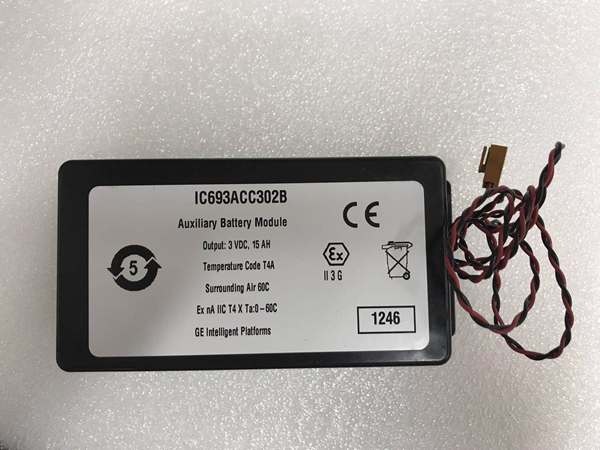
Description
Hard-Numbers: Technical Specifications
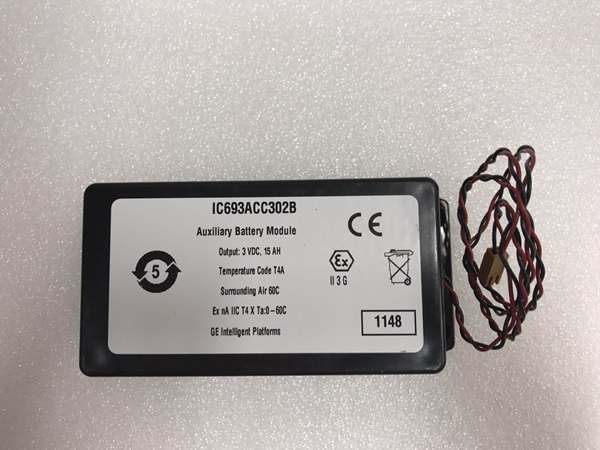
- Battery Chemistry: Lithium (primary, non-rechargeable)
- Output Voltage: 3 VDC
- Battery Capacity: 15.0 Amp-hours (15 Ah)
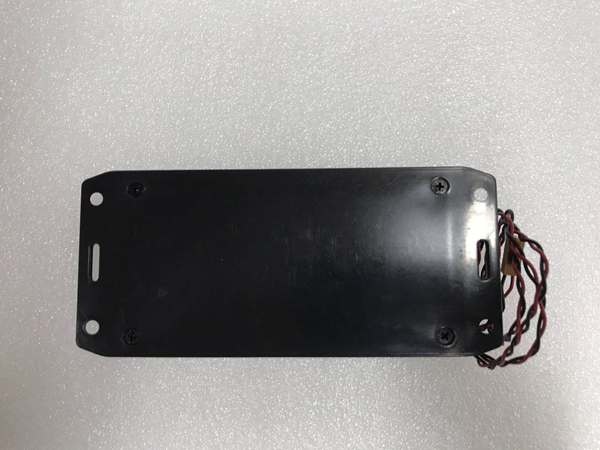
- Physical Dimensions: 5.713″ × 2.559″ × 1.571″ (145.1 × 65.0 × 39.9 mm)
- Weight: 232 grams (0.51 lbs / 0.69 lbs per alternate source)
- Case Material: Black, flame-retardant ABS plastic
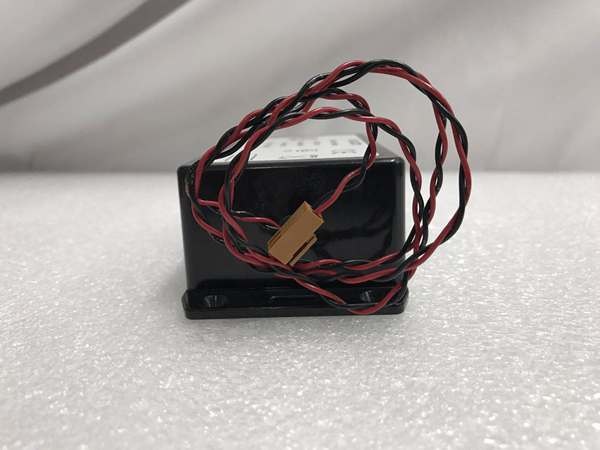
- Connection: 2.0′ (0.6 meter) twisted red/black 24 AWG lead with female 2-pin connector
- Mounting: Panel mount (four #8-32 × ½” flat head machine screws)
- Operating Temperature Range: 0°C to +60°C (+32°F to +140°F)
- Shelf Life: 7 years at 20°C
- Protection: Built-in 1 Amp fuse (non-replaceable, sealed inside)
- Compatibility: All IC693 power supplies and IC697 CPUs; PACSystems battery connectors
- Memory Backup Life (Power-Down Conditions):
- IC693 CPUs 311–364: 75 months (~6.25 years)
- All existing IC697 CPUs: 75 months (~6.25 years)
- IC693 CPU374: 15 months (~1.25 years)
- Lithium Content: 5.1 grams (3 cells @ 1.7 grams/cell)
- Status: Discontinued/Obsolete (replaced by IC695ACC302 for PACSystems)

GE IC693ACC302
The Real-World Problem It Solves
The standard IC693ACC301 internal battery lasts 1–2 years, but many industrial applications require far longer memory retention during extended shutdowns, maintenance periods, or seasonal downtime. The IC693ACC302 extends backup time from months to years, eliminating the need for program reloads after long power-down intervals.
Where you’ll typically find it:
- Seasonal facilities: Sugar mills, agricultural processing plants, and amusement parks that shut down for months annually.
- Backup power systems: Emergency generators and UPS systems where PLCs may remain offline for extended service intervals.
- Remote installations: Oil and gas wellheads, water treatment facilities, and solar installations where maintenance access is infrequent.
- Critical control infrastructure: Applications where program loss is unacceptable and battery replacement logistics are challenging.
Bottom line: It trades installation complexity for multi-year memory retention. Use it when standard battery replacement intervals are impractical or when power-down durations exceed 6–12 months.
Hardware Architecture & Under-the-Hood Logic
The IC693ACC302 is an external high-capacity lithium pack wired to the CPU’s battery backup circuit. It replaces the internal IC693ACC301 battery and provides substantially longer backup time due to its 15Ah capacity (vs. 1.2–1.5Ah for the internal battery).
-
Battery Configuration:
- Contains three lithium-thionyl chloride cells in series/parallel configuration to deliver 3 VDC at 15 Ah.
- Cells are primary (non-rechargeable) and optimized for low self-discharge rate and long shelf life.
- Total lithium content: 5.1 grams, requiring proper disposal per local regulations.
-
Connection and Installation:
- Mounts externally to the control cabinet via four #8-32 screws.
- 0.6-meter (24″) cable routes from the external battery pack to the CPU’s battery connector.
- For IC693 systems: cable connects to battery connector on power supply module; routed through bottom of battery compartment.
- For IC697 systems: cable connects directly to CPU module; routed out bottom of CPU cover.
- Critical: Must remove the internal IC693ACC301 standard battery when using the auxiliary module to avoid back-feeding conflicts.
-
Protection Circuitry:
- Internal 1 Amp fuse protects against short-circuit or severe overload conditions.
- Fuse is sealed inside the battery pack and not user-serviceable—if blown, the entire unit requires replacement.
- No active voltage regulation or low-battery monitoring; the battery provides direct 3 VDC to CPU RAM backup circuit.
-
Memory Backup Timing:
- When main 5 VDC power is lost, CPU RAM switches to battery backup mode.
- Backup time depends on CPU model and memory size:
- CPU311–364 and IC697 CPUs: 75 months (due to lower standby current draw)
- CPU374: 15 months (higher standby current due to larger memory and additional Ethernet circuitry)
- Timing assumes 20°C ambient temperature; elevated temperatures reduce capacity proportionally.
-
No Low-Battery Indication:
- Unlike the standard IC693ACC301, the auxiliary module does not provide reliable low-battery warnings to the CPU.
- User logic should not rely on battery status bits when using IC693ACC302.
- Replacement must be scheduled based on date codes and shelf-life tracking.
GE IC693ACC302
Field Service Pitfalls: What Rookies Get Wrong
Forgetting to remove the internal battery
The most common rookie error: installing the IC693ACC302 without removing the internal IC693ACC301 battery. Both batteries connected simultaneously causes unpredictable behavior—overcharging, rapid depletion, or intermittent RAM failures.
- Field Rule: Always remove the internal IC693ACC301 battery from the power supply compartment before connecting the IC693ACC302. Store the internal battery as a spare for other systems or dispose of properly if expired.
Relying on the BATT LED for low-battery warning
The IC693ACC302 does not provide reliable low-battery indication to the CPU. Rookies watch the BATT LED or monitor Fault Table bits, assuming they’ll get advance warning—then discover the battery is dead during a planned shutdown.
- Field Rule: The auxiliary battery provides no low-battery alarm. Track installation dates and replace every 5–6 years for CPU311–364, or every 12–14 months for CPU374. Use a multimeter to verify voltage (should be 3.0–3.3 VDC) during preventive maintenance.
Ignoring the 7-year shelf life
The battery has a finite shelf life of 7 years. Rookies install batteries that have been in storage for 8–10 years, expecting full backup time—then face program loss during the first extended power-down.
- Field Rule: Check the date code on the product label (three digits: first digit = year in 21st century, last two = fiscal week). Do not install batteries that have exceeded 7 years from manufacture, regardless of storage conditions.
Improper mounting and cable routing
Rookies mount the battery pack without securing it properly or pinch the cable when closing covers. Vibration loosens the module, or the cable shorts against enclosure edges—causing intermittent memory corruption or blown fuse.
- Field Rule: Use all four #8-32 × ½” flat head screws with proper torque. Route the cable through designated slots without sharp bends. Verify cable clearance before closing compartment covers.
Exceeding operating temperature limits
The battery operates 0°C to +60°C. Rookies mount it near hot components (VFDs, power supplies) where ambient exceeds 60°C, causing rapid capacity loss and premature failure.
- Field Rule: Install the module in the coolest part of the enclosure. Maintain at least 2 inches of clearance from heat sources. Consider adding forced ventilation if enclosure temperature exceeds 50°C during operation.
Blowing the internal fuse during installation
The internal 1 Amp fuse opens if the battery is shorted during installation. Rookies accidentally short the connector pins or reverse polarity—then assume the new battery is defective and request a warranty claim.
- Field Rule: Turn off PLC power before connecting the battery. Verify connector polarity (red = positive, black = negative). If fuse opens (no voltage at connector pins), the entire unit must be replaced—this is not user-repairable.
Not testing after installation
Rookies install the auxiliary battery and assume it works—never verifying actual backup voltage or performing a controlled power-down test. The first real power outage reveals the battery was never properly connected.
- Field Rule: After installation, verify voltage at connector pins (3.0–3.3 VDC). Perform a controlled power-down test: remove AC power for 10–15 minutes, restore power, and confirm program and retentive data are intact.
Using IC693ACC302 with CPU374 without understanding limitations
The CPU374 only gets 15 months of backup from the IC693ACC302 due to higher standby current. Rookies expect 75 months, then face program loss after 1 year of shutdown.
- Field Rule: For CPU374 applications requiring more than 15 months of backup, consider upgrading to a PACSystems controller with IC695ACC302 Smart Battery Module, or implement Flash memory backup for long-term program retention.
Commercial Availability & Pricing Note
Please note: The listed price is for reference only and is not binding. Final pricing and terms are subject to negotiation based on current market conditions and availability.