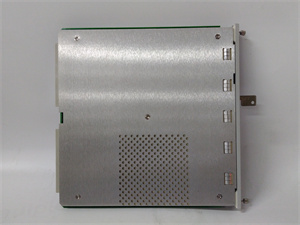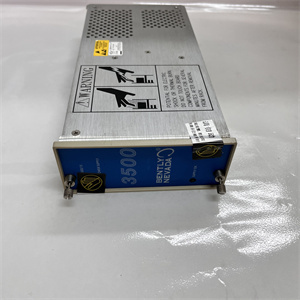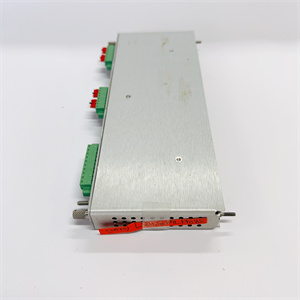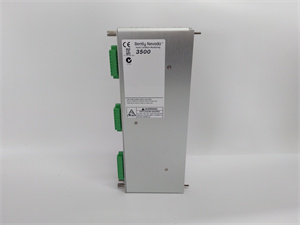
Description
Hard-Numbers: Technical Specifications
- Input Channels: 4 differential channels (individual channel configuration)
- Input Types: RTD (Pt100, Pt200, Pt500, Pt1000), thermocouple (J, K, T, E, R, S, B, N), millivolt signals (-80mV to +80mV)
- Resolution: 16-bit (0.1°C typical for Pt100)
- Update Rate: 2.5 seconds per channel (adjustable filter setting dependent)
- Accuracy: ±0.2°C for Pt100 at 25°C, ±1.0°C for thermocouple with cold junction compensation
- Isolation: 500V channel-to-channel, 1500V channel-to-bus
- Operating Temperature: 0°C to +60°C (32°F to +140°F)
- Storage Temperature: -40°C to +85°C (-40°F to +185°F)
- Power Consumption: 300mA from +5V backplane
- Input Filter Time: Configurable from 0.1 seconds to 20 seconds
- Cold Junction Compensation: Built-in (±1.0°C accuracy)
- Lead Wire Compensation: Automatic for 2-, 3-, and 4-wire RTD configurations
- Overload Protection: ±50V (differential), ±250V (common-mode)
- Regional Certification: JIS (Japanese Industrial Standards) compliance, CE marked
- Documentation Language: Japanese and English manuals included
- Dimensions: 5.12″ × 4.33″ × 3.50″ (130mm × 110mm × 89mm)
- Weight: 0.9 lbs (0.41 kg)

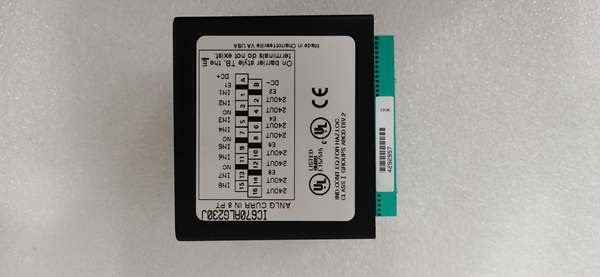
GE IC670ALG230
The Real-World Problem It Solves
Japanese process facilities require temperature measurement modules that comply with JIS standards and support Japanese documentation requirements while maintaining the same performance as standard GE modules. The IC670ALG310-JA provides identical functionality to the standard IC670ALG310 but with Japanese market certification, bilingual documentation, and compliance with Japanese electrical safety regulations.
Where you’ll typically find it:
- Japanese semiconductor manufacturing temperature control
- Automotive plant furnace monitoring in Japan
- Food processing temperature verification systems requiring JIS compliance
This module enables Japanese facilities to maintain GE’s high-performance temperature measurement capabilities while meeting regional regulatory requirements and ensuring documentation accessibility for Japanese-speaking personnel.
Hardware Architecture & Under-the-Hood Logic
The IC670ALG310-JA maintains the same hardware architecture as the standard IC670ALG310, featuring independent signal conditioning and cold junction compensation on each channel. The only differences are in labeling, certification markings, and included documentation language.
- Temperature sensor signal enters differential input pair
- Cold junction temperature sensor measures terminal block ambient temperature
- Signal amplifier applies gain based on detected input type
- Auto-ranging ADC converts analog signal to digital value
- Microprocessor applies lead wire compensation (RTD) or cold junction compensation (thermocouple)
- Configurable digital filter reduces noise from AC line interference
- Temperature calculation engine applies calibration tables and linearization curves
- Final temperature value transmitted to VersaMax backplane via serial bus
- LED indicators update based on channel status and fault conditions
- Watchdog timer resets channel if conversion process exceeds 30 seconds
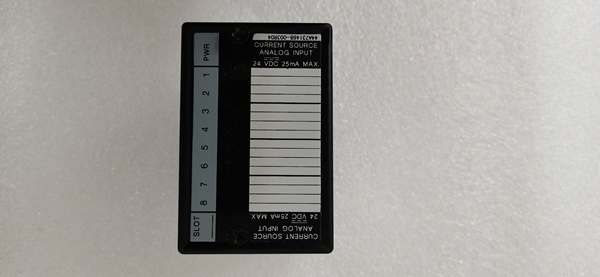
GE IC670ALG230
Field Service Pitfalls: What Rookies Get Wrong
Assuming JA Variant is Different Internally
Technicians frequently treat the JA variant as fundamentally different from the standard IC670ALG310, searching for separate manuals and configuration procedures. This wastes time and leads to confusion. The module is identical internally—only certification and documentation differ.
- Field Rule: Use standard IC670ALG310 procedures for installation, configuration, and troubleshooting. The JA suffix indicates regional certification, not functional differences. The only exception is documentation language, which includes Japanese.
Mixing Standard and JA Variants in Redundant Systems
Engineers install a mix of standard IC670ALG310 and IC670ALG310-JA modules in redundant systems, creating potential regulatory compliance issues in facilities requiring full JIS certification throughout. At a Japanese pharmaceutical plant, this caused a regulatory audit finding.
- Quick Fix: Maintain consistent variants within redundant racks if JIS compliance is required. Use JA variants throughout for Japanese installations, standard variants for other regions. Mixing variants does not affect electrical performance but may impact regulatory certification.
Overlooking Japanese Documentation Differences
New technicians attempt to troubleshoot JA variants using English-only documentation, missing critical Japanese language troubleshooting notes that address region-specific issues. This has led to unnecessary module replacements at Japanese facilities.
- Field Rule: Always refer to the included Japanese documentation for JA variants, especially when troubleshooting region-specific issues. The documentation is bilingual—use the Japanese sections for detailed troubleshooting steps when available.
Neglecting Regional Power Standards
Field techs operating in Japanese facilities sometimes assume the JA variant has different power requirements or input voltage ranges due to regional variations. The module operates on the same +5V backplane power as standard variants—no regional power adaptation is needed.
- Quick Fix: Treat the JA variant identically to standard variants for power requirements. The VersaMax backplane provides +5V DC regardless of regional AC power input. No special power adaptation is required for the JA module.
Misinterpreting Regional Compliance Labels
Engineers misunderstand the JIS certification label meaning, assuming it implies different performance specifications or safety ratings. The certification only confirms compliance with Japanese electrical safety standards—performance is identical to standard variants.
- Field Rule: Understand that regional certifications (JIS, CE, UL) confirm compliance with local electrical safety standards, not performance differences. The IC670ALG310-JA meets the same performance specs as the standard IC670ALG310.
Forgetting Calibration Requirements Vary by Region
Technicians apply generic calibration procedures without considering that Japanese facilities may have different calibration intervals or traceability requirements. This can lead to compliance issues during audits.
- Field Rule: Verify facility-specific calibration requirements when servicing JA variants in Japanese facilities. Japanese plants may require annual calibration or specific traceability documentation that differs from international standards.
Please note: The listed price is for reference only and is not binding. Final pricing and terms are subject to negotiation based on current market conditions and availability.