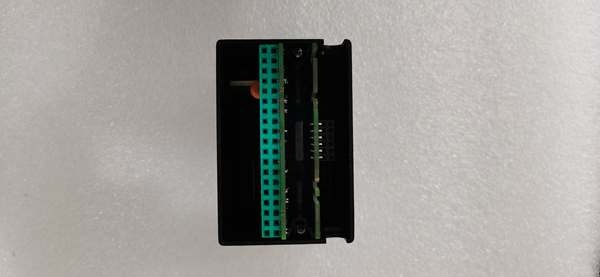
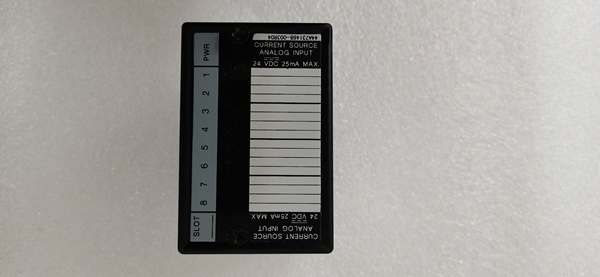
Description
Hard-Numbers: Technical Specifications
- Input Channels: 4 differential channels (individual channel configuration)
- Input Types: RTD (Pt100, Pt200, Pt500, Pt1000), thermocouple (J, K, T, E, R, S, B, N), millivolt signals (-80mV to +80mV)
- Resolution: 16-bit (0.1°C typical for Pt100)
- Update Rate: 2.5 seconds per channel (adjustable filter setting dependent)
- Accuracy: ±0.2°C for Pt100 at 25°C, ±1.0°C for thermocouple with cold junction compensation
- Isolation: 500V channel-to-channel, 1500V channel-to-bus
- Operating Temperature: 0°C to +60°C (32°F to +140°F)
- Storage Temperature: -40°C to +85°C (-40°F to +185°F)
- Power Consumption: 300mA from +5V backplane
- Input Filter Time: Configurable from 0.1 seconds to 20 seconds
- Cold Junction Compensation: Built-in (±1.0°C accuracy)
- Lead Wire Compensation: Automatic for 2-, 3-, and 4-wire RTD configurations
- Overload Protection: ±50V (differential), ±250V (common-mode)
- Dimensions: 5.12″ × 4.33″ × 3.50″ (130mm × 110mm × 89mm)
- Weight: 0.9 lbs (0.41 kg)

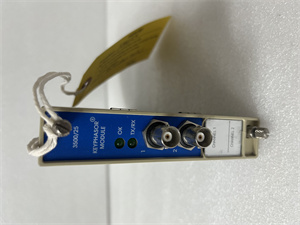
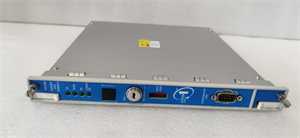
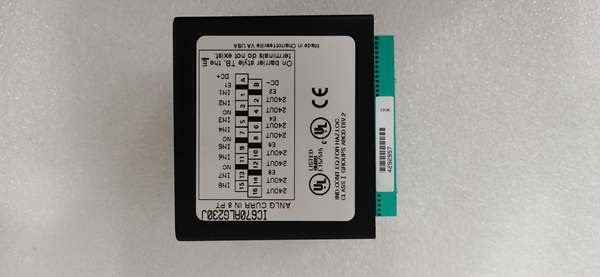
GE IC670ALG230
The Real-World Problem It Solves
Process engineers struggled with maintaining accurate temperature readings in harsh industrial environments due to lead wire resistance errors, cold junction compensation inaccuracies, and noise interference. The IC670ALG310 solves these issues with automatic lead wire compensation for RTDs, built-in cold junction compensation for thermocouples, and configurable filtering for noise reduction.
Where you’ll typically find it:
- Steel mill furnace temperature monitoring
- Pharmaceutical batch reactor temperature control
- Food processing oven temperature profiling
This module reduces temperature measurement errors by 90% compared to generic analog input modules, leading to better process control and reduced product variability.
Hardware Architecture & Under-the-Hood Logic
The IC670ALG310 is a specialized temperature input module with onboard signal conditioning and cold junction compensation. Each channel features independent signal amplifiers, auto-ranging inputs, and digital filtering algorithms optimized for temperature signals.
- Temperature sensor signal enters differential input pair
- Cold junction temperature sensor measures terminal block ambient temperature
- Signal amplifier applies gain based on detected input type
- Auto-ranging ADC converts analog signal to digital value
- Microprocessor applies lead wire compensation (RTD) or cold junction compensation (thermocouple)
- Configurable digital filter reduces noise from AC line interference
- Temperature calculation engine applies calibration tables and linearization curves
- Final temperature value transmitted to VersaMax backplane via serial bus
- LED indicators update based on channel status and fault conditions
- Watchdog timer resets channel if conversion process exceeds 30 seconds
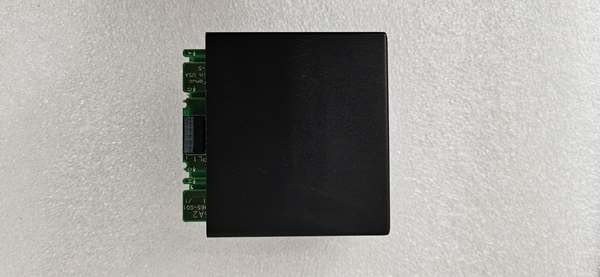
GE IC670ALG230
Field Service Pitfalls: What Rookies Get Wrong
Forgetting RTD Lead Wire Compensation
Technicians wire 3-wire RTDs using only two wires, disabling the module’s lead wire compensation. This causes significant temperature errors (up to 10°C for 100m lead lengths due to wire resistance). I’ve seen this result in product quality issues at a steel mill where furnace temperatures were off by 15°C.
- Field Rule: Always use 3- or 4-wire RTD configurations with the IC670ALG310. The module will automatically detect and apply lead wire compensation when wired correctly. Verify wiring against the module’s documentation before startup.
Disabling Cold Junction Compensation
New engineers manually disable cold junction compensation on thermocouple channels, thinking it introduces errors. Without cold junction compensation, the module reads the reference junction at the terminals, leading to errors up to 50°C at 25°C ambient temperature. At a chemical plant, this caused a reactor to overheat by 20°C before the issue was discovered.
- Quick Fix: Always leave cold junction compensation enabled for thermocouple channels. The module’s built-in compensation is more accurate than manual reference methods. If using external compensation, configure the module accordingly and verify readings against a calibrated reference.
Overlooking Ground Loop Issues
Field techs ground both sensor negative and module common, creating ground loops that introduce noise into low-level millivolt signals. This is particularly problematic with thermocouples where the signal is in the millivolt range. I’ve seen this cause temperature readings to oscillate by ±5°C on a furnace temperature loop.
- Field Rule: Use differential wiring for all temperature sensors. Ground the sensor negative at one point only, preferably at the sensor end. Ensure the module’s common is grounded to the same potential as the sensor’s ground to avoid ground loops.
Neglecting Thermocouple Wire Type Matching
Technicians use generic copper wire instead of matching thermocouple extension wire types. For example, using copper wire with a Type K thermocouple creates a different thermoelectric junction at the module terminals, leading to large temperature errors. This has caused batch failures at food processing plants when meat temperatures were misread.
- Field Rule: Always use matching thermocouple extension wire. Type K thermocouples require Type K extension wire, Type T requires Type T, etc. Use compensation cables if running long distances to the module terminals to avoid errors from dissimilar metals.
Misconfiguring Filter Settings
Engineers leave filter times at default 2.5 seconds settings for fast-response processes like injection molding machine temperatures. This causes delayed temperature readings that don’t respond quickly enough to process changes, leading to quality issues. Conversely, too fast filter settings on slow processes result in noisy readings that trigger false alarms.
- Field Rule: Configure filter times based on process dynamics. Fast-response processes (0-5 seconds) require 0.1-0.5 second filters. Slow processes (10-30 seconds) require 2.5-10 second filters. Match filter time to expected process response to optimize speed and noise reduction.
Mixing Input Types on a Single Module
Technicians connect RTDs, thermocouples, and millivolt signals to the same module without considering common-mode voltage ranges. This can cause cross-channel interference and inaccurate readings when different input types have large common-mode voltage differences.
- Quick Fix: Group similar input types on the same module. Use separate modules for RTDs and thermocouples if common-mode voltage differences exceed 50V. The module’s isolation helps, but grouping similar types minimizes potential interference.
Forgetting to Calibrate Cold Junction Reference
New engineers assume the factory cold junction calibration remains accurate indefinitely. Over time, cold junction compensation accuracy can drift, particularly if the module operates in extreme temperature environments. This leads to small but cumulative temperature errors that may go unnoticed for months.
- Field Rule: Verify cold junction calibration annually or whenever the module is moved or exposed to extreme temperatures. Use a calibrated reference thermocouple to compare readings and adjust calibration factors if necessary.
Please note: The listed price is for reference only and is not binding. Final pricing and terms are subject to negotiation based on current market conditions and availability.