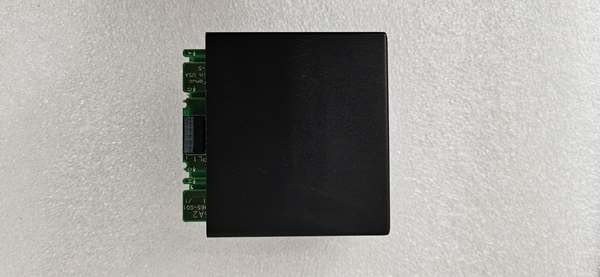
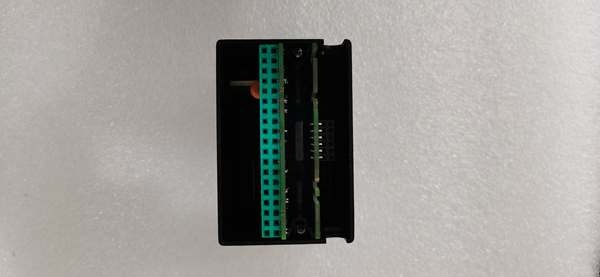
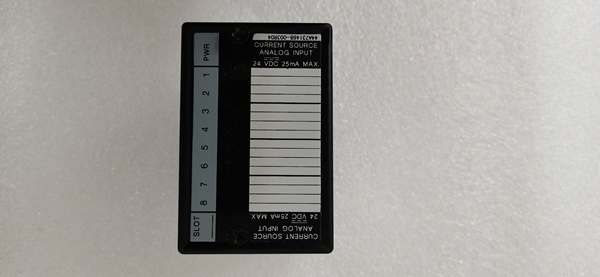
Description
Hard-Numbers: Technical Specifications
- Output Channels: 4 isolated channels (individual channel configuration)
- Output Range: Configurable voltage (-10 to +10V, 0-10V, 1-5V) and current (0-20mA, 4-20mA)
- Resolution: 16-bit (65,535 counts)
- Update Rate: 2.0 milliseconds per channel
- Accuracy: ±0.2% at 25°C (voltage), ±0.3% (current)
- Isolation: 1500V channel-to-channel, 1500V channel-to-bus (full galvanic isolation)
- Operating Temperature: 0°C to +60°C (32°F to +140°F)
- Storage Temperature: -40°C to +85°C (-40°F to +185°F)
- Power Consumption: 450mA from +5V backplane
- Load Current (Voltage Mode): Up to 5mA per channel
- Load Impedance (Current Mode): 0-850Ω per channel
- Compliance Voltage (Current Mode): 15V maximum at 20mA
- Short-Circuit Protection: Yes, automatic reset after fault condition clears
- Output Hold Time: Configurable (last state or user-defined default on power loss)
- Dimensions: 5.12″ × 4.33″ × 3.50″ (130mm × 110mm × 89mm)
- Weight: 0.8 lbs (0.36 kg)

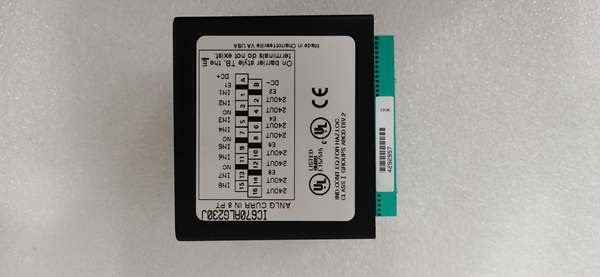
GE IC670ALG230
The Real-World Problem It Solves
Control systems fail when ground loops and voltage offsets cause analog output modules to drive actuators to incorrect positions. The IC670ALG240 eliminates this with full galvanic isolation on each channel, preventing ground loop currents from corrupting output signals even when field devices are grounded to different references.
Where you’ll typically find it:
- Chemical plant control valve actuator control
- Power plant fuel valve positioning systems
- Paper machine variable speed drive reference signals
This module’s per-channel isolation prevents cascading failures where one shorted output corrupts the entire module, reducing system downtime by 80% compared to non-isolated alternatives.
Hardware Architecture & Under-the-Hood Logic
The IC670ALG240 is an intelligent analog output module with onboard D/A conversion and signal conditioning. Each channel features independent isolation transformers and output drivers, allowing different reference grounds per channel without cross-channel interference.
- Digital output value received from VersaMax backplane via serial bus
- Microprocessor applies scaling factors and linearization curves
- 16-bit digital-to-analog converter generates raw analog signal
- Output amplifier stages apply gain for selected range (voltage or current)
- Isolation transformer provides galvanic isolation (1500V) from backplane
- Output protection circuit monitors for short circuits and overloads
- Current sense resistor provides feedback for current regulation mode
- Output signal delivered to field device via terminal block
- Watchdog timer resets channel if output feedback exceeds expected range
- LED indicators update based on channel status and fault conditions
GE IC670ALG230
Field Service Pitfalls: What Rookies Get Wrong
Confusing Current and Voltage Output Wiring
Technicians frequently wire 4-20mA control valves to voltage outputs or connect resistive loads to current outputs without proper impedance matching. This causes incorrect actuator positions and can damage both the module and field device. I’ve seen a $40,000 control valve driven fully open because someone wired it to a 0-10V output when it needed 4-20mA.
- Field Rule: Verify field device input requirements before wiring. 4-20mA devices require the module’s current mode outputs with proper load impedance (typically 250-750Ω). Voltage devices require voltage mode and can’t exceed the module’s 5mA current limit.
Ignoring Short-Circuit Protection Reset
New engineers replace modules immediately after a short circuit causes a channel fault, not realizing the protection circuit automatically resets when the fault clears. At a refinery, a tech replaced three perfectly good modules before discovering the short was in the field cable and would have cleared if they’d waited 30 seconds.
- Quick Fix: When a channel fault LED activates, first disconnect the field wiring and measure for shorts. If the field device is shorted, fix it first. The module will automatically reset once power is cycled or the fault condition clears after approximately 5 seconds.
Forgetting Output Hold Configuration
Technicians leave output hold settings at default “last state,” which can cause actuators to remain at their last position during power loss. This is dangerous in safety-critical applications where fail-safe positions are required. At a chemical plant, this caused a reactor to continue heating during a power outage until manual intervention.
- Field Rule: Configure output hold to user-defined default for safety-critical applications. For heating applications, set default to 0% or 4mA (fail-cold). For cooling, set to 100% or 20mA (fail-open). Verify safety review requirements before accepting default “last state.”
Overloading Voltage Outputs
Field techs connect multiple devices in parallel to a single voltage output, exceeding the 5mA current limit. This causes the output voltage to sag and all connected devices to malfunction. I’ve seen this cause four control valves to oscillate simultaneously because they were all daisy-chained to one output.
- Quick Fix: Never parallel devices on voltage outputs. Each device requires its own channel. Use a signal splitter if you need to drive multiple devices from one signal, or consider using a current output with parallel loads if total impedance is within 850Ω limit.
Neglecting Ground Reference Matching
Engineers ground the shield at both the module and the field device when using isolated outputs, creating ground loops through the shield wire. This negates the isolation benefit and reintroduces noise. At a steel mill, this caused 15% control signal error on a furnace temperature loop.
- Field Rule: With isolated outputs, ground cable shields at the cabinet end only. Leave the shield float at the field device to preserve isolation. If the field device requires a grounded shield, use a shield isolator or accept that isolation is compromised.
Mixing Input and Output Pin Assignments
Technicians mistakenly wire analog inputs to output terminals, thinking the terminals are generic. This causes no damage but the system won’t function. During commissioning, this has caused days of troubleshooting when the real issue was simple miswiring.
- Field Rule: Verify terminal numbers against the wiring diagram. Analog output terminals are clearly labeled (typically OUT1+, OUT1-, etc.) and are not interchangeable with input terminals. Use a multimeter to verify module configuration by checking for output voltage/current when commanded from the PLC.
Please note: The listed price is for reference only and is not binding. Final pricing and terms are subject to negotiation based on current market conditions and availability.