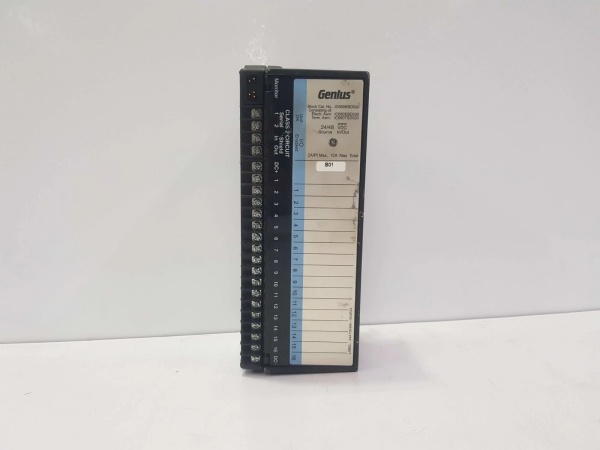
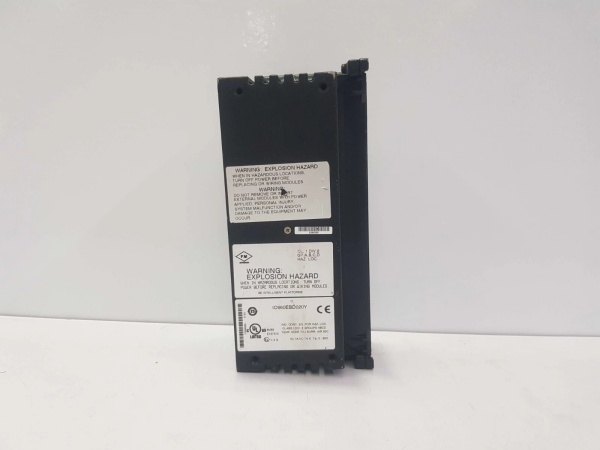
Description
Hard-Numbers: Technical Specifications
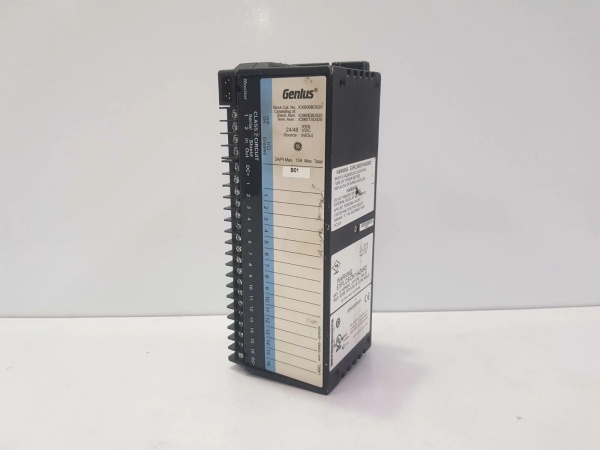
- Circuit Count: 16 terminals (screw-type connection)
- Wire Gauge Range: #12-24 AWG (2.5-0.5 mm²)
- Torque Specification: 7-9 in-lbs (0.8-1.0 N·m) for terminal screws
- Terminal Material: Copper alloy with nickel plating
- Operating Temperature: -40°C to +60°C (-40°F to +140°F) when mounted
- Current Rating: Up to 2A per terminal (module-dependent)
- Voltage Rating: 1500V isolation (refer to base module specs)
- Mounting: Plugs directly into compatible Genius I/O modules via spring-loaded latch
- Dimensions: Approximately 5.5″ x 3.5″ x 2.0″ (varies by module configuration)
- Weight: 0.6 lbs (0.27 kg)
- Connector Type: Plug-in terminal block with locking mechanism
- Shield Connection: Dedicated ground terminals for cable shields
- Applicable Modules: Compatible with current source analog and analog hybrid Genius I/O modules

The Real-World Problem It Solves
When an analog module fails or requires replacement in a harsh industrial environment, technicians spend hours disconnecting and reconnecting individual field wires directly from the module—a process that risks damaging delicate module terminals and creates extended downtime during critical operations. The IC660TBA025 terminal assembly allows hot-swappable module changes by keeping field wiring intact, reducing replacement time from 4 hours to 20 minutes while eliminating terminal damage risks.
Where you’ll typically find it:
- Chemical plant process control loops (4-20mA transmitter connections)
- Power plant feedwater control systems
- Pulp and paper pH monitoring circuits
This assembly protects expensive base modules from wiring damage and enables rapid module replacement without disturbing field terminations.
Hardware Architecture & Under-the-Hood Logic
The IC660TBA025 is a passive terminal block assembly that serves as the field wiring interface for Genius I/O current source modules. It contains no active electronic components—only conductive copper pathways, terminal screws, shielding connections, and a mechanical latching system.
- Field device wires connect to screw-type terminals using #12-24 AWG conductors
- Terminal screws compress wire against copper alloy bus bars
- Bus bars route signals to spring-loaded connector pins on assembly back
- Connector pins mate with base module receptacle when assembly is latched
- Latch mechanism secures assembly and prevents accidental disconnection
- Shield terminals provide bonding point for cable drain wires
- Assembly can be removed from module without disturbing field wiring
- Module electronics remain protected from field wiring stress and torque
GE IC660BBD020
Field Service Pitfalls: What Rookies Get Wrong
Over-Torquing Terminal Screws
I’ve seen apprentice technicians crank down on terminal screws until the copper bus bars fracture. This causes intermittent connections that are nightmares to diagnose during commissioning. The screws feel “secure” at 10 in-lbs, but they’ve already cracked the internal bus.
- Field Rule: Always use a torque screwdriver set to 7-9 in-lbs. If you don’t have one, tighten until snug and back off 1/8 turn—never more.
Mixing Current Source and Sink Modules
Technicians frequently attempt to reuse IC660TBA025 terminal blocks on current sink or voltage modules. The internal wiring configuration differs between current source and other block types. This causes miswired loops, blown transmitters, and angry instrumentation techs when the 4-20mA loops fry.
- Quick Fix: Verify terminal block compatibility before installation. IC660TBA025 is CURRENT SOURCE ONLY. Use IC660TBA024 for current sink, IC660TBA026 for voltage applications.
Ignoring Shield Grounding Connections
New engineers often leave shield drain wires floating or connect them to the wrong terminals. I’ve seen a Midwest refinery where EMI-induced noise caused 12-20mA signals to oscillate by ±3mA because the terminal shield wasn’t properly bonded. DCS operators couldn’t maintain stable process control.
- Field Rule: Always connect cable shield drain wires to the dedicated shield terminals on the block assembly, not to arbitrary signal grounds. This is your EMI defense barrier.
Failing to Label Before Removal
Senior technicians know the pain: remove a terminal block during a rush, replace the module, and discover the block has been swapped with one from a different I/O rack. Without labeling, you’re now tracing 16 circuits through conduit—hours of wasted time. I’ve seen this cause 8-hour delays during emergency shutdown repairs.
- Quick Fix: Label the block with rack/slot position and module ID before removal. Use removable wire tags on each terminal during planned outages.
Improper Wire Stripping Length
Technicians strip too much wire insulation, leaving exposed copper beyond the terminal screw area. This causes stray conductors to short against adjacent terminals or the block housing. At a paper mill, I saw this take down an entire analog input bank when a stray strand bridged two inputs during vibration.
- Field Rule: Strip wire to expose exactly 7-9mm (0.28-0.35 inches) of copper. No more. Ensure no strands extend beyond the terminal clamp area.
Please note: The listed price is for reference only and is not binding. Final pricing and terms are subject to negotiation based on current market conditions and availability.