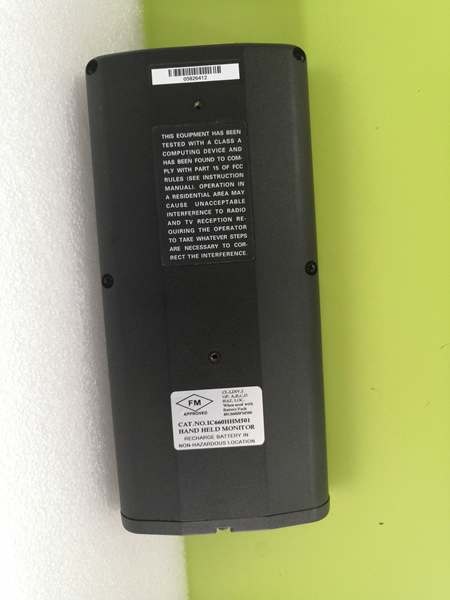
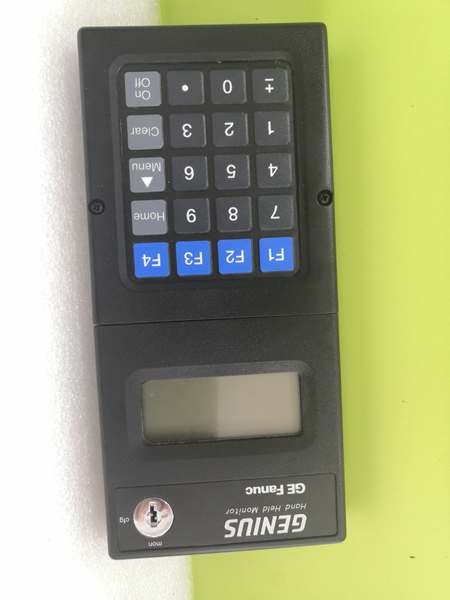
Description
Hard-Numbers: Technical Specifications
- Protocol Support: Genius Bus Network
- Baud/Data Rate: Compatible with Genius I/O communication rates
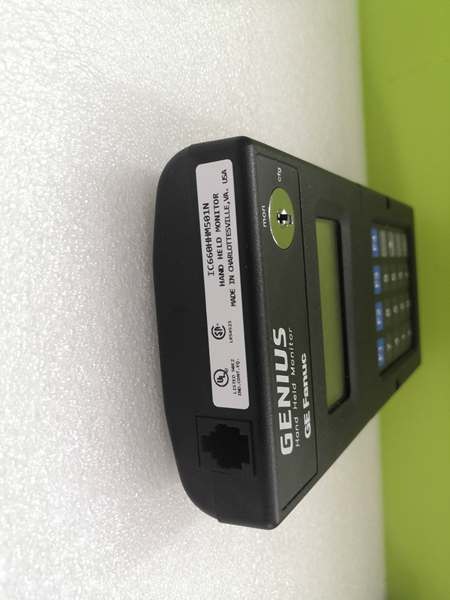
- Display: 4-line x 16-character LCD (monochrome)
- Operating Temperature: 0°C to +60°C (32°F to +140°F)
- Storage Temperature: -40°C to +70°C (-40°F to +158°F)
- Humidity: 5-95% non-condensing
- Power Supply: 115/230 VAC 50-60 Hz or internal battery
- Battery Life: Up to 6 hours continuous operation
- Input Voltage Fluctuation: -15% to +10%
- Dimensions: Approximately 8.00″ x 3.75″ x 1.25″ (203mm x 95mm x 32mm)
- Weight: 1.31 lbs (0.60 kg)
- Keypad: 20 softkeys (numeric, function, decimal)
- Languages Supported: English, French, German, Italian, Spanish

GE IC660HHM501
The Real-World Problem It Solves
Field technicians struggle with Series 90-70 PLC system setup and diagnostics when the host computer is unavailable or networked workstations are inaccessible. The IC660HHM502 provides direct access to Genius I/O blocks and bus controllers for configuration, monitoring, and troubleshooting without requiring a host PC connection.
Where you’ll typically find it:
- Series 90-70 PLC control system commissioning
- Legacy industrial automation system maintenance
- Genius I/O network diagnostics and repair
This tool eliminates dependency on host computers during system startup and allows technicians to perform critical diagnostics directly at the control cabinet.
Hardware Architecture & Under-the-Hood Logic
The IC660HHM502 is a handheld terminal specifically designed for GE Series 90-70 PLC systems. It includes a rechargeable battery, LCD display, and mode selection keyswitch that restricts access to specific functions for security purposes.
- Connect monitor cable to Series 90-70 PLC or Genius I/O block monitoring port
- Battery or AC power activates controller and LCD display
- Genius Bus protocol interpreter establishes communication with target devices
- 20-key softkey keypad allows configuration input and navigation
- Mode selection keyswitch at top of device restricts access to critical functions
- LCD displays I/O data, diagnostics, bus scan time, and configuration parameters
- Multilingual firmware supports English, German, French, Italian, and Spanish
GE IC660HHM501
Field Service Pitfalls: What Rookies Get Wrong
Confusing IC660HHM502 with IC660HHM501 Compatibility
Technicians often assume the IC660HHM502 works with Series 90-30 PLC systems like the IC660HHM501. This is incorrect – the IC660HHM502 is specifically designed for Series 90-70 systems only and will not communicate with 90-30 hardware.
- Field Rule: Verify the PLC series before attempting connection. Use IC660HHM501 for Series 90-30, IC660HHM502 for Series 90-70.
Ignoring Mode Selection Key Position
New engineers forget to check the mode selection keyswitch position before attempting configuration changes. With the switch in “monitor” mode, critical configuration functions are disabled, leading to wasted hours troubleshooting why changes won’t save.
- Quick Fix: Always verify the mode selection keyswitch is in the correct position before attempting any configuration changes. Use the provided key to switch between modes.
Operating Beyond Temperature Range
I’ve seen technicians use the HHM in temperatures below 0°C or above 60°C during outdoor commissioning work. This causes LCD display failure and intermittent communication errors that are difficult to diagnose.
- Field Rule: Keep the HHM within the 0°C to +60°C operating range. Use the provided protective case in extreme environments and avoid direct sunlight exposure.
Disregarding EMC Noise Sources
Technicians often place the HHM near high-voltage equipment, variable frequency drives, or other sources of electromagnetic interference. This degrades display performance and can cause communication failures.
- Field Rule: Maintain distance from EMC noise sources during operation. The manual specifically warns that EMC noise reduces performance over time.
Please note: The listed price is for reference only and is not binding. Final pricing and terms are subject to negotiation based on current market conditions and availability.