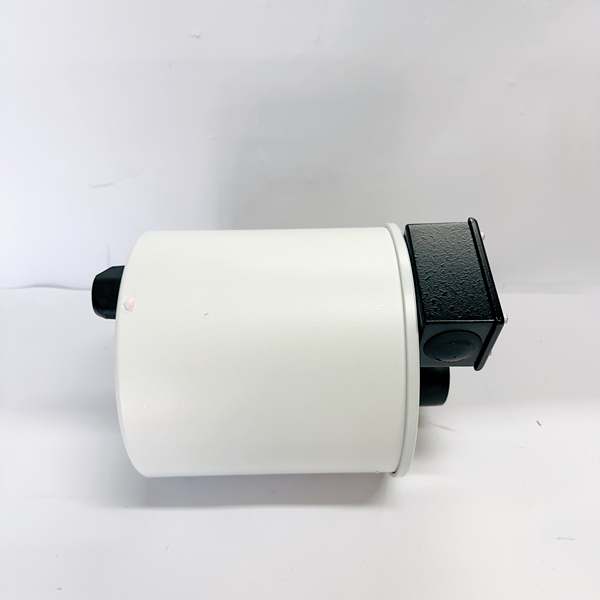
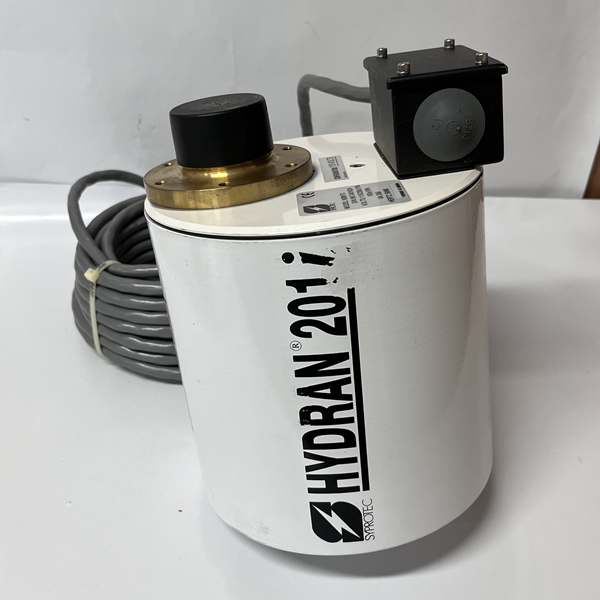
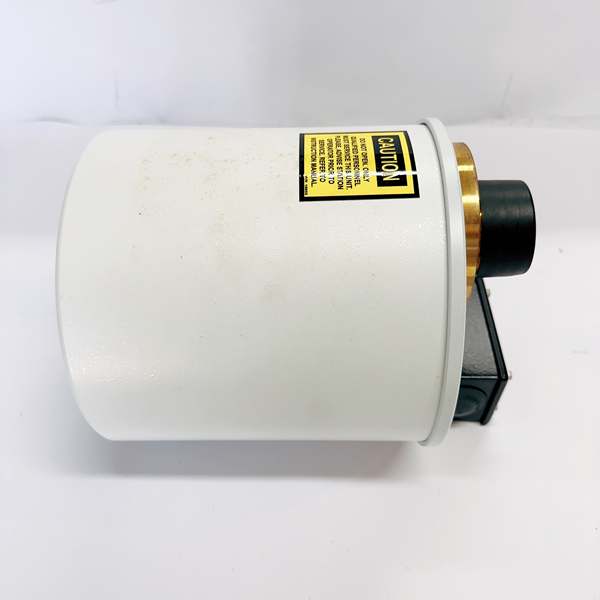
Description
Hard-Numbers: Technical Specifications
- Input Channels: 8 single-ended thermocouple inputs
- Supported Thermocouple Types: J, K, T, E, R, S, B (software-configurable per channel)
- ADC Resolution: 16-bit (including sign bit)
- Accuracy: ±0.25% of full scale (typical, including CJC error)
- Cold Junction Compensation: Integrated CJC sensor located on TB201TI terminal block (±0.5°C compensation accuracy)
- Input Impedance: >1 MΩ
- Isolation Rating: 500 Vrms (channel-to-channel and channel-to-backplane)
- Update Rate: ~125 ms per channel (full scan cycle <1 second for all channels)
- Operating Temperature: 0°C to +60°C (+32°F to +140°F)
- Storage Temperature: -40°C to +85°C (-40°F to +185°F)
- Measurement Range: Dependent on thermocouple type (T-type: -200°C to +400°C; B-type: +200°C to +1800°C)
- Terminal Block: TB201TI (required for CJC function—standard terminal blocks will not work)
- Status Indicators: Per-channel green LED (OK), module-level red LED (fault)
- Communication: Via VersaMax backplane to CPU (IC693CPU374, IC697CPU782, etc.)
- Power Supply: Powered by VersaMax backplane (no external power required)

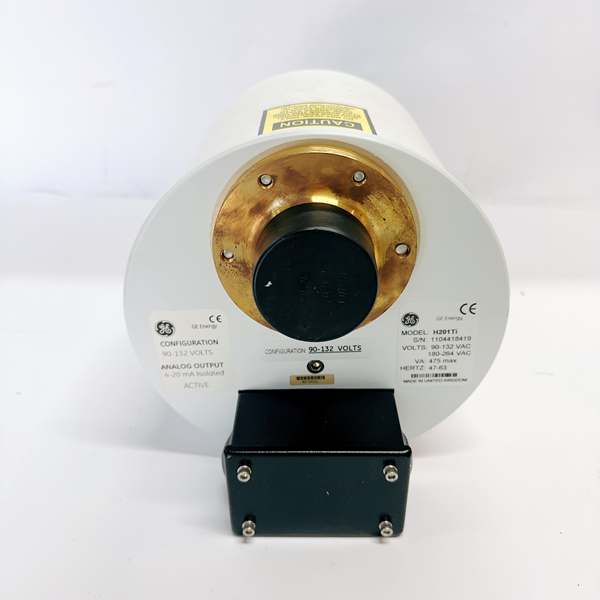
H201Ti
The Real-World Problem It Solves
This module eliminates the nightmare of swapping hardware modules or jumpering terminal blocks when process requirements change—you can reconfigure thermocouple types on the fly through software without touching the wiring. Its integrated CJC sensor, located directly on the terminal block at the measurement point, kills thermal gradient errors that plague modules with remote cold junction compensation, while the 500V channel isolation cuts ground loops that trash readings in electrically noisy environments like steel mills and power plants.
Where you’ll typically find it:
- Power plant boiler superheater tube wall monitoring for MFT (Main Fuel Trip) interlock protection
- Chemical reactor jacket temperature control where ±1°C accuracy prevents batch failures
- Glass melting furnaces and cement kilns requiring continuous monitoring at 1500°C+ to optimize fuel ratios
Bottom line: It’s your temperature acquisition workhorse that measures, isolates, and protects without forcing you to re-engineer the I/O cabinet when process temperatures change.
Hardware Architecture & Under-the-Hood Logic
The H201TI is a single-slot VersaMax I/O module that communicates over the backplane to the PLC CPU. The module contains an 8-channel multiplexed ADC subsystem with independent signal conditioning per channel. The critical Cold Junction Compensation (CJC) sensor is embedded in the TB201TI terminal block, not on the main PCB, ensuring the reference temperature is measured as close as physically possible to the thermocouple connection point.
Signal processing breakdown:
- Thermocouple millivolt signals enter through TB201TI terminal block where the integrated CJC thermistor measures local ambient temperature
- Input signals pass through anti-aliasing filters and protection circuitry (surge suppression for ESD/RFI immunity)
- Analog multiplexer routes each channel sequentially to the 16-bit ADC
- ADC digitizes the thermocouple voltage and CJC reading with high-precision reference
- Microprocessor applies the NIST thermocouple lookup table (polynomial approximation) for the configured type
- Cold junction compensation calculation subtracts the reference voltage offset using the TB201TI sensor reading
- Temperature value (°C or °F) is scaled to engineering units and stored in module input data memory
- Backplane communication handler updates the PLC CPU image table with all channel values on each scan
- Status monitoring circuitry drives per-channel LEDs and the module fault LED based on open-circuit detection, undervoltage, or internal diagnostics
H201Ti
Field Service Pitfalls: What Rookies Get Wrong
Using the wrong terminal block without CJCRookie engineers grab a generic 12-pin terminal block from the spare bin because it “looks the same.” The CJC sensor lives in the TB201TI block—without it, readings drift by 10-20°C as cabinet temperature changes.
- Field Rule: Always use the TB201TI terminal block. Never substitute with generic terminals. The CJC sensor is factory-calibrated to the module—if you lose the block, order the replacement as a matched pair with the module.
Running copper wire for thermocouple extensionsTechs run standard instrumentation wire from the thermocouple to the I/O cabinet to save money. Copper wire creates its own thermocouple junction at every terminal, introducing measurement errors that shift with ambient temperature.
- Field Rule: Use thermocouple extension wire matched to your TC type (JX for J-type, KX for K-type, etc.). Keep extension wires short and avoid running them parallel to high-current power cables—inductive coupling creates noise spikes that look like temperature fluctuations.
Ignoring open-circuit detection behaviorThe H201TI detects thermocouple open circuits and typically drives the reading to upscale or downscale depending on configuration. Rookies see a reading at +1800°C and think the process is on fire when actually the thermocouple lead just broke.
- Field Rule: Configure the open-circuit detection behavior for your application (upscale or downscale). Always verify the thermocouple continuity with a meter before blaming the module when readings go to full scale.
Forgetting isolation limits when referencing groundSome systems ground the thermocouple sheath at the vessel. If you accidentally ground another thermocouple on the same module at a different potential, the 500V isolation gets bypassed and you get ground loops through the measurement circuit.
- Field Rule: Ground thermocouple sheaths at one point only—usually at the measurement point. Use isolated thermocouples when measuring grounded elements. Never use the module to bond different ground potentials.
Missing the TB201TI orientation when mountingThe TB201TI terminal block can be mounted upside down if you’re not paying attention. The CJC sensor is positioned relative to the terminal markings—flip the block and the sensor reads the wrong thermal zone, causing consistent offset errors.
- Field Rule: Mount the TB201TI block with the label facing outward and the screw terminals accessible from below. The CJC sensor is thermally coupled to the terminal mass—orient the block correctly so it measures actual terminal temperature, not the cabinet wall.
Please note: The listed price is for reference only and is not binding. Final pricing and terms are subject to negotiation based on current market conditions and availability.