Description
Key Technical Specifications
-
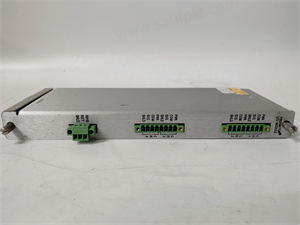
Model Number: DS3800NMEC1K1K
-
Manufacturer: General Electric
-
Function: Firing-angle control & field-current feedback for static exciter
-
Analog Inputs: 4 differential, ±10 V, 12-bit resolution (EEPROM-scaled)
-
Analog Outputs: 2 isolated, ±10 V, 5 mA drive, short-circuit protected
-
Variable Resistor: Front-panel 10-turn 100 kΩ pot for manual field limit trim
-
Op-Amps: Quad 741 packages, low-offset, drive external SCR pulse transformers
-
Digital Section: 4-bit D-latches store last fire-angle word from CPU
-
Connectors: 6 male headers (JE/JA/JH/DA/DB/JP), keyed for exciter bridge & PT/CT inputs
-
Power: +5 V @ 1 A, ±12 V @ 200 mA from rack; field power (external 125 VDC) stays off-card
-
Isolation: 1500 Vrms field-to-logic via opto-couplers on fire-pulse lines
-
Operating Temperature: –20 °C to +60 °C ambient inside turbine control cabinet
-
Dimensions: 7.5 × 5.5 × 1.5 in; weight 1.2 lb

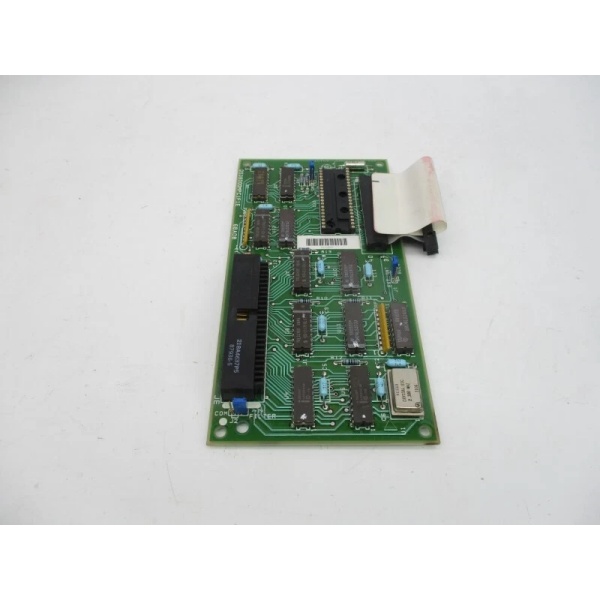
GE DS3800DMPC1F1E
Field Application & Problem Solved
A 1987 frame-5 peaker still runs a brushless exciter—no permanent magnets, just a rotating diode wheel fed from a stationary SCR bridge. The DS3800NMEC1K1K is the card that keeps the generator field at exactly the right amps so the AVR can hold 13.8 kV ±0.5 %. It sits in the third slot of the Mark IV rack, reads PT/CT signals off the generator terminals, and spits out 0-10 V fire-angle commands to the SCR gate drivers. When the board drifts—usually the front-panel trim pot gets dirty—you see hunting on the megawatt meter and the VAR needle swings like a pendulum. Swap the card, dial the pot back to the witness mark you Sharpied ten years ago, and the oscillation stops; no software reload, no re-cal. You’ll find this board in any plant that still uses a static exciter with a GE SCR bridge: paper-mill back-pressure sets, refineries, and every frame-5/6 peaker from Texas to New Brunswick. Its core value is repeatability: the firing-angle curve is baked into EEPROM, so you get the same volts-per-hertz slope the generator was commissioned with—critical for keeping old-school electromechanical relays happy.
A 1987 frame-5 peaker still runs a brushless exciter—no permanent magnets, just a rotating diode wheel fed from a stationary SCR bridge. The DS3800NMEC1K1K is the card that keeps the generator field at exactly the right amps so the AVR can hold 13.8 kV ±0.5 %. It sits in the third slot of the Mark IV rack, reads PT/CT signals off the generator terminals, and spits out 0-10 V fire-angle commands to the SCR gate drivers. When the board drifts—usually the front-panel trim pot gets dirty—you see hunting on the megawatt meter and the VAR needle swings like a pendulum. Swap the card, dial the pot back to the witness mark you Sharpied ten years ago, and the oscillation stops; no software reload, no re-cal. You’ll find this board in any plant that still uses a static exciter with a GE SCR bridge: paper-mill back-pressure sets, refineries, and every frame-5/6 peaker from Texas to New Brunswick. Its core value is repeatability: the firing-angle curve is baked into EEPROM, so you get the same volts-per-hertz slope the generator was commissioned with—critical for keeping old-school electromechanical relays happy.
Installation & Maintenance Pitfalls (Expert Tips)
Potentiometer dust—hunting megawatts
The 10-turn trim pot faces up; coal dust works its way in and the wiper jumps 50 mV. Generator starts hunting ±2 MW. Hit the pot with DeoxIT, exercise it ten turns, reset to the witness mark—problem gone for another five years.
The 10-turn trim pot faces up; coal dust works its way in and the wiper jumps 50 mV. Generator starts hunting ±2 MW. Hit the pot with DeoxIT, exercise it ten turns, reset to the witness mark—problem gone for another five years.
Wrong keying—120 VAC on 10 V input cooks the 741
The JE and JA connectors are keyed alike but pin-out is mirror-image. Plug the CT cable into JA and you just stuffed 120 VAC into a 741 input—smoke show. Match the white wire-stripe to the silk-screen triangle before you push the plug home.
The JE and JA connectors are keyed alike but pin-out is mirror-image. Plug the CT cable into JA and you just stuffed 120 VAC into a 741 input—smoke show. Match the white wire-stripe to the silk-screen triangle before you push the plug home.
EPROM creep—firing angle drifts high
The EEPROM holds slope/offset. After 15 years the charge pump inside the SCR driver drifts; field current sags 3 %. If you find yourself cranking the front pot clockwise every month, don’t—burn a new EEPROM with the factory constants or the curve will keep walking.
The EEPROM holds slope/offset. After 15 years the charge pump inside the SCR driver drifts; field current sags 3 %. If you find yourself cranking the front pot clockwise every month, don’t—burn a new EEPROM with the factory constants or the curve will keep walking.
Missing nylon spacer—board warps, cracks traces
The four nylon stand-offs keep the card 6 mm off the next board. If one’s missing the card bows when you torque the screws; micro-cracks show up as intermittent fire-pulse dropouts. Steal a spacer from the old card before you toss it—GE hasn’t shipped those in ten years.
The four nylon stand-offs keep the card 6 mm off the next board. If one’s missing the card bows when you torque the screws; micro-cracks show up as intermittent fire-pulse dropouts. Steal a spacer from the old card before you toss it—GE hasn’t shipped those in ten years.
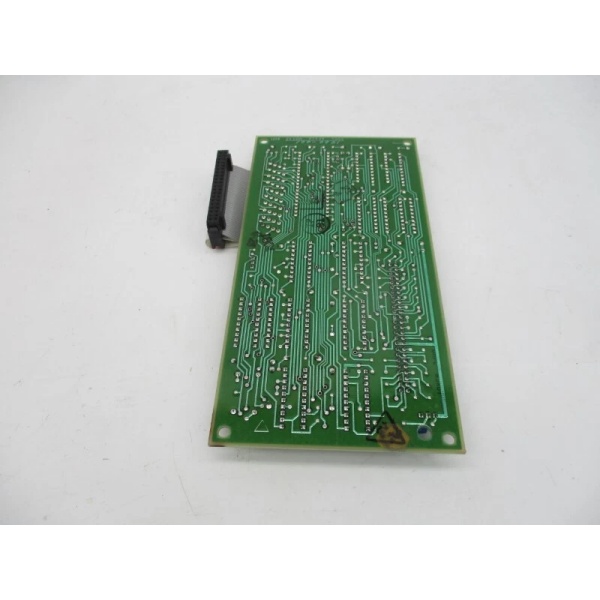
GE DS3800DMPC1F1E
Technical Deep Dive & Overview
DS3800NMEC1K1K is an analog front-end and pulse-shaper for a three-phase SCR bridge. Quad 741 op-amps scale PT/CT signals down to ±10 V; an on-board 4-bit latch stores the last fire-angle word from the Mark IV CPU. Two LM331 V-to-F chips convert the analog angle to 1 kHz-8 kHz pulses that ride out the opto-couplers to the SCR gate board. The front-panel pot clamps the angle between 5 % and 95 % so you can’t over-excite or under-excite the machine. Field power (typically 125 VDC) never comes near this card—only low-level pulses leave the board, keeping 1500 V isolation intact. Think of it as a smart firing card frozen in 1987 silicon; treat the trim pot like a calibrated resistor and the generator will float exactly where it did the day it was commissioned.
DS3800NMEC1K1K is an analog front-end and pulse-shaper for a three-phase SCR bridge. Quad 741 op-amps scale PT/CT signals down to ±10 V; an on-board 4-bit latch stores the last fire-angle word from the Mark IV CPU. Two LM331 V-to-F chips convert the analog angle to 1 kHz-8 kHz pulses that ride out the opto-couplers to the SCR gate board. The front-panel pot clamps the angle between 5 % and 95 % so you can’t over-excite or under-excite the machine. Field power (typically 125 VDC) never comes near this card—only low-level pulses leave the board, keeping 1500 V isolation intact. Think of it as a smart firing card frozen in 1987 silicon; treat the trim pot like a calibrated resistor and the generator will float exactly where it did the day it was commissioned.