Description
DS3800NHVE1B1A: Product Overview
The board serves as a high voltage power management and isolation module within the Speedtronic Mark IV turbine control architecture. Positioned within the control rack assembly, this unit handles the high power voltage requirements necessary for driving substantial auxiliary loads and excitation systems while providing the electrical isolation required to protect sensitive microprocessor-based control logic. In the Mark IV’s triple modular redundant (TMR) system, this board operates within each independent control channel, ensuring that high voltage power functions remain synchronized and fault-tolerant across redundant processing paths.
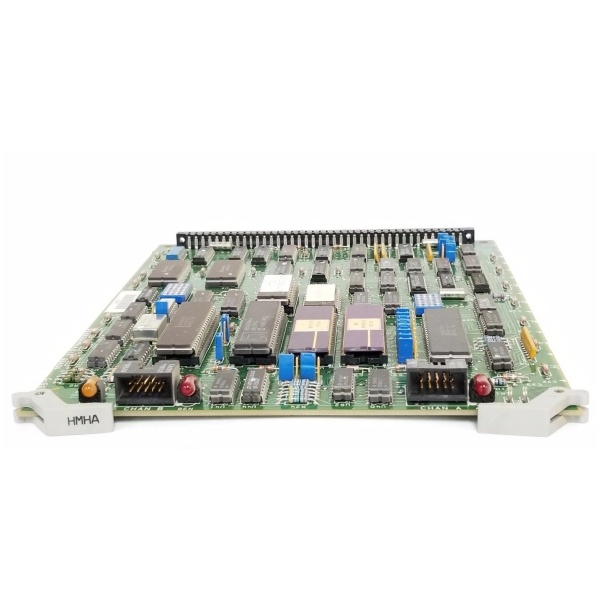
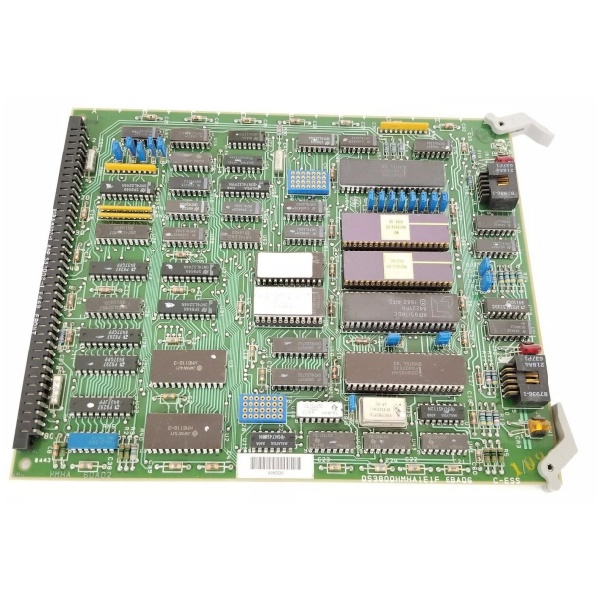
As a high voltage high horsepower interface, the unit incorporates six substantial transformers arranged in two rows to provide the magnetic isolation and voltage step-down necessary for control circuit protection. These transformers handle the power levels associated with field excitation, large motor drives, and high-current auxiliary systems that exceed the capabilities of standard low-power interface cards. The board receives high voltage inputs from station power sources or excitation systems and conditions these to levels suitable for Mark IV logic circuits, while maintaining robust isolation barriers that prevent transient propagation into sensitive electronics.
The board features extensive connectivity options through vertical pin headers arranged on three edges, providing multiple pathways for power distribution and signal monitoring. Five jumper switches allow field configuration of operational modes, enabling technicians to adapt the high voltage characteristics to specific turbine applications without hardware modifications. Six LEDs provide immediate visual indication of power rail status, transformer operation, and fault conditions.
This board belongs to the DS3800 series of the Mark IV platform, deployed across heavy-duty gas turbines (Frame 3, 5, 6, 7, 9) and LM aeroderivative units. The platform’s distributed architecture requires that high voltage power management execute autonomously while maintaining deterministic coordination with protective systems, ensuring that power semiconductor firing and field control remain precisely synchronized with turbine operational states.

GE DS3800HMHA1E1F
DS3800NHVE1B1A: Technical Specifications
-
Model Number: DS3800NHVE1B1A
-
Manufacturer: General Electric
-
Product Type: High Voltage High Horsepower Board
-
Series: GE Speedtronic Mark IV
-
Architecture: Triple Modular Redundant (TMR) compatible
-
Transformer Configuration: Six Bicron transformers (Part No. 218A4886 P1) in dual-row arrangement
-
Voltage Handling: High voltage input capability for high horsepower applications
-
Configuration: Five jumper switches (settable to H or B positions)
-
Indicators: Six red LEDs for status and diagnostic indication
-
Connectivity: Vertical pin headers on three edges:
-
Top edge: Three 8-position 3-pin headers (P1/P2/P3)
-
Right edge: Five 4-position 2-pin headers (01/02/03/P/N)
-
Bottom edge: Three 8-position 3-pin headers (N1/N2/N3)
-
-
Resistors: Twelve carbon composite resistors with color banding
-
Capacitors: Six polyester film capacitors (100V, 2.0 ±10%)
-
Mounting: Factory-drilled corner holes with alignment markings
-
Operating Temperature: -40°C to +70°C (industrial grade)
-
Humidity: 5% to 95% non-condensing
-
Physical Dimensions: Vertically heavy form factor due to transformer mass
-
Weight: Approximately 2.0 lbs (0.9 kg) including transformers
Part 4: Core Features & Customer Value
High-Density Transformer Isolation: The six integrated transformers provide galvanic isolation between high voltage power circuits and sensitive control electronics, a critical safety feature in turbine applications where field excitation voltages can reach several hundred volts. This isolation prevents ground fault currents and transient overvoltages from damaging expensive microprocessor boards while ensuring that control signals remain electrically separate from power switching circuits. For maintenance personnel, this isolation allows safe troubleshooting of high voltage circuits without exposing low-voltage logic to dangerous potentials.
Field-Configurable High Power Characteristics: The five jumper switches enable technicians to configure voltage ranges, grounding schemes, and operational modes to match specific high horsepower applications. Whether interfacing with 125VDC station batteries, 250VDC field excitation, or high-voltage AC auxiliary drives, these hardware configurations adapt the board without requiring firmware changes or board swaps. This flexibility reduces spare parts inventory requirements, as the same board can support diverse turbine voltage standards through simple jumper positioning.
Comprehensive Connectivity for Power Distribution: The eleven vertical pin headers provide robust connection points for high-current power distribution, allowing the board to interface with external contactors, relay coils, and power semiconductors. Unlike low-signal boards that use ribbon cables, these pin headers accommodate the heavier gauge wiring necessary for high horsepower applications, ensuring reliable power delivery without voltage drops or overheating at connection points.
Visual Diagnostic Capability: The six LEDs provide immediate indication of power supply integrity, transformer operation, and fault conditions without requiring multimeter testing or diagnostic software. During commissioning, technicians can verify that high voltage rails are present and properly isolated; during operation, these indicators provide early warning of transformer saturation, overload conditions, or ground faults that could compromise turbine availability.
Robust Construction for High-Vibration Environments: The board features factory-drilled mounting holes and alignment markings that ensure secure installation despite the substantial weight of the transformer assembly. In turbine enclosures subject to mechanical vibration from rotating equipment, this mechanical stability prevents connector loosening and solder joint fatigue that could cause intermittent high voltage faults. The vertical orientation of heavy components minimizes stress on the PCB, ensuring long-term reliability in continuous-duty applications.
GE DS3800HMHA1E1F
Part 5: Typical Applications
Generator Field Excitation Systems:
The board is deployed in turbine-generator installations to manage the high voltage DC supplies necessary for generator field excitation. In these applications, the transformers isolate the excitation power (often 125-250VDC) from the Mark IV control logic, while the jumper configurations adapt the voltage sensing and feedback circuits to match specific generator field ratings. The board handles the substantial power levels required to establish generator voltage during startup and maintain regulation during grid operation, providing the isolation necessary to protect control electronics from field flashover events.
The board is deployed in turbine-generator installations to manage the high voltage DC supplies necessary for generator field excitation. In these applications, the transformers isolate the excitation power (often 125-250VDC) from the Mark IV control logic, while the jumper configurations adapt the voltage sensing and feedback circuits to match specific generator field ratings. The board handles the substantial power levels required to establish generator voltage during startup and maintain regulation during grid operation, providing the isolation necessary to protect control electronics from field flashover events.
High Horsepower Auxiliary Motor Control:
In applications requiring control of large auxiliary motors—such as boiler feed pumps, cooling water pumps, or combustion air fans—the board interfaces with high-voltage motor contactors and variable voltage drives. It manages the control power for contactor coils operating at 125VDC or 250VDC, providing the necessary isolation between the high-power switching circuits and the low-voltage control logic. The pin headers accommodate the heavier wiring required for these high-current applications, ensuring reliable operation of critical auxiliaries that support turbine operation.
In applications requiring control of large auxiliary motors—such as boiler feed pumps, cooling water pumps, or combustion air fans—the board interfaces with high-voltage motor contactors and variable voltage drives. It manages the control power for contactor coils operating at 125VDC or 250VDC, providing the necessary isolation between the high-power switching circuits and the low-voltage control logic. The pin headers accommodate the heavier wiring required for these high-current applications, ensuring reliable operation of critical auxiliaries that support turbine operation.
Static Excitation and Thyristor Firing:
The board provides the high voltage interface and isolation required for static excitation systems utilizing thyristor bridges. It manages the gate drive power and voltage feedback signals for high-power SCRs that control field current, ensuring that firing pulses are properly isolated from the high voltage anode-cathode circuits. The transformer arrangement provides the pulse transformation necessary to trigger high-current thyristors while maintaining the electrical separation essential for safe operation of high-voltage power electronics.
The board provides the high voltage interface and isolation required for static excitation systems utilizing thyristor bridges. It manages the gate drive power and voltage feedback signals for high-power SCRs that control field current, ensuring that firing pulses are properly isolated from the high voltage anode-cathode circuits. The transformer arrangement provides the pulse transformation necessary to trigger high-current thyristors while maintaining the electrical separation essential for safe operation of high-voltage power electronics.
Emergency and Backup Power Systems:
In turbine applications utilizing DC emergency lubrication pumps or hydraulic power units, the board manages the high voltage battery connections (125VDC or 250VDC station batteries) required to drive these critical safety systems. It provides the isolation and voltage transformation necessary to monitor battery voltage and control emergency motors without exposing the main control system to the high current transients associated with large DC motor starting.
In turbine applications utilizing DC emergency lubrication pumps or hydraulic power units, the board manages the high voltage battery connections (125VDC or 250VDC station batteries) required to drive these critical safety systems. It provides the isolation and voltage transformation necessary to monitor battery voltage and control emergency motors without exposing the main control system to the high current transients associated with large DC motor starting.