Description
DS3800NFCF1J1E: Product Overview
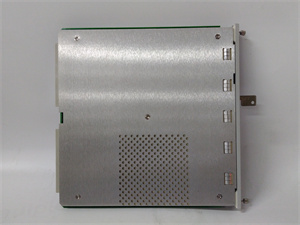
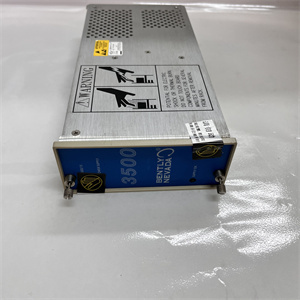
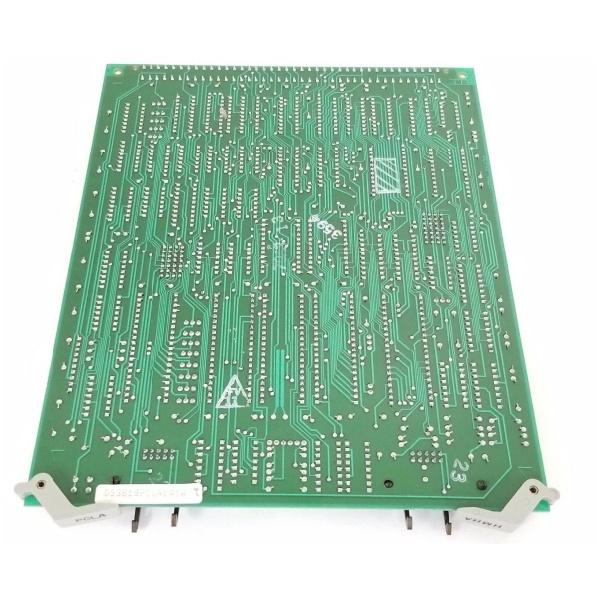
The board serves as a precision firing circuit controller within GE’s Speedtronic Mark IV turbine control architecture. Positioned within the control rack assembly, this unit generates the precisely timed gate pulses necessary to trigger power semiconductor devices in high voltage applications. In the Mark IV’s triple modular redundant (TMR) system, this board operates within each independent control channel, ensuring synchronized thyristor firing for critical functions such as generator field excitation, static starter systems, and combustion sequencing.
As a firing circuit module, the unit manages the conversion of digital firing angle commands from microprocessor-based control algorithms into analog gate pulses that trigger SCRs at specific points in the AC waveform. This phase-controlled firing regulates power delivery to field windings, starter motors, and auxiliary equipment, enabling smooth turbine starting sequences and controlled generator voltage regulation. The board incorporates sophisticated timing circuitry with crystal oscillator precision to maintain microsecond-level accuracy required for stable power control.
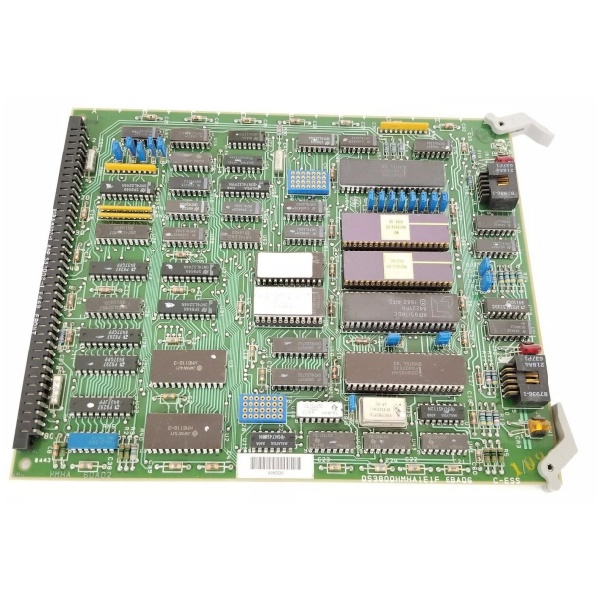
The board features extensive diagnostic capabilities with fifteen LEDs providing visual indication of power status, firing activity, and fault conditions. Twenty-nine test points allow detailed signal monitoring during commissioning and troubleshooting. An optional daughterboard interface (DS3800DFCF) expands functionality with additional jumpers and metering capabilities for specialized applications. Forty-two integrated circuits including 8-bit static MOS RAM, dual J/K flip-flops, and 4-bit up/down counters provide the logic necessary for complex firing sequences.
This board belongs to the DS3800 series of the Mark IV platform, deployed across heavy-duty gas turbines (Frame 3, 5, 6, 7, 9) and LM aeroderivative units. The platform’s distributed architecture requires deterministic firing control synchronized with turbine speed, voltage, and protection systems; this board provides the precise timing infrastructure necessary for safe and efficient turbine operation.

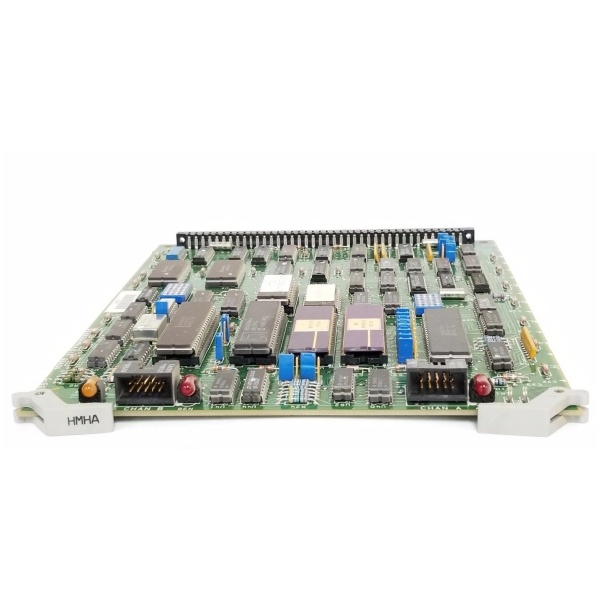
GE DS3800HMHA1E1F
DS3800NFCF1J1E: Technical Specifications
-
Model Number: DS3800NFCF1J1E
-
Manufacturer: General Electric
-
Product Type: Firing Circuit Board
-
Series: GE Speedtronic Mark IV
-
Architecture: Triple Modular Redundant (TMR) compatible
-
Firing Channels: 12 independent gate pulse outputs
-
Semiconductor Interface: SCR/Thyristor gate control with high current capability
-
Firing Mode: Phase-angle control with microsecond timing resolution
-
Timing Reference: Crystal oscillator (11.00 MHz) for precision stability
-
Memory: 8-bit static MOS RAM chip for sequence storage
-
Logic Components: Dual J/K negative-edge-triggered flip-flops, 4-bit up/down counters with dual clock
-
Indicators: 15 LEDs total (14 red status + 1 amber power/diagnostic)
-
User Interface: Two button switches (“Step” and “Reset”)
-
Configuration: Two jumper switches; five additional jumpers via optional DS3800DFCF daughterboard
-
Test Access: 29 labeled test points (TP) parallel to board edges
-
Active Components: 21 transistors; 42 integrated circuits
-
Passive Components: Metal film resistors; 8542 M/E 200V electrolytic capacitors
-
Expansion: Daughterboard connector for DS3800DFCF auxiliary board
-
Backplane Interface: High-density modular connector (AMD 218A4553-1 compatible)
-
Operating Temperature: -35°C to +45°C (critical thermal management range)
-
Storage Temperature: -40°C to +85°C
-
Dimensions: 8.24 cm high × 4.16 cm wide
-
Weight: Approximately 2 lbs (0.9 kg)
-
Humidity: 5% to 95% non-condensing
-
Mounting: Factory-drilled alignment holes (A-L markings); retention levers
Part 4: Core Features & Customer Value
Precision Phase-Angle Firing Control:
The board utilizes a crystal oscillator reference to generate gate pulses with microsecond-level timing accuracy, enabling precise phase-angle control of thyristor conduction. This precision is critical for generator field excitation systems where firing angle directly controls field current and generator terminal voltage. By controlling the exact point in the AC waveform where SCRs fire, the board enables smooth, stepless voltage regulation from zero to full excitation, eliminating mechanical wear associated with electromechanical regulators. For power plant operators, this translates to stable grid voltage regulation and improved reactive power capability.
The board utilizes a crystal oscillator reference to generate gate pulses with microsecond-level timing accuracy, enabling precise phase-angle control of thyristor conduction. This precision is critical for generator field excitation systems where firing angle directly controls field current and generator terminal voltage. By controlling the exact point in the AC waveform where SCRs fire, the board enables smooth, stepless voltage regulation from zero to full excitation, eliminating mechanical wear associated with electromechanical regulators. For power plant operators, this translates to stable grid voltage regulation and improved reactive power capability.
Comprehensive Diagnostic Visibility:
The fifteen-element LED array provides immediate indication of board power, firing activity, and fault states without requiring diagnostic software connections. Fourteen red LEDs indicate channel-specific firing status or operational conditions, while the amber LED confirms board power and initialization status. Twenty-nine test points provide probe access for oscilloscope verification of gate pulse timing and amplitude. For field technicians, this visibility reduces mean time to repair by allowing rapid identification of whether faults originate in the firing logic, gate drive circuits, or external thyristors.
The fifteen-element LED array provides immediate indication of board power, firing activity, and fault states without requiring diagnostic software connections. Fourteen red LEDs indicate channel-specific firing status or operational conditions, while the amber LED confirms board power and initialization status. Twenty-nine test points provide probe access for oscilloscope verification of gate pulse timing and amplitude. For field technicians, this visibility reduces mean time to repair by allowing rapid identification of whether faults originate in the firing logic, gate drive circuits, or external thyristors.
Optional Expanded Functionality:
The board accepts an optional auxiliary daughterboard (DS3800DFCF) that mounts via seventeen board-to-board pins, adding three ammeters and five additional jumper switches for enhanced configuration capability. This modular approach allows the same base board to serve standard applications while supporting specialized requirements—such as additional metering or custom firing sequences—through the daughterboard option. For facilities with diverse turbine configurations, this flexibility reduces spare parts inventory by using common base hardware with application-specific daughterboards.
The board accepts an optional auxiliary daughterboard (DS3800DFCF) that mounts via seventeen board-to-board pins, adding three ammeters and five additional jumper switches for enhanced configuration capability. This modular approach allows the same base board to serve standard applications while supporting specialized requirements—such as additional metering or custom firing sequences—through the daughterboard option. For facilities with diverse turbine configurations, this flexibility reduces spare parts inventory by using common base hardware with application-specific daughterboards.
Robust Digital Logic Architecture:
Forty-two integrated circuits including 8-bit static RAM, synchronous counters, and edge-triggered flip-flops provide the digital infrastructure for complex firing sequences and timing calculations. This discrete logic design offers deterministic performance unaffected by software latency, ensuring that firing pulses are generated at precise intervals required for stable power control. The architecture supports automated turbine sequences including startup, synchronization, load control, and cooldown without requiring microprocessor intervention for timing-critical functions.
Forty-two integrated circuits including 8-bit static RAM, synchronous counters, and edge-triggered flip-flops provide the digital infrastructure for complex firing sequences and timing calculations. This discrete logic design offers deterministic performance unaffected by software latency, ensuring that firing pulses are generated at precise intervals required for stable power control. The architecture supports automated turbine sequences including startup, synchronization, load control, and cooldown without requiring microprocessor intervention for timing-critical functions.
Integrated Protection and Sequencing:
The firing circuit board incorporates logic for automated turbine routines including shutdown and cooldown sequences. It monitors firing circuit integrity and provides status feedback to the main control processors, ensuring that power semiconductor faults are detected immediately. The Step and Reset buttons allow manual intervention during commissioning or emergency procedures, providing technician override capability for testing firing circuits or reinitializing sequences during maintenance activities.
The firing circuit board incorporates logic for automated turbine routines including shutdown and cooldown sequences. It monitors firing circuit integrity and provides status feedback to the main control processors, ensuring that power semiconductor faults are detected immediately. The Step and Reset buttons allow manual intervention during commissioning or emergency procedures, providing technician override capability for testing firing circuits or reinitializing sequences during maintenance activities.
GE DS3800HMHA1E1F
Part 5: Typical Applications
Generator Static Excitation Control:
The board is deployed in turbine-generator installations to control the thyristor bridges that supply DC field current to generator rotors. In these applications, the twelve channels typically control six thyristors arranged in a three-phase full-wave bridge configuration with redundant trigger circuits. The board receives firing angle commands from the automatic voltage regulator and generates precisely timed gate pulses to maintain generator terminal voltage within ±0.5% of setpoint during grid parallel operation. The phase-angle control enables smooth voltage build-up during synchronization and rapid field forcing during grid disturbances to maintain stability.
The board is deployed in turbine-generator installations to control the thyristor bridges that supply DC field current to generator rotors. In these applications, the twelve channels typically control six thyristors arranged in a three-phase full-wave bridge configuration with redundant trigger circuits. The board receives firing angle commands from the automatic voltage regulator and generates precisely timed gate pulses to maintain generator terminal voltage within ±0.5% of setpoint during grid parallel operation. The phase-angle control enables smooth voltage build-up during synchronization and rapid field forcing during grid disturbances to maintain stability.
Turbine Static Starting Systems:
For large gas turbines utilizing static frequency converters or wound-rotor motor starters, this board manages the thyristor firing that controls starting torque and acceleration rates. The phase-angle firing gradually increases motor voltage during turbine roll-up, preventing mechanical shock to the compressor and turbine train. The twelve channels may control multiple stages of resistance switching or current limiting in reduced-voltage starter configurations. The automated Step button functionality allows technicians to manually advance through starting sequences during commissioning or troubleshooting.
For large gas turbines utilizing static frequency converters or wound-rotor motor starters, this board manages the thyristor firing that controls starting torque and acceleration rates. The phase-angle firing gradually increases motor voltage during turbine roll-up, preventing mechanical shock to the compressor and turbine train. The twelve channels may control multiple stages of resistance switching or current limiting in reduced-voltage starter configurations. The automated Step button functionality allows technicians to manually advance through starting sequences during commissioning or troubleshooting.
Combustion Dynamics and Fuel Control:
In advanced gas turbine applications, the board manages firing circuits associated with fuel injection systems, combustion chamber sequencing, or dilution air control. It provides the precise timing necessary for fuel staging during startup and load transitions, ensuring that fuel valves open and close in coordinated sequences that maintain stable combustion. The optional daughterboard interface allows integration of additional metering for fuel flow monitoring or combustion dynamics sensors.
In advanced gas turbine applications, the board manages firing circuits associated with fuel injection systems, combustion chamber sequencing, or dilution air control. It provides the precise timing necessary for fuel staging during startup and load transitions, ensuring that fuel valves open and close in coordinated sequences that maintain stable combustion. The optional daughterboard interface allows integration of additional metering for fuel flow monitoring or combustion dynamics sensors.
Emergency and Safety Shutdown Systems:
Within the Mark IV’s protection architecture, the board manages the controlled de-excitation of generators during emergency shutdowns. Upon detection of overspeed, overvoltage, or protective trip conditions, the firing circuit executes rapid phase-back of thyristors to reduce field current in a controlled manner, preventing damaging voltage transients while safely removing the generator from service. The deterministic response ensures that protective actions execute within milliseconds of trip initiation.
Within the Mark IV’s protection architecture, the board manages the controlled de-excitation of generators during emergency shutdowns. Upon detection of overspeed, overvoltage, or protective trip conditions, the firing circuit executes rapid phase-back of thyristors to reduce field current in a controlled manner, preventing damaging voltage transients while safely removing the generator from service. The deterministic response ensures that protective actions execute within milliseconds of trip initiation.
Aeroderivative Turbine Power Control:
For LM6000 and LM2500 units, the board manages the compact, high-response excitation and starter systems typical of aeroderivative packages. It provides the fast firing angle updates necessary for quick-start applications where rapid synchronization to the grid is required. The board’s 12-channel architecture supports the unique power circuit configurations of aeroderivative generator packages, which often differ from heavy-duty frame turbine excitation systems.
For LM6000 and LM2500 units, the board manages the compact, high-response excitation and starter systems typical of aeroderivative packages. It provides the fast firing angle updates necessary for quick-start applications where rapid synchronization to the grid is required. The board’s 12-channel architecture supports the unique power circuit configurations of aeroderivative generator packages, which often differ from heavy-duty frame turbine excitation systems.