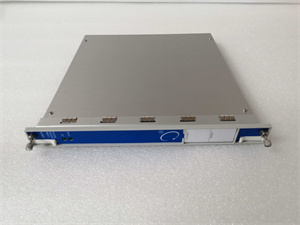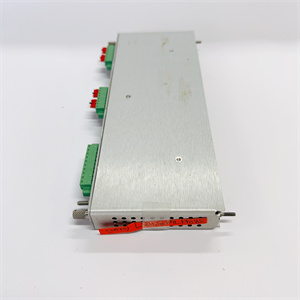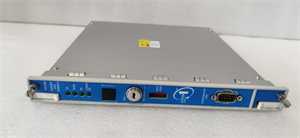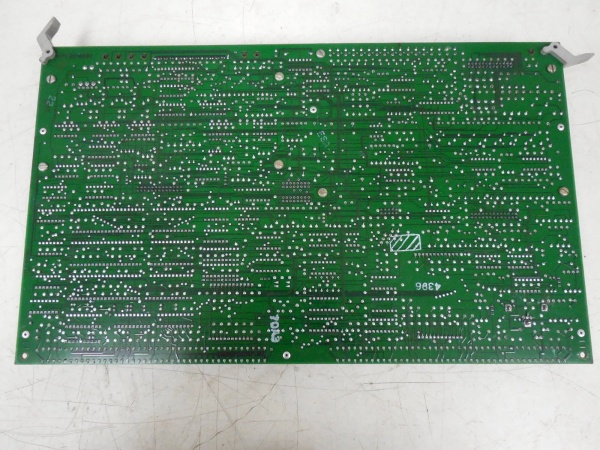
Description
Key Technical Specifications
-
Model Number: DS3800ND1D1Q1H
-
Manufacturer: General Electric
-
Function: Data-processing & signal buffering interface
-
Connectors: Dual 40-pin headers (J1/J2) to CPU rack; multiple 10/16-pin aux headers for daughter-cards
-
Logic Family: NDIA signal-bus, 5 V CMOS/TTL levels
-
Isolation: 500 V channel-to-ground on analog paths; opto-coupled digital lines
-
Power Demand: +5 V @ 1.2 A, +15 V @ 0.3 A from back-plane
-
Operating Temperature: 0 – 60 °C board rating
-
Board Size: 6U Euro-card ≈ 233 × 160 mm; weight 0.4 kg
-
Construction: Normal conformal coat; epoxy-sealed traces (non-repairable)
-
Repairability: Component-level swap allowed on sockets only; traces are sealed—board replacement preferred on failure

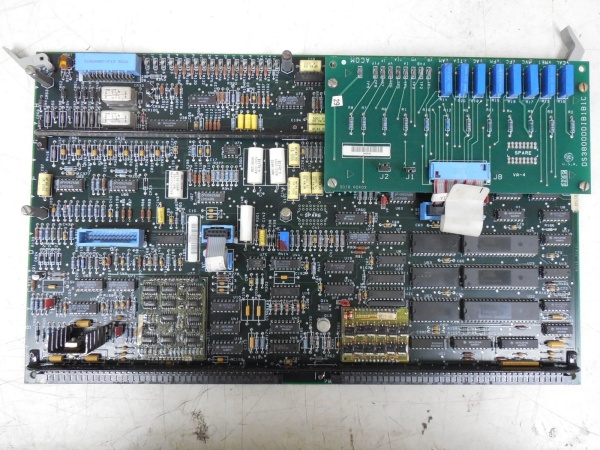
GE DS3800ND1D1Q1H
Field Application & Problem Solved
In a Mark V C-core the CPU needs a clean, low-skew path to the high-density I/O daughter-cards—this board is the freeway. It sits between the main processor and the NDIA signal layer, buffers the address/data bus, and gives each daughter-card its own regulated 5 V rail. When a lightning hit blows a trace, the epoxy seal limits damage to one lane—you swap the whole card in three minutes and the turbine is back online—no download, no re-cal. Every peaker crate keeps a spare taped inside the door because without the ND interface the CPU can’t see the I/O world.
In a Mark V C-core the CPU needs a clean, low-skew path to the high-density I/O daughter-cards—this board is the freeway. It sits between the main processor and the NDIA signal layer, buffers the address/data bus, and gives each daughter-card its own regulated 5 V rail. When a lightning hit blows a trace, the epoxy seal limits damage to one lane—you swap the whole card in three minutes and the turbine is back online—no download, no re-cal. Every peaker crate keeps a spare taped inside the door because without the ND interface the CPU can’t see the I/O world.
Installation & Maintenance Pitfalls (Expert Tips)
Dual connectors must seat evenly
J1/J2 are 40-pin and long—half-latch one and you get random “DATA FAULT” that clears when you wiggle the card. Push until both extractors click, then tug-test.
Dual connectors must seat evenly
J1/J2 are 40-pin and long—half-latch one and you get random “DATA FAULT” that clears when you wiggle the card. Push until both extractors click, then tug-test.
Epoxy seal means no trace repair
If a via lifts or a trace burns, you cannot solder it—epoxy won’t take heat. Order a new board; attempting repair voids the UL listing and you’ll fight the same fault next month.
If a via lifts or a trace burns, you cannot solder it—epoxy won’t take heat. Order a new board; attempting repair voids the UL listing and you’ll fight the same fault next month.
Power-up sequence matters
The NDIA bus must be live before the CPU boots. If you rack this card after the CPU, the processor throws “ND TIMEOUT” and hangs. Always install in slot order: power, I/O, then CPU.
The NDIA bus must be live before the CPU boots. If you rack this card after the CPU, the processor throws “ND TIMEOUT” and hangs. Always install in slot order: power, I/O, then CPU.
Daughter-card screws walk loose
High-density headers use 4-40 stand-offs. Vibration backs them out; next heat cycle the daughter card lifts and you chase phantom “I/O LOSS.” Torque 8 in-lb and hit them again after the first thermal cycle.
High-density headers use 4-40 stand-offs. Vibration backs them out; next heat cycle the daughter card lifts and you chase phantom “I/O LOSS.” Torque 8 in-lb and hit them again after the first thermal cycle.
GE DS3800ND1D1Q1H
Technical Deep Dive & Overview
Internally the board is a passive signal highway—no CPU, no firmware. Address buffers (74ACT244) and data transceivers (74ACT245) distribute the 16-bit NDIA bus to each daughter site; local 5 V DC-DC converters provide isolated power. Because everything is hardware, you can hot-swap with the rack powered: pull the old card, slam in the new, seat both 40-pin connectors, and the CPU re-scans the I/O map inside 100 ms
Internally the board is a passive signal highway—no CPU, no firmware. Address buffers (74ACT244) and data transceivers (74ACT245) distribute the 16-bit NDIA bus to each daughter site; local 5 V DC-DC converters provide isolated power. Because everything is hardware, you can hot-swap with the rack powered: pull the old card, slam in the new, seat both 40-pin connectors, and the CPU re-scans the I/O map inside 100 ms
.