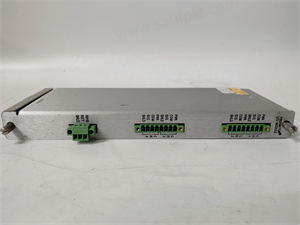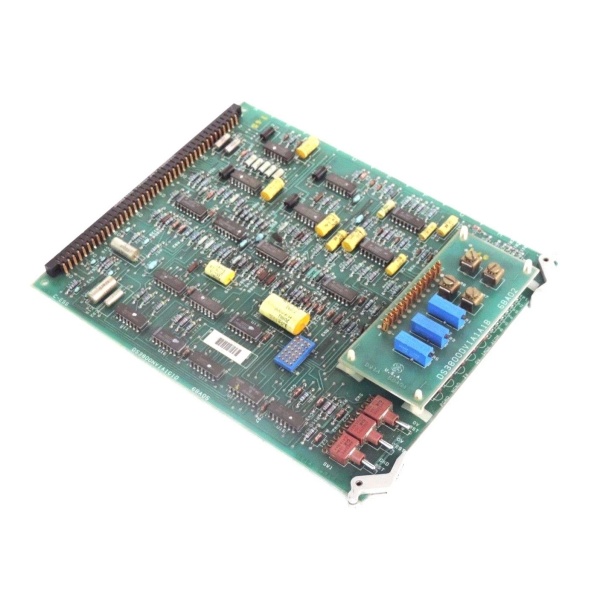
Description
Key Technical Specifications
-
Model Number: DS3800HPTL1F1D
-
Manufacturer: General Electric
-
Logic Voltage: +5 V ±5 % @ 1.8 A from rack back-plane
-
Field Voltage: 18–32 VDC external (same battery bus that feeds coils)
-
Output Channels: 8 high-side drivers, 2 A each, 10 A total, short-circuit protected
-
Input Channels: 8 dry-contact returns for relay-position feedback
-
Isolation: 2500 Vrms channel-to-logic, 1500 Vrms channel-to-channel
-
Protection: Thermal fold-back, over-volt clamp 60 V, reverse-polarity diode
-
Time-Stamp Resolution: 1 ms using on-board 8254 timer, latched to SOE bus
-
Connectors: Four 12-position pluggable terminal blocks, 96-pin DIN back-plane
-
Diagnostics: Red/green LED per channel, group fault relay to TCSA annunciator
-
Operating Temperature: 0 – 70 °C continuous, –40 – 85 °C storage
-
Dimensions: 6.3 × 9.0 in (160 × 229 mm), single-slot 6U Euro-card
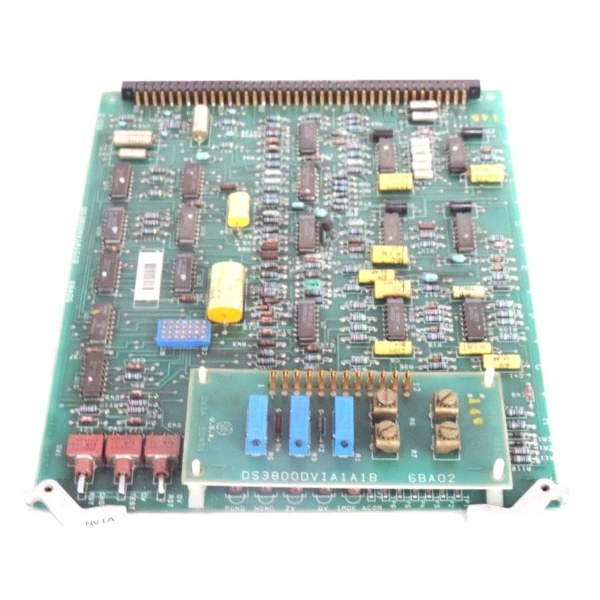
GE DS3800NMSM1G1E
Field Application & Problem Solved
When the grid operator yells “trip” you have 40 ms to drop every fuel valve, every starter motor, and every hydraulic pump. The Mark IV doesn’t trust a single CPU to do that—this card does it in hardware. DS3800HPTL1F1D lives in the protection rack, usually two slots away from the speed-probe card. It stares at eight digital commands from the main processor; when any bit flips to “trip” the corresponding MOSFET snaps off battery voltage to the coil and at the same time slaps a 1 ms time-stamp on the SOE bus so the forensics team knows exactly what happened. You’ll find it in 1980s frame-5 peakers, paper-mill back-pressure turbines, and any place that still runs on lead-acid station batteries. Its value is bullet-proof speed: no software scan, no back-plane arbitration—just copper from the driver to the coil. That keeps your overspeed, over-temp, and vibration trips inside the insurance-mandated 100 ms window even if the main CPU is hung.
When the grid operator yells “trip” you have 40 ms to drop every fuel valve, every starter motor, and every hydraulic pump. The Mark IV doesn’t trust a single CPU to do that—this card does it in hardware. DS3800HPTL1F1D lives in the protection rack, usually two slots away from the speed-probe card. It stares at eight digital commands from the main processor; when any bit flips to “trip” the corresponding MOSFET snaps off battery voltage to the coil and at the same time slaps a 1 ms time-stamp on the SOE bus so the forensics team knows exactly what happened. You’ll find it in 1980s frame-5 peakers, paper-mill back-pressure turbines, and any place that still runs on lead-acid station batteries. Its value is bullet-proof speed: no software scan, no back-plane arbitration—just copper from the driver to the coil. That keeps your overspeed, over-temp, and vibration trips inside the insurance-mandated 100 ms window even if the main CPU is hung.
Installation & Maintenance Pitfalls (Expert Tips)
Battery ground loops cook the isolators
The card is isolated, but the 24 V battery bus is not. If someone lands the negative on building ground and you tie shield drain to the same ground, you just shorted the 2500 V barrier. Use single-point ground back at the battery only—float every field cable shield at the card.
The card is isolated, but the 24 V battery bus is not. If someone lands the negative on building ground and you tie shield drain to the same ground, you just shorted the 2500 V barrier. Use single-point ground back at the battery only—float every field cable shield at the card.
Terminal blocks reversed—coils stay latched
The plugs are identical top and bottom. Flip one 180° and the coil wire lands on the return pin—relay never drops out even when the LED is dark. Before you energize, ohm each channel card-to-relay; you should see 300–600 Ω coil resistance, not a dead short.
The plugs are identical top and bottom. Flip one 180° and the coil wire lands on the return pin—relay never drops out even when the LED is dark. Before you energize, ohm each channel card-to-relay; you should see 300–600 Ω coil resistance, not a dead short.
Missing SOE time-stamps? Swap the 8254 crystal
The 8 MHz crystal drifts with age; when it slips below 7.8 MHz the SOE logger rejects the data. If your historian shows “bad time” on every trip, don’t chase firmware—swap the crystal, five cents and a hot iron.
The 8 MHz crystal drifts with age; when it slips below 7.8 MHz the SOE logger rejects the data. If your historian shows “bad time” on every trip, don’t chase firmware—swap the crystal, five cents and a hot iron.
LED green but coil cold—check the fuse link
Each channel has a 2 A internal fuse link. A shorted coil blows the link; the LED still sees logic voltage so it glows green. If you measure 24 V at the terminal but no current flows, the fuse is open—card is scrap unless you bridge it with a wire-wrap (field fix approved by many plants).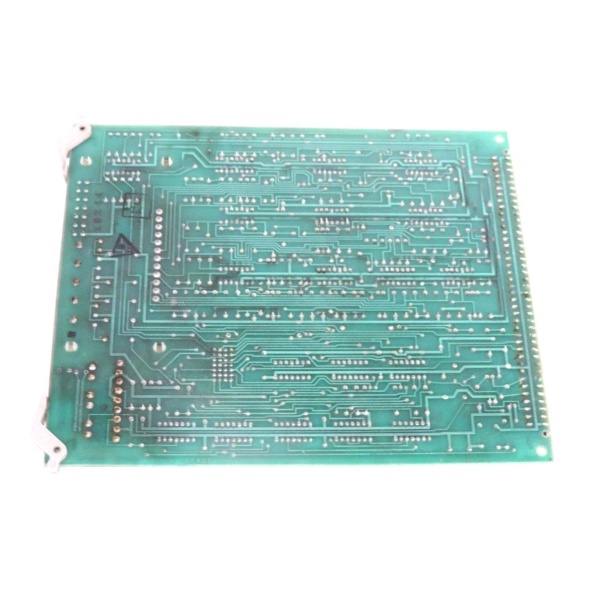
Each channel has a 2 A internal fuse link. A shorted coil blows the link; the LED still sees logic voltage so it glows green. If you measure 24 V at the terminal but no current flows, the fuse is open—card is scrap unless you bridge it with a wire-wrap (field fix approved by many plants).
GE DS3800NMSM1G1E
Technical Deep Dive & Overview
DS3800HPTL1F1D is an intelligent high-side switch array bolted to a 6U Euro-card. An 8-bit microcontroller decodes back-plane commands, drives eight isolated MOSFET stages, and returns status via the same parallel bus. The 8254 timer latches the exact millisecond a trip occurs, then shoves that count onto the Mark IV SOE highway so the historian can sort events faster than the operator can blink. Redundant 24 V inputs (A and B) diode-or together so the card stays alive even if one battery string is grounded. Because the drivers are current-limited and self-protected, you can short a coil all day and the card simply folds back—no fuse to hunt, no SCR crowbar, just a red LED that says “fix me when you’re ready.”
DS3800HPTL1F1D is an intelligent high-side switch array bolted to a 6U Euro-card. An 8-bit microcontroller decodes back-plane commands, drives eight isolated MOSFET stages, and returns status via the same parallel bus. The 8254 timer latches the exact millisecond a trip occurs, then shoves that count onto the Mark IV SOE highway so the historian can sort events faster than the operator can blink. Redundant 24 V inputs (A and B) diode-or together so the card stays alive even if one battery string is grounded. Because the drivers are current-limited and self-protected, you can short a coil all day and the card simply folds back—no fuse to hunt, no SCR crowbar, just a red LED that says “fix me when you’re ready.”