Description
DS3800HPCA1F1E Product Overview
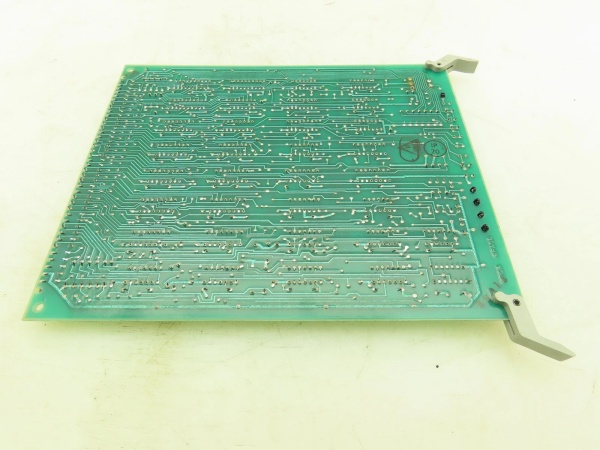
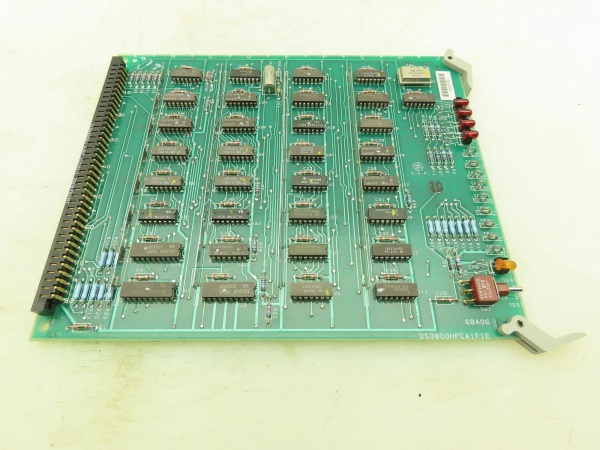
The DS3800HPCA1F1E is a digital pulse-controller add-on board that plugs into GE Mark IV turbine and EX2000 exciter control racks. Occupying a 6BA07 Euro-card slot, it acts as a high-speed pulse counter and timing reference: it captures incoming pulse trains from shaft encoders, proximity probes, or diode-fail contacts, latches the count in local SRAM, and presents the result to the main CPU over the NDIA parallel bus. Because all copper traces are fully encapsulated in high-temperature epoxy, the unit is treated as a line-replaceable module—any internal fault requires a complete card swap rather than component-level rework. The module is fully hot-swappable when the rack is powered down, and its 0.05 lb weight allows adjacent-slot population without additional card guides.
The DS3800HPCA1F1E is a digital pulse-controller add-on board that plugs into GE Mark IV turbine and EX2000 exciter control racks. Occupying a 6BA07 Euro-card slot, it acts as a high-speed pulse counter and timing reference: it captures incoming pulse trains from shaft encoders, proximity probes, or diode-fail contacts, latches the count in local SRAM, and presents the result to the main CPU over the NDIA parallel bus. Because all copper traces are fully encapsulated in high-temperature epoxy, the unit is treated as a line-replaceable module—any internal fault requires a complete card swap rather than component-level rework. The module is fully hot-swappable when the rack is powered down, and its 0.05 lb weight allows adjacent-slot population without additional card guides.
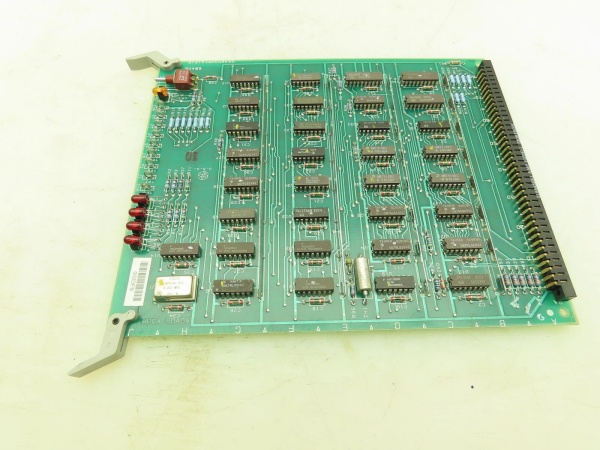
GE DS3800HPCA1F1E
DS3800HPCA1F1E Technical Specifications
-
Model Number: DS3800HPCA1F1E
-
Manufacturer: General Electric (GE Fanuc)
-
Product Type: Digital Pulse Controller / Counter Add-On Board
-
Series: DS3800, Mark IV Speedtronic
-
Form Factor: 6BA07 Euro-card (≈ 233 × 160 mm)
-
Function: Counter / Digital Pulse
-
Indicators: On-board LED indicators for pulse activity and fault status
-
Memory Support: EPROM/EEPROM socket for firmware or parameter storage
-
Input Type: Differential TTL / 24 Vdc pulse (jumper-selectable)
-
Count Rate: ≤ 2 MHz (typical Mark IV bus limit)
-
Isolation: 1500 Vdc field-to-logic; opto-coupled inputs
-
Power Demand: +5 V @ 0.4 A, +15 V @ 0.1 A from rack 2PL bus
-
Operating Temperature: 0 – 60 °C
-
Weight: 0.05 lb (≈ 23 g)
-
Construction: Epoxy-sealed copper traces—non-repairable
Core Features & Customer Value
High-Speed Pulse Counting: The on-board differential receivers accept pulse trains up to 2 MHz, enabling precise speed or flow measurement from shaft encoders or turbine blade proximity probes. For the control engineer this means tighter speed regulation and faster detection of blade-loss or diode-fail events without additional external counters.
Epoxy-Sealed Construction: All internal copper is encapsulated in high-temperature epoxy. In environments with high humidity, dust, or conductive contamination the seal prevents trace-to-trace shorting that would otherwise cause random “PULSE LOSS” alarms after ten-plus years of service. The trade-off is non-repairability—any internal fault requires a whole-card exchange—but this is offset by reduced troubleshooting time and the fact that plants stock one spare instead of maintaining a repair bench.
Plug-and-Play Memory Support: The on-board EPROM/EEPROM socket allows firmware or count presets to be stored locally. For the maintenance crew this means the card can be swapped without re-loading parameters—the memory device moves with the board, cutting exchange time to under three minutes.
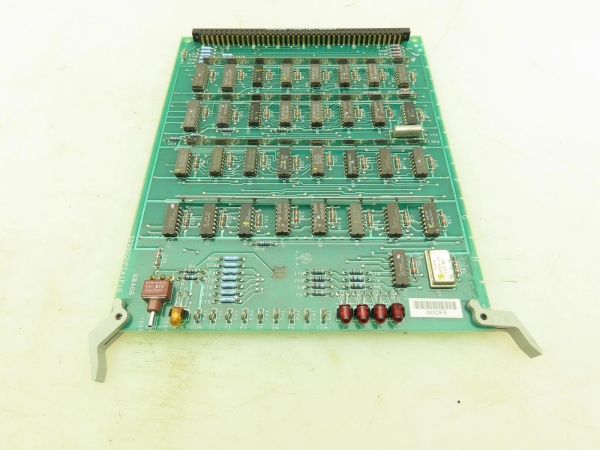
GE DS3800HPCA1F1E
Typical Applications
In combined-cycle power plants the board is installed in the Mark IV turbine control core where it counts pulses from the main shaft encoder. During start-up the CPU uses the count to compute instantaneous speed and acceleration rate; during load changes the count verifies blade-pass frequency for early detection of blade loss.
On utility-scale EX2000 static exciters the same card is used to count diode-fail pulses from the rotating rectifier. Because the input is opto-isolated, a shorted diode will not drag down the 5 V logic bus.
Frequently the same part number is used on mechanical-drive gas compressors to count flow-meter pulses. Its ability to mix high-speed counting with local memory on one card makes it a universal “pulse front-end” for any Mark IV loop that needs deterministic, battery-free operation.