Description
Key Technical Specifications
-
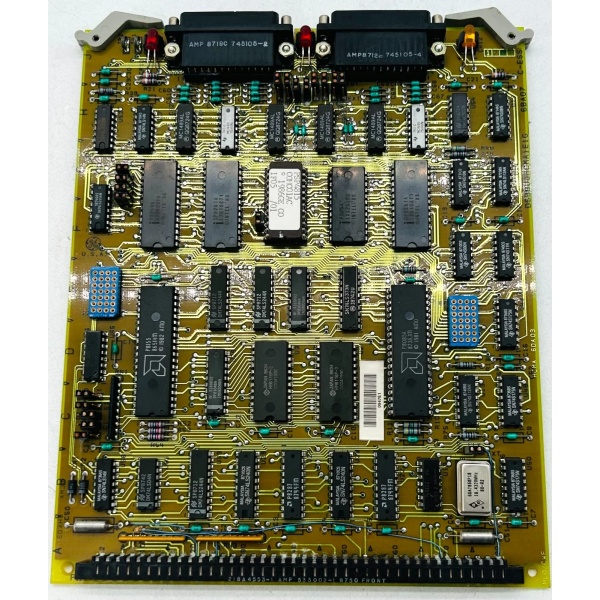
Model Number: DS3800HMPF1E1D
-
Manufacturer: General Electric
-
CPU: Intel 8086, 8 MHz, 16-bit external bus
-
EPROM: 4 × 2764 (32 kB total) firmware in UV-erasable sockets
-
RAM: 2 × HM6264LP-12 (16 kB) lithium-backed (3.6 V AA cell)
-
Bus Interface: DS3800 proprietary parallel back-plane, 96-pin DIN
-
Interrupts: 8-level vectored, maskable via 8259 PIC
-
Timers: Dual 8254 programmable interval timers for speed & SOE time-stamp
-
Serial Port: One RS-232 (DB-25) for local diagnostics @ 9600 baud fixed
-
Power: +5 V ±5 % @ 2.1 A, +12 V @ 50 mA supplied by DS3800 power module
-
Operating Temperature: 0 – 70 °C (card edge), –40 – 85 °C storage
-
Dimensions: 6.3 × 9.0 in (160 × 229 mm), single-slot 6U Euro-card form factor

DS3800HCMA1E1C
Field Application & Problem Solved
In a 1980s frame-5 peaker you still meet the Mark IV—no Ethernet, no flash drives, just wire-wrap and EPROMs. The DS3800HMPF1E1D is the on-board brain that keeps the unit from eating itself. It polls speed probes, fire detectors, and auxiliary contacts every 40 ms, then decides if the turbine should start, load, or trip. When the board dies the panel goes dark, the unit locks out, and the ISO schedule calls you at midnight. Swapping this card restores the exact firmware revision the turbine was commissioned with—no re-download, no re-cal—so you’re back on line before the steam cools. You’ll find it bolted in the second rack from the left, usually under a layer of coal dust in a Florida peaker or a paper mill cogeneration house. Its value is simple: it’s the only drop-in replacement that still runs the original binary; newer boards change timing just enough to fault the 30-year-old I/O.
In a 1980s frame-5 peaker you still meet the Mark IV—no Ethernet, no flash drives, just wire-wrap and EPROMs. The DS3800HMPF1E1D is the on-board brain that keeps the unit from eating itself. It polls speed probes, fire detectors, and auxiliary contacts every 40 ms, then decides if the turbine should start, load, or trip. When the board dies the panel goes dark, the unit locks out, and the ISO schedule calls you at midnight. Swapping this card restores the exact firmware revision the turbine was commissioned with—no re-download, no re-cal—so you’re back on line before the steam cools. You’ll find it bolted in the second rack from the left, usually under a layer of coal dust in a Florida peaker or a paper mill cogeneration house. Its value is simple: it’s the only drop-in replacement that still runs the original binary; newer boards change timing just enough to fault the 30-year-old I/O.
Installation & Maintenance Pitfalls (Expert Tips)
Battery leak etches the ground plane
The lithium cell is soldered to the board. After ten years it weeps alkali and cuts traces under the RAM. Cut the old cell leads, clean the green slime with vinegar and a toothbrush, install a 3.6 V AA holder off-board—tape it to the faceplate.
The lithium cell is soldered to the board. After ten years it weeps alkali and cuts traces under the RAM. Cut the old cell leads, clean the green slime with vinegar and a toothbrush, install a 3.6 V AA holder off-board—tape it to the faceplate.
EPROM window uncovered—UV erasure in daylight
The firmware sockets face up. Leave the foil sticker off and a month of fluorescent light flips bits; next startup the unit hangs on “P FAIL.” Always re-seal the window with fresh opaque tape after you verify the checksum.
The firmware sockets face up. Leave the foil sticker off and a month of fluorescent light flips bits; next startup the unit hangs on “P FAIL.” Always re-seal the window with fresh opaque tape after you verify the checksum.
Wrong revision—timing drift kills I/O scan
Boards ending in E1F or E1C run slightly faster wait-states. The original turbine program was tuned for E1D. If you plug the wrong suffix the 40 ms task slips, annunciation lags, and you get nuisance “LOSS OF FLAME.” Match the last four characters exactly.
Boards ending in E1F or E1C run slightly faster wait-states. The original turbine program was tuned for E1D. If you plug the wrong suffix the 40 ms task slips, annunciation lags, and you get nuisance “LOSS OF FLAME.” Match the last four characters exactly.
Back-plane bent pin—3 A short cooks the 5 V rail
The 96-pin DIN is fragile. One pushed pin hits +12 V and shorts the rail; the power module folds back and the whole rack reboots. Always flashlight-inspect the receptacle before you slide the card—if you smell hot epoxy you already lost the trace.
The 96-pin DIN is fragile. One pushed pin hits +12 V and shorts the rail; the power module folds back and the whole rack reboots. Always flashlight-inspect the receptacle before you slide the card—if you smell hot epoxy you already lost the trace.
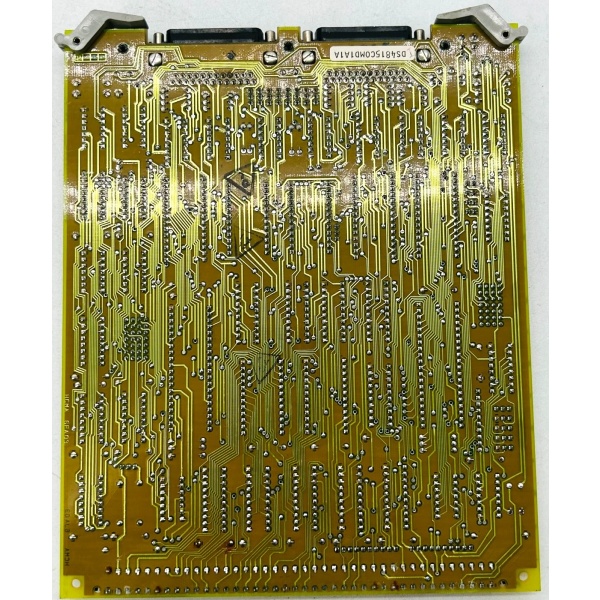
DS3800HCMA1E1C
Technical Deep Dive & Overview
The DS3800HMPF1E1D is a single-board 8086 system on a 6U Euro-card. Local firmware in EPROM boots to a tiny monitor that copies itself to RAM, then enters the turbine application. Two 8254 timers generate the 1 ms tick for sequence-of-events logging and the 40 ms control task heartbeat. An on-board 8259 PIC arbitrates interrupts from speed, temperature, and flame detection cards across the back-plane. Battery-backed RAM holds trip history, run hours, and calibration offsets; when power drops the lithium cell keeps the data for 5–7 years. Communication to the operator interface is through the Mark IV data highway—no TCP/IP, just parallel shared memory. The card is essentially a frozen-in-time DOS box that happens to know how to start a 100 MW turbine; treat it like antique hardware and it will outlive the building.
The DS3800HMPF1E1D is a single-board 8086 system on a 6U Euro-card. Local firmware in EPROM boots to a tiny monitor that copies itself to RAM, then enters the turbine application. Two 8254 timers generate the 1 ms tick for sequence-of-events logging and the 40 ms control task heartbeat. An on-board 8259 PIC arbitrates interrupts from speed, temperature, and flame detection cards across the back-plane. Battery-backed RAM holds trip history, run hours, and calibration offsets; when power drops the lithium cell keeps the data for 5–7 years. Communication to the operator interface is through the Mark IV data highway—no TCP/IP, just parallel shared memory. The card is essentially a frozen-in-time DOS box that happens to know how to start a 100 MW turbine; treat it like antique hardware and it will outlive the building.