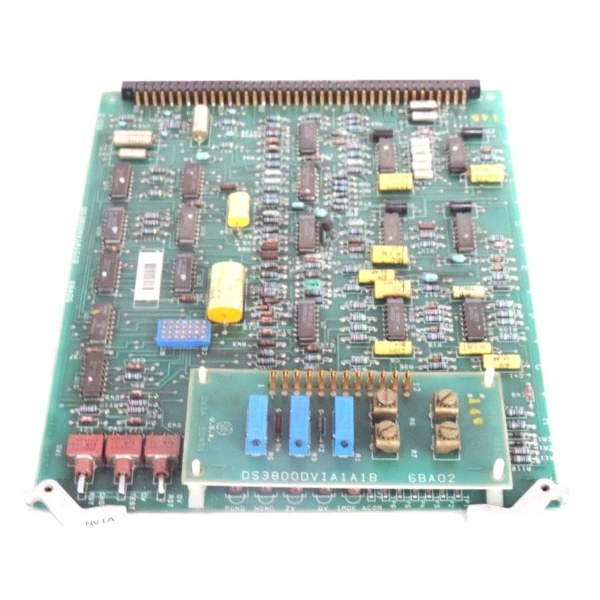
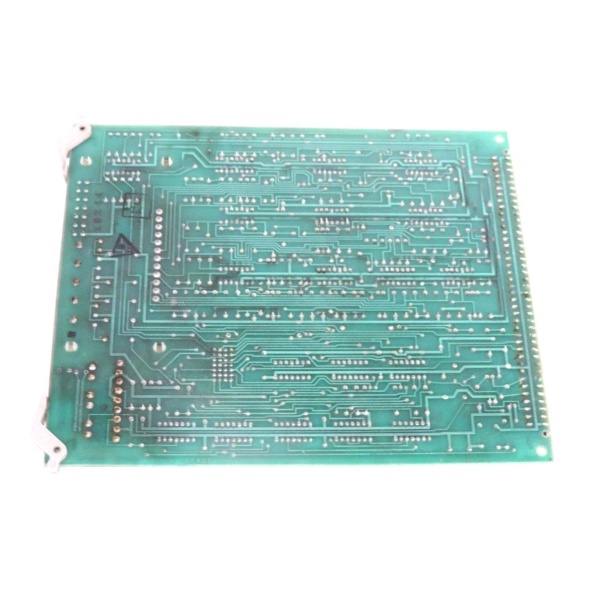
Description
Key Technical Specifications
-
Model Number: DS3800HMPF1B1B
-
Manufacturer: General Electric
-
CPU: Intel 8086, 8 MHz, 16-bit external bus
-
EPROM: 4 × 2764 sockets, 32 kB total, UV-erasable
-
RAM: 2 × HM6264LP-12, 16 kB lithium-backed (3.6 V AA cell)
-
Bus Interface: DS3800 proprietary 96-pin DIN back-plane
-
Interrupts: 8-level vectored via 8259 PIC
-
Timers: Dual 8254 programmable interval timers (1 ms tick & SOE)
-
Serial Port: One RS-232 (DB-25) fixed 9600 baud for local monitor
-
Power: +5 V ±5 % @ 2 A, +12 V @ 50 mA from rack supply
-
Operating Temperature: 0 – 70 °C operational, –40 – 85 °C storage
-
Dimensions: 6.3 × 9.0 in (160 × 229 mm), single-slot 6U Euro-card

GE DS3800NMSM1G1E
Field Application & Problem Solved
A frame-5 peaker installed in 1987 doesn’t care about Gigabit Ethernet—it wants the same 8086 instruction timing it was commissioned with or the I/O scan drifts and you trip on “LOSS OF FLAME.” The DS3800HMPF1B1B is that exact brain. It lives in the center rack, talks to the speed inputs, temperature cards, and discrete I/O over the DS3800 parallel bus, and keeps the 40 ms control task locked to the original spec. When the card dies you lose sequencing, fuel logic, and all SOE time-stamps—basically the unit becomes a 50-ton paperweight. Swap this board and you’re back to 1987 firmware without re-downloading or re-calibrating; that’s why every spare parts cage from Florida cogeneration to California combined-cycle still stocks at least one.
A frame-5 peaker installed in 1987 doesn’t care about Gigabit Ethernet—it wants the same 8086 instruction timing it was commissioned with or the I/O scan drifts and you trip on “LOSS OF FLAME.” The DS3800HMPF1B1B is that exact brain. It lives in the center rack, talks to the speed inputs, temperature cards, and discrete I/O over the DS3800 parallel bus, and keeps the 40 ms control task locked to the original spec. When the card dies you lose sequencing, fuel logic, and all SOE time-stamps—basically the unit becomes a 50-ton paperweight. Swap this board and you’re back to 1987 firmware without re-downloading or re-calibrating; that’s why every spare parts cage from Florida cogeneration to California combined-cycle still stocks at least one.
Installation & Maintenance Pitfalls (Expert Tips)
Battery leak corrodes address lines
The 3.6 V AA is soldered pigtail-style. After year 12 it leaks, eats through the nearby A11 trace, and the CPU can’t see the top 8 kB of RAM—unit faults on “MEM PARITY.” Snip the old cell, clean the green crust with vinegar, and relocate a new AA holder to the faceplate with double-stick tape.
The 3.6 V AA is soldered pigtail-style. After year 12 it leaks, eats through the nearby A11 trace, and the CPU can’t see the top 8 kB of RAM—unit faults on “MEM PARITY.” Snip the old cell, clean the green crust with vinegar, and relocate a new AA holder to the faceplate with double-stick tape.
EPROM window uncovered—firmware fades
The 2764 windows face up. A year of top-of-rack sunlight flips bits; next startup hangs on “BOOT?” Keep the foil security sticker in place—if it’s missing, slap on aluminum HVAC tape before you slide the card in.
The 2764 windows face up. A year of top-of-rack sunlight flips bits; next startup hangs on “BOOT?” Keep the foil security sticker in place—if it’s missing, slap on aluminum HVAC tape before you slide the card in.
Wrong suffix—timing changes, I/O drifts
HMPF1B1B runs 3-wait-state RAM; HMPF1E1D runs 2-wait. The Mark IV I/O scanner expects the slower cycle; swap revisions and your discrete reads skew 200 µs, enough to miss a 25 ms overspeed pulse. Match the last six characters exactly.
HMPF1B1B runs 3-wait-state RAM; HMPF1E1D runs 2-wait. The Mark IV I/O scanner expects the slower cycle; swap revisions and your discrete reads skew 200 µs, enough to miss a 25 ms overspeed pulse. Match the last six characters exactly.
Bent back-plane pin—5 V short cooks the board
The 96-pin DIN is fragile. One folded pin on +5 V arcs as you seat the card and blows a buried trace. Always flashlight-inspect the receptacle; if you see a brass speck, straighten it with needle-nose before the board goes in.
The 96-pin DIN is fragile. One folded pin on +5 V arcs as you seat the card and blows a buried trace. Always flashlight-inspect the receptacle; if you see a brass speck, straighten it with needle-nose before the board goes in.
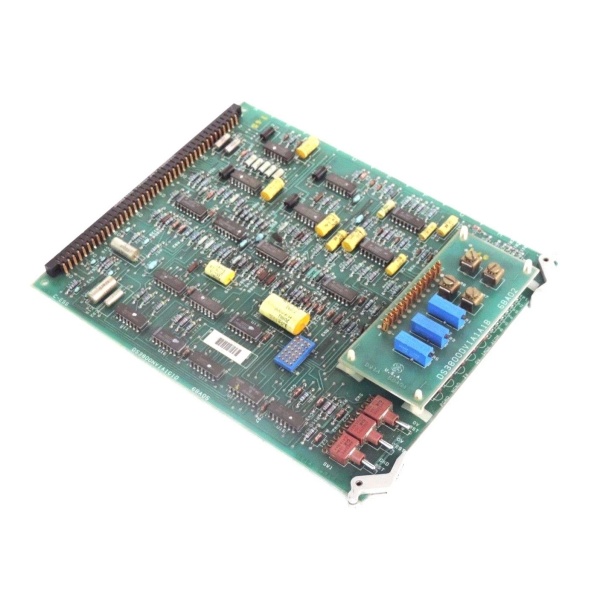
GE DS3800NMSM1G1E
Technical Deep Dive & Overview
DS3800HMPF1B1B is a single-board 8086 computer on a 6U Euro-card. At power-up the CPU fetches a 256-byte boot stub in EPROM that copies the turbine application to RAM, verifies checksum, then jumps to the application. The 8259 PIC prioritizes interrupts from speed, flame, and temperature cards; the 8254 timers stamp each event to 1 ms resolution for the SOE historian. A local RS-232 port spits out a 9600-baud monitor prompt—type “M 0000” and you can peek at the original 1987 registers. Battery-backed RAM retains trip history, calibration offsets, and run hours; when the cell dies you lose everything, but the CPU keeps running because the firmware shadows to RAM. It’s a 16-bit time capsule—treat it like antique hardware and the turbine will fire every time you hit START.
DS3800HMPF1B1B is a single-board 8086 computer on a 6U Euro-card. At power-up the CPU fetches a 256-byte boot stub in EPROM that copies the turbine application to RAM, verifies checksum, then jumps to the application. The 8259 PIC prioritizes interrupts from speed, flame, and temperature cards; the 8254 timers stamp each event to 1 ms resolution for the SOE historian. A local RS-232 port spits out a 9600-baud monitor prompt—type “M 0000” and you can peek at the original 1987 registers. Battery-backed RAM retains trip history, calibration offsets, and run hours; when the cell dies you lose everything, but the CPU keeps running because the firmware shadows to RAM. It’s a 16-bit time capsule—treat it like antique hardware and the turbine will fire every time you hit START.