Description
DS3800HMHA1E1F: Product Overview
The board functions as a microprocessor host adapter within GE’s Speedtronic Mark IV turbine control architecture. Positioned within the control rack assembly, this module serves as a critical interface layer that manages data concentration, logic processing, and communication protocol handling between the central microprocessor complex and other system modules. In the Mark IV’s triple modular redundant (TMR) system, this board operates within each independent control channel, ensuring coordinated data flow and logic execution across redundant processing paths.
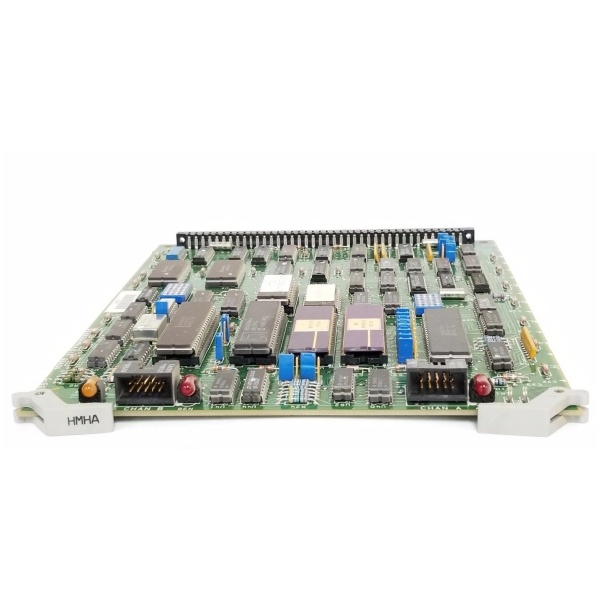
As a host adapter, the unit provides the logical interface infrastructure necessary to support complex control algorithms. It incorporates EPROM-based firmware storage for site-specific configuration data and executable logic, allowing the board to adapt to different turbine models and operational requirements without hardware modifications. The onboard logic circuitry processes high-speed data streams, manages address decoding for peripheral modules, and ensures deterministic timing for real-time control functions essential to turbine protection and operation.
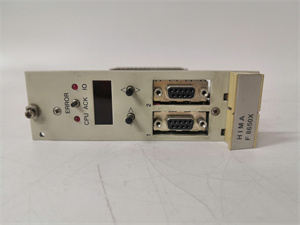
The board features a robust connector system compatible with the Mark IV rack backplane, facilitating reliable power distribution and high-speed data exchange. Retention levers ensure positive mechanical engagement in high-vibration environments, while diagnostic LEDs provide immediate visual indication of operational status and fault conditions. Multiple configuration jumpers allow field adaptation to specific system architectures and addressing schemes.
This board belongs to the DS3800 series of the Mark IV platform, deployed across heavy-duty gas turbines (Frame 3, 5, 6, 7, 9) and LM aeroderivative units. The platform’s distributed architecture allows this host adapter to operate autonomously while maintaining tight synchronization with the main control processors, ensuring that logic functions remain coordinated across the TMR triad.

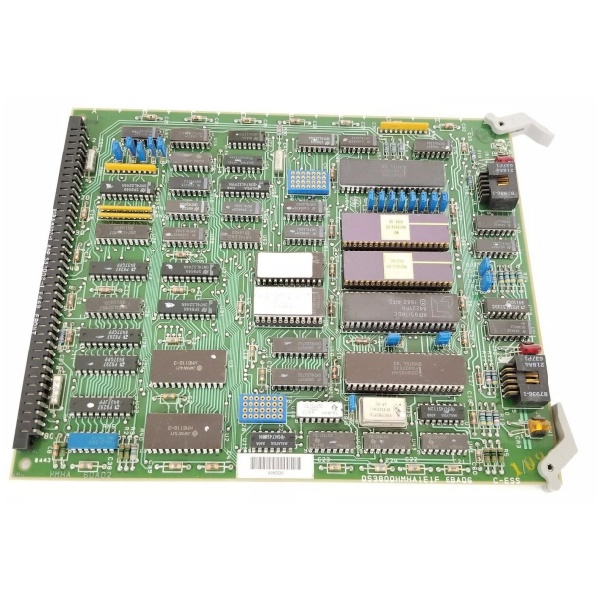
GE DS3800HMHA1E1F
DS3800HMHA1E1F: Technical Specifications
-
Model Number: DS3800HMHA1E1F
-
Manufacturer: General Electric
-
Product Type: Microprocessor Host Adapter Board
-
Series: GE Speedtronic Mark IV
-
Architecture: Triple Modular Redundant (TMR) compatible
-
Processing Logic: TTL/CMOS integrated circuits for data handling and address decoding
-
Memory: EPROM sockets for firmware and configuration parameter storage
-
Backplane Interface: High-density modular connector (AMD 218A4553-1 compatible)
-
Configuration: Multiple hardware jumpers for addressing and operational mode selection
-
Status Indication: Diagnostic LEDs for power, activity, and fault indication
-
Test Access: Multiple test points for signal verification and troubleshooting
-
Operating Temperature: -40°C to +70°C (industrial grade)
-
Storage Temperature: -40°C to +85°C
-
Humidity: 5% to 95% non-condensing
-
Vibration/Shock: 5 g vibration / 50 g shock (per Mark IV specifications)
-
Mounting: Standard Mark IV rack slot with integrated retention levers
-
Power Supply: Derived from Mark IV rack backplane (+5 VDC logic, ±15 VDC analog)
Part 4: Core Features & Customer Value
High-Level Data Interface and Concentration: The board serves as a logical aggregation point for data flowing between the main microprocessors and distributed I/O modules. By handling address decoding, data buffering, and protocol translation, the board reduces the processing burden on central CPUs while ensuring deterministic data exchange. For system architects, this distributed processing approach improves overall system responsiveness and enables complex control strategies without compromising the real-time performance required for turbine protection.
Firmware-Based Configuration Flexibility: EPROM-based storage allows site-specific logic configurations and addressing maps to be implemented through firmware programming rather than hardware modifications. This flexibility enables the same physical board to support different turbine frames, auxiliary configurations, and communication protocols by simply replacing the firmware modules. For maintenance managers, this reduces spare parts proliferation—standardized hardware supports diverse applications through software configuration, simplifying inventory management across mixed turbine fleets.
Comprehensive Diagnostic Visibility: Integrated diagnostic LEDs provide immediate indication of power rail status, data bus activity, and fault conditions without requiring diagnostic software connections. During commissioning or troubleshooting, technicians can verify that the host adapter is executing firmware correctly, that backplane communication is active, and that logic levels are within specification. This visibility reduces mean time to repair by allowing rapid identification of whether faults originate in the host logic, backplane connections, or downstream modules.
Robust Industrial Design for Critical Applications: The board utilizes industrial-grade integrated circuits and passive components rated for extended temperature operation and high-vibration environments typical of turbine control enclosures. The retention lever system ensures reliable backplane engagement despite mechanical stresses, while the modular connector design supports hot-swappable replacement in TMR configurations. Given the obsolete status of the Mark IV platform, this construction reliability is essential for maintaining operational availability over extended service lifecycles.
Deterministic Performance for Safety-Critical Functions: The logic circuitry provides predictable response times necessary for safety instrumented functions and protective trip logic. By executing host interface functions in deterministic hardware rather than software interpretations, the board ensures that critical data reaches protection algorithms within specified timeframes. This predictability supports Safety Integrity Level (SIL) compliance for turbine protection systems and ensures coordinated response across redundant channels during emergency conditions.
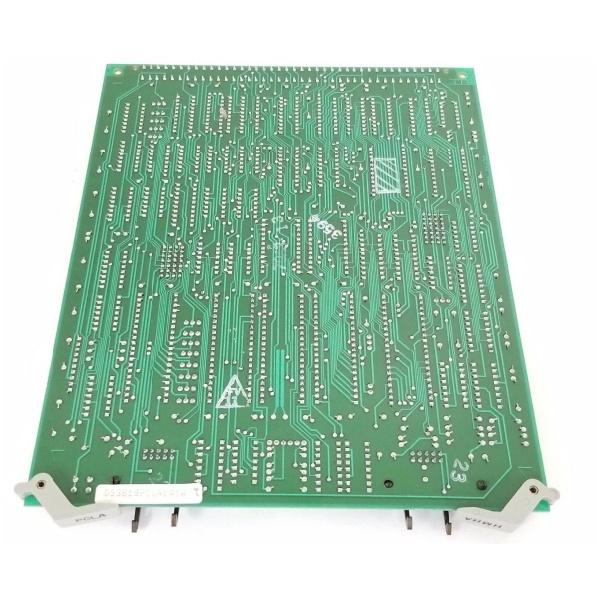
GE DS3800HMHA1E1F
Part 5: Typical Applications
Gas Turbine Control System Data Management:
The DS3800HMHA1E1F is deployed in GE Frame 5, 6, and 7 gas turbines to manage data interfaces between the main microprocessor boards and distributed I/O modules. In these applications, the board handles address decoding for exhaust temperature monitoring cards, servo valve drivers, and auxiliary control interfaces. The firmware configuration adapts the addressing scheme to the specific complement of I/O modules installed for each turbine frame, ensuring that control software correctly accesses sensors and actuators regardless of physical slot positions. The board’s diagnostic capabilities alert operators to communication failures that could compromise temperature monitoring or fuel control functions.
The DS3800HMHA1E1F is deployed in GE Frame 5, 6, and 7 gas turbines to manage data interfaces between the main microprocessor boards and distributed I/O modules. In these applications, the board handles address decoding for exhaust temperature monitoring cards, servo valve drivers, and auxiliary control interfaces. The firmware configuration adapts the addressing scheme to the specific complement of I/O modules installed for each turbine frame, ensuring that control software correctly accesses sensors and actuators regardless of physical slot positions. The board’s diagnostic capabilities alert operators to communication failures that could compromise temperature monitoring or fuel control functions.
Steam Turbine Retrofit and Control Integration:
In steam turbine modernization projects, this board facilitates integration of modern microprocessor controls with existing field wiring and auxiliary systems. It provides the logical interface layer that translates between the Mark IV’s internal data formats and the signal conditioning requirements of legacy electro-hydraulic control systems. The configurable jumpers allow adaptation to different I/O addressing schemes required when retrofitting controls onto turbines originally equipped with analog governors or early digital systems, reducing rewiring requirements and accelerating commissioning schedules.
In steam turbine modernization projects, this board facilitates integration of modern microprocessor controls with existing field wiring and auxiliary systems. It provides the logical interface layer that translates between the Mark IV’s internal data formats and the signal conditioning requirements of legacy electro-hydraulic control systems. The configurable jumpers allow adaptation to different I/O addressing schemes required when retrofitting controls onto turbines originally equipped with analog governors or early digital systems, reducing rewiring requirements and accelerating commissioning schedules.
Aeroderivative Turbine Package Control:
For LM6000 and LM2500 units, the board manages high-speed data interfaces in the compact control enclosures typical of aeroderivative installations. It coordinates communication between the main control processors and package-specific modules such as inlet guide vane positioners, fuel forwarding controls, and compartment ventilation systems. The board’s vibration-resistant mounting and retention system ensures reliable operation in the higher-frequency vibration environments encountered with these high-speed machines, while the firmware can be configured for the specific auxiliary complement of each package installation.
For LM6000 and LM2500 units, the board manages high-speed data interfaces in the compact control enclosures typical of aeroderivative installations. It coordinates communication between the main control processors and package-specific modules such as inlet guide vane positioners, fuel forwarding controls, and compartment ventilation systems. The board’s vibration-resistant mounting and retention system ensures reliable operation in the higher-frequency vibration environments encountered with these high-speed machines, while the firmware can be configured for the specific auxiliary complement of each package installation.
Safety Instrumented Systems (SIS) Logic Interface:
Within the Mark IV’s integrated protection architecture, this board provides the logical interface for safety-critical functions such as overspeed protection, vibration monitoring, and emergency shutdown systems. It ensures that protective input data reaches the voting logic with minimal latency and that trip commands are distributed to output modules without delay. The deterministic performance of the host adapter supports the response time requirements for turbine protection, while the TMR compatibility ensures that safety functions remain available even during single-channel maintenance activities.
Within the Mark IV’s integrated protection architecture, this board provides the logical interface for safety-critical functions such as overspeed protection, vibration monitoring, and emergency shutdown systems. It ensures that protective input data reaches the voting logic with minimal latency and that trip commands are distributed to output modules without delay. The deterministic performance of the host adapter supports the response time requirements for turbine protection, while the TMR compatibility ensures that safety functions remain available even during single-channel maintenance activities.
Auxiliary System Control Networks:
The board manages data interfaces for complex auxiliary systems such as lube oil consoles, hydraulic power units, and cooling water systems. It handles the communication protocol requirements for intelligent auxiliary controllers, translating between proprietary device protocols and the Mark IV’s internal data bus. This integration allows turbine auxiliaries to be monitored and controlled through the main operator interface while maintaining the distributed processing architecture that prevents auxiliary system faults from impacting critical turbine control functions.
The board manages data interfaces for complex auxiliary systems such as lube oil consoles, hydraulic power units, and cooling water systems. It handles the communication protocol requirements for intelligent auxiliary controllers, translating between proprietary device protocols and the Mark IV’s internal data bus. This integration allows turbine auxiliaries to be monitored and controlled through the main operator interface while maintaining the distributed processing architecture that prevents auxiliary system faults from impacting critical turbine control functions.