Description
DS3800HCMA1E1C Product Overview
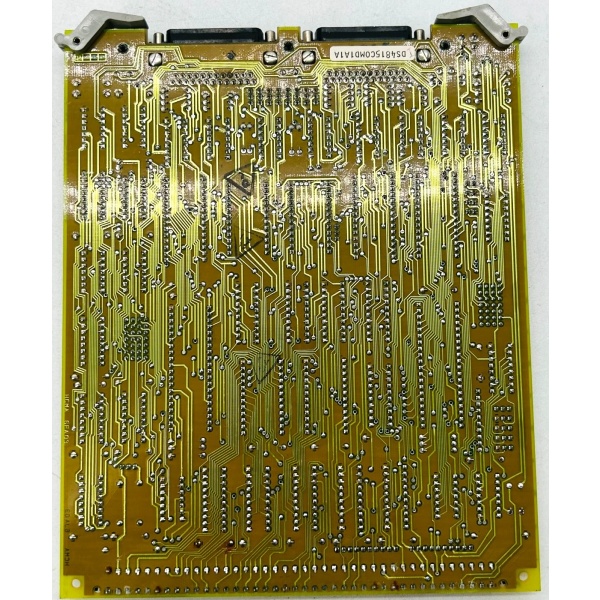
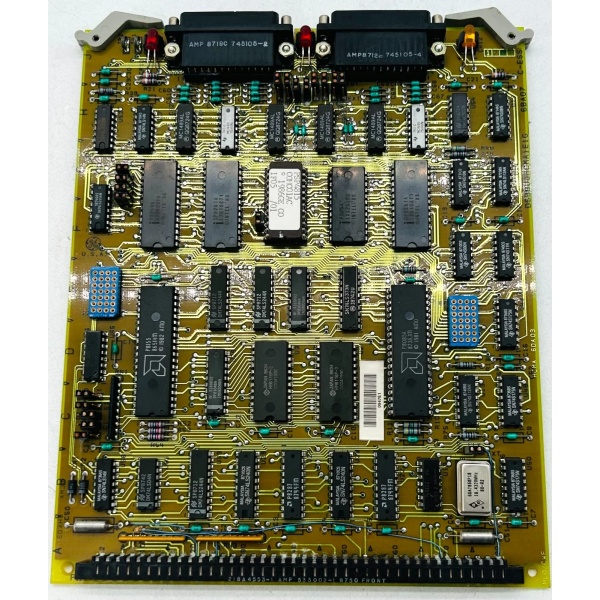
The DS3800HCMA1E1C is a dual-channel communication and personality control board used inside GE Mark IV Speedtronic gas- and steam-turbine control cubicles. It occupies a 6U card slot and acts as the programmable interface between the main control processor and external serial/parallel devices such as operator panels, remote I/O links, or auxiliary PLCs.
The DS3800HCMA1E1C is a dual-channel communication and personality control board used inside GE Mark IV Speedtronic gas- and steam-turbine control cubicles. It occupies a 6U card slot and acts as the programmable interface between the main control processor and external serial/parallel devices such as operator panels, remote I/O links, or auxiliary PLCs.
In the automation hierarchy the card sits at the “personality & communication” layer: it receives high-level commands from the CPU, applies site-specific logic stored in on-board memory (EPROM/PAL), and returns status or data over the backplane. Transformer-isolated power rails and ceramic metal-film resistors give the card enough noise immunity to survive ground-shift events common when 4 kV breakers close inside the turbine hall.
The module belongs to the DS3800 “HCMA” family of Mark IV personality boards—cards that share the same 96-pin edge connector and mounting rails but implement dedicated communication or sequencing tasks. Using a common hardware platform allows plant stores to stock one spare chassis and populate it with the exact personality boards required for each turbine section

.
DS3800HCMA1E1C
Technical Specifications
-
Model Number: DS3800HCMA1E1C
-
Manufacturer: General Electric
-
Product Type: Dual-Channel Communication / Personality Control Card
-
Revision: 6BA02 (silk-screen on PCB)
-
Edge Connector: 96-pin DIN, short-edge mount
-
Logic Voltage: +5 V backplane; field side 24 V via backplane or external feed
-
Isolation: Basic insulation between field and logic; user must fuse field supply
-
Memory: Firmware stored in socketed EPROM/PAL; no battery required
-
Diagnostics: On-board BIT logic drives front-panel red/green LED
-
Mounting: Standard Mark IV card rails, captive screws
-
Weight: ≈ 0.4 kg (0.9 lb)
-
Operating Temperature: 0 … +70 °C (card ambient)
-
Storage Temperature: -40 … +85 °C
-
Vibration/Shock: 5 g / 50 g (per Mark IV cabinet spec)
Core Features & Customer Value
Dual-channel communication – Two independent serial or parallel paths allow the CPU to talk to an operator panel and a remote I/O link simultaneously, eliminating external gateways and saving panel space.
Dual-channel communication – Two independent serial or parallel paths allow the CPU to talk to an operator panel and a remote I/O link simultaneously, eliminating external gateways and saving panel space.
EPROM-based personality – Control sequencing is stored in socketed memory; site-specific start-up curves or communication protocols can be updated by simply swapping a chip—no laptop or download cable required.
96-pin standard footprint – Shares the DS3800 form factor with earlier HCMA revisions; no mounting changes, no calibration, and no parameter downloads required during swap-out.
On-board BIT LED – Front-panel red/green indicator gives immediate visual feedback on card health or firmware faults, shortening commissioning time when the HMI is not yet online.
Industrial temperature & vibration rating – Rated for 5 g vibration and 50 g shock, the card survives breaker-slam events and cooling-fan failures common in medium-voltage drive cubicles
DS3800HCMA1E1C
.
Typical Applications
In combined-cycle power plants the DS3800HCMA1E1C is installed in the “personality” bay of every Mark IV panel that governs gas turbines, boiler-feed pumps, or induced-draft fans. It implements site-specific communication protocols, auxiliary motor logic, or alarm latching that the CPU calls during each control scan.
In combined-cycle power plants the DS3800HCMA1E1C is installed in the “personality” bay of every Mark IV panel that governs gas turbines, boiler-feed pumps, or induced-draft fans. It implements site-specific communication protocols, auxiliary motor logic, or alarm latching that the CPU calls during each control scan.
In pipeline compressor stations the same board handles serial communication to the station RTU and parallel I/O for auxiliary pump contactors while reporting BIT status to the operator station.
Because the card is firmware-based (no battery) it is also accepted in nuclear standby turbine-generator sets, where “simple device” classification avoids additional software V&V.