Description
DS3800HAIA1E1D: Product Overview
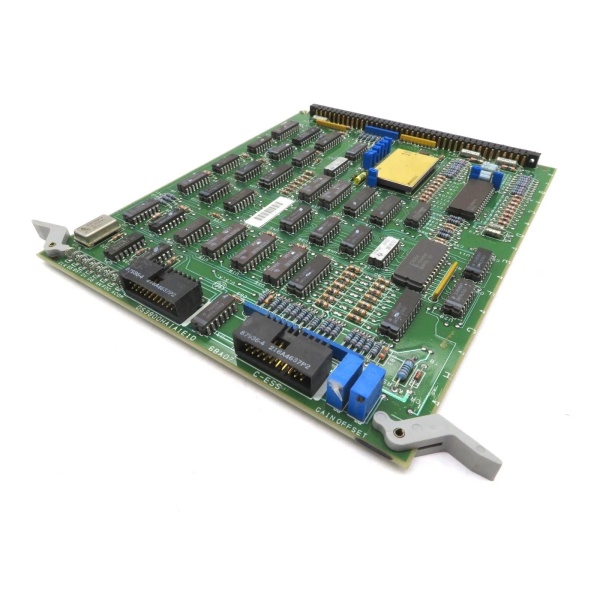
The DS3800HAIA1E1D is a daughterboard-grade high-frequency analog-to-digital converter that plugs onto a motherboard carrier inside the GE Speedtronic Mark IV rack. It sits electrically between field analog sources and the central CPU, converting ±10 V signals from temperature transmitters, pressure transducers, and position sensors into 0–5 V digital outputs that the CPU can use for speed control, temperature limiting, and protective tripping. Because it is hardware-deterministic (no firmware), the card delivers bit-exact timing across all three legs of a TMR string, making it suitable for SIL-2 / API 670 safety loops.
The board belongs to the DS3800 daughterboard architecture, allowing hot-swap replacement without rewiring the turbine deck. Gold-plated edge fingers, conformal coat, and –40 °C to +85 °C rating ensure 25-year service life in coal-dust, salt-fog, or high-vibration environments.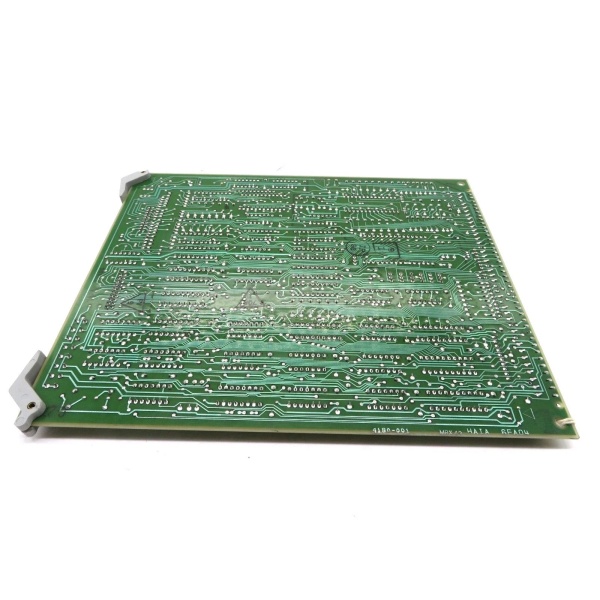
DS3800HAIA1E1D: Technical Specifications
-
Model Number: DS3800HAIA1E1D
-
Manufacturer: General Electric (GE)
-
Product Type: High-Frequency Analog-to-Digital Converter Board
-
System Compatibility: Speedtronic Mark IV (6BA07 slot)
-
Input Range: -10 V to +10 V (differential)
-
Output Range: 0–5 V (single-ended)
-
ADC Resolution: 12-bit monotonic, ±½ LSB INL
-
Sampling Rate: 100 kHz max (jumper-selectable)
-
Isolation: 1500 V AC channel-to-ground, 500 V channel-to-channel
-
Filter: 2-pole Butterworth, 10 Hz–10 kHz jumper-selectable
-
Connectors: 20-pin ribbon (field side) + VME edge fingers (back-plane side)
-
Power Rails: +5 V logic, ±15 V analog, <1 W per channel
-
Operating Temperature: -40 °C to +85 °C; Storage: -55 °C to +125 °C
-
Certifications: CE, RoHS, IEEE 344 seismic, SIL-2 suitable
Core Features & Customer Value
Hardware-Deterministic Timing
Because the card contains no flashable firmware, every channel responds with bit-exact timing across all three legs of a TMR string. This eliminates scan-to-scan jitter that could introduce voter disagreement, giving you SIL-2 / API 670 confidence for overspeed, over-temperature, or flame-detection loops.
Because the card contains no flashable firmware, every channel responds with bit-exact timing across all three legs of a TMR string. This eliminates scan-to-scan jitter that could introduce voter disagreement, giving you SIL-2 / API 670 confidence for overspeed, over-temperature, or flame-detection loops.
Hot-Swap Ready
The daughterboard form factor allows you to extract and insert the card while the turbine remains on-line (provided the carrier is in a TMR string). Mean-time-to-repair is <5 minutes, so you avoid forced outages and start-up delays.
The daughterboard form factor allows you to extract and insert the card while the turbine remains on-line (provided the carrier is in a TMR string). Mean-time-to-repair is <5 minutes, so you avoid forced outages and start-up delays.
Field-Calibratable Without Software
On-board trim pots let you adjust offset and gain on the turbine deck using only a screwdriver and a DMM. This eliminates the need for a laptop or OEM service call when you swap sensors, change cable runs, or recalibrate after a major overhaul.
On-board trim pots let you adjust offset and gain on the turbine deck using only a screwdriver and a DMM. This eliminates the need for a laptop or OEM service call when you swap sensors, change cable runs, or recalibrate after a major overhaul.
Surge-Hardened for Harsh Sites
TVS diodes on every input clamp >500 V spikes from lightning, VFD switching, or exciter flash-over. The 1500 V galvanic isolation barrier prevents ground-fault currents from propagating into the low-voltage CPU domain, extending card life beyond 25 years in coal-dust, salt-fog, or high-vibration sites.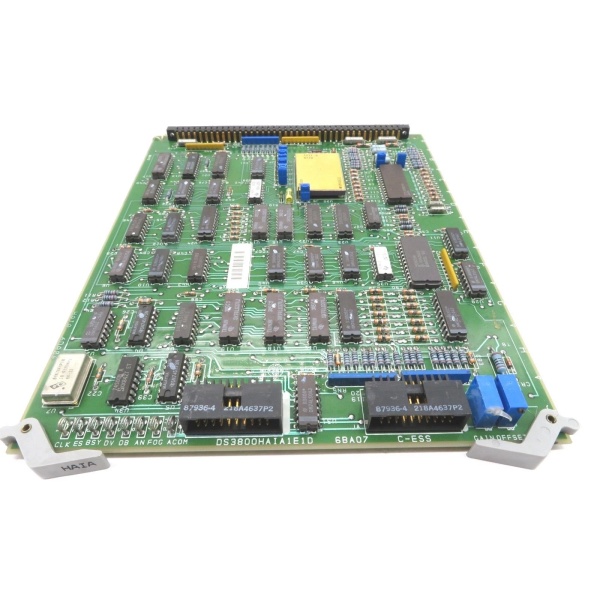
TVS diodes on every input clamp >500 V spikes from lightning, VFD switching, or exciter flash-over. The 1500 V galvanic isolation barrier prevents ground-fault currents from propagating into the low-voltage CPU domain, extending card life beyond 25 years in coal-dust, salt-fog, or high-vibration sites.
DS3800HAIA1E1D
Typical Applications
Gas Turbine Bearing & Combustor Monitoring
In large combined-cycle plants, DS3800HAIA1E1D is widely used to condition bearing-metal thermocouples and combustion-can pressure transmitters. The –10 V to +10 V input range and 12-bit resolution allow the CPU to detect sub-degree temperature rises or millisecond pressure transients that precede a flame-out, enabling predictive shutdowns that avoid thermal damage.
In large combined-cycle plants, DS3800HAIA1E1D is widely used to condition bearing-metal thermocouples and combustion-can pressure transmitters. The –10 V to +10 V input range and 12-bit resolution allow the CPU to detect sub-degree temperature rises or millisecond pressure transients that precede a flame-out, enabling predictive shutdowns that avoid thermal damage.
Steam Turbine Governor & Extraction Control
The card’s 0–5 V output capability makes it the preferred interface for steam-valve position LVDTs and exhaust-pressure transmitters. During load ramps, the deterministic 100 kHz update rate prevents valve dither, extending servo life beyond 100 000 cycles while maintaining ±0.1 % pressure control accuracy.
The card’s 0–5 V output capability makes it the preferred interface for steam-valve position LVDTs and exhaust-pressure transmitters. During load ramps, the deterministic 100 kHz update rate prevents valve dither, extending servo life beyond 100 000 cycles while maintaining ±0.1 % pressure control accuracy.
Island-Mode & Black-Start Sites
On offshore platforms or remote peaking plants, the –40 °C rating and conformal coat allow the card to run without HVAC. Battery-backed operation is supported because the card draws <1 W and continues to deliver accurate readings when external transmitters are powered from station DC.
On offshore platforms or remote peaking plants, the –40 °C rating and conformal coat allow the card to run without HVAC. Battery-backed operation is supported because the card draws <1 W and continues to deliver accurate readings when external transmitters are powered from station DC.