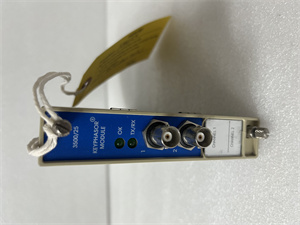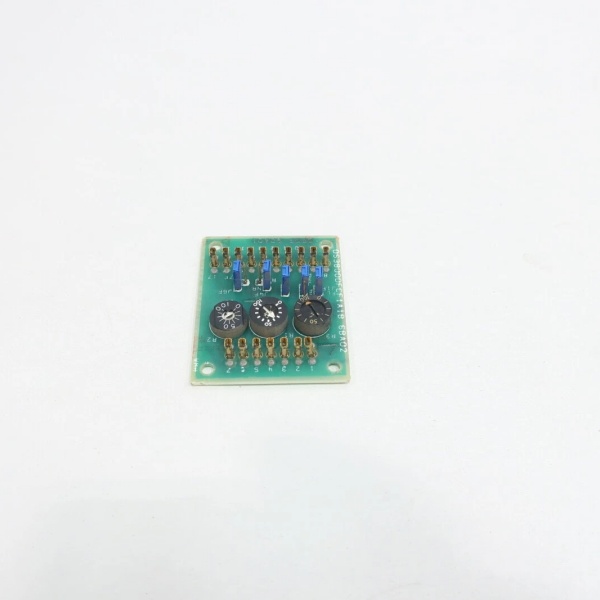
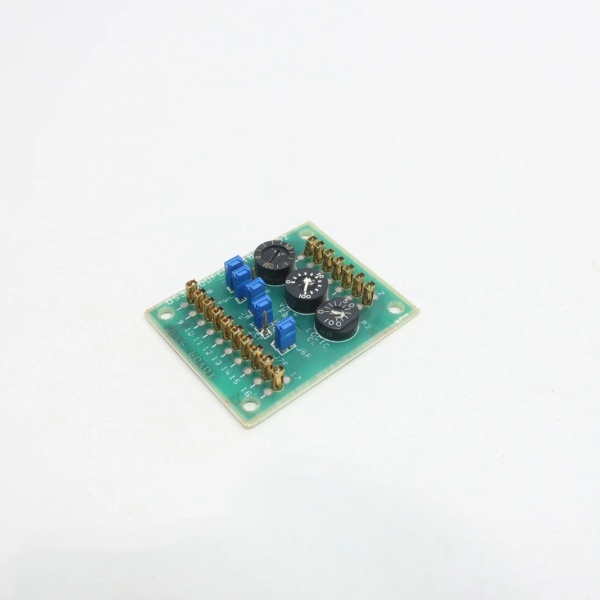
Description
Key Technical Specifications
-
Model Number: DS3800DFCF1A1B
-
Manufacturer: General Electric
-
Logic Voltage: +5 V @ 1.2 A, ±12 V @ 200 mA from rack back-plane
-
Gate Outputs: 6 × 30 V pulses, 2 A peak, 200 µs width, transformer-isolated
-
Input Command: 0-10 V differential from upstream NAIF/NVRC firing-reference card
-
Phase-Balance Trim: Six 20-turn 50 kΩ pots, one per SCR, ±5 ° adjustment range
-
Isolation: 1500 Vrms gate-to-logic, 500 V phase-to-phase
-
Pulse Shape: Dual 30 V / –5 V spike to guarantee SCR turn-on at 0 °C
-
Connectors: 96-pin DIN to back-plane, six 2-position pluggable for gate leads
-
Protection: 39 V MOV on each output, 2 A PTC resettable fuse per gate
-
Operating Temperature: –20 °C to +70 °C inside turbine cabinet
-
Dimensions: 6.3 × 9.0 in (160 × 229 mm), single-slot 6U Euro-card

DS3800DFCF1A1B
Field Application & Problem Solved
A 1987 frame-5 static exciter doesn’t fire SCRs with good intentions—it needs a 30 V, 2 A pulse delivered to six gate terminals within 2 µs of the angle command. The DS3800DFCF1A1B is the card that makes that happen. It sits in the exciter rack, listens to a 0-10 V angle reference from the NAIF card, and spits out six 200 µs pulses 60° apart to turn on the big SCRs in the bridge. When the card drifts—usually a gate transformer primary opens—you see field current collapse and the generator voltage sag 5 %; swap the board, re-torque the gate leads, and the bridge comes back to life. You’ll find this PCB in any plant that still runs a three-phase SCR exciter: paper-mill back-pressure sets, refineries, and every frame-5/6 peaker that never upgraded to digital AVRs. Its core value is brute force plus trim: the pulse is 2 A peak, enough to fire 1000 A SCRs, and the six front-panel pots let you balance phase current within 2 %—critical for keeping the VAR meter steady when the grid dispatcher jacks the set-point.
A 1987 frame-5 static exciter doesn’t fire SCRs with good intentions—it needs a 30 V, 2 A pulse delivered to six gate terminals within 2 µs of the angle command. The DS3800DFCF1A1B is the card that makes that happen. It sits in the exciter rack, listens to a 0-10 V angle reference from the NAIF card, and spits out six 200 µs pulses 60° apart to turn on the big SCRs in the bridge. When the card drifts—usually a gate transformer primary opens—you see field current collapse and the generator voltage sag 5 %; swap the board, re-torque the gate leads, and the bridge comes back to life. You’ll find this PCB in any plant that still runs a three-phase SCR exciter: paper-mill back-pressure sets, refineries, and every frame-5/6 peaker that never upgraded to digital AVRs. Its core value is brute force plus trim: the pulse is 2 A peak, enough to fire 1000 A SCRs, and the six front-panel pots let you balance phase current within 2 %—critical for keeping the VAR meter steady when the grid dispatcher jacks the set-point.
Installation & Maintenance Pitfalls (Expert Tips)
Gate leads reversed—bridge shorts on power-up
The six gate plugs are keyed alike but pin-outs alternate phase-to-phase. Land G1 on G2 and you fire the wrong SCR pair—bridge crowbars, fuse blows, unit trips. Always ring-out gate leads with a DMM before you energize; you should see 18 Ω primary, not a dead short.
The six gate plugs are keyed alike but pin-outs alternate phase-to-phase. Land G1 on G2 and you fire the wrong SCR pair—bridge crowbars, fuse blows, unit trips. Always ring-out gate leads with a DMM before you energize; you should see 18 Ω primary, not a dead short.
Phase-balance pots dirty—VAR needle hunts
The six 20-turn pots face up; coal dust works into the track and the wiper jumps 0.5 °. Generator starts swinging ±3 MVAR. Hit the pots with DeoxIT, exercise them ten turns, reset to the witness marks—hunting gone for another five years.
The six 20-turn pots face up; coal dust works into the track and the wiper jumps 0.5 °. Generator starts swinging ±3 MVAR. Hit the pots with DeoxIT, exercise them ten turns, reset to the witness marks—hunting gone for another five years.
MOV fatigue—pulse amplitude drops, field current sags
A 39 V MOV on each output clamps inductive kick. After 15 years the MOV drifts low; pulse tops out at 24 V instead of 30 V and SCRs misfire cold. If field current sags 3 % in winter, swap the MOVs or the whole card—gate drive is not field-repairable.
A 39 V MOV on each output clamps inductive kick. After 15 years the MOV drifts low; pulse tops out at 24 V instead of 30 V and SCRs misfire cold. If field current sags 3 % in winter, swap the MOVs or the whole card—gate drive is not field-repairable.
Missing nylon washer—card arcs to rack
The four corner holes are through-plated. Forget the fiber washers and the card edge sits 0.5 mm proud; 125 V field voltage finds the rack paint, arcs, and blows a hole in the ground plane. Use the original GE shoulder washers or add 2 mm nylon spacers—torque to 8 in-lb, no more.
The four corner holes are through-plated. Forget the fiber washers and the card edge sits 0.5 mm proud; 125 V field voltage finds the rack paint, arcs, and blows a hole in the ground plane. Use the original GE shoulder washers or add 2 mm nylon spacers—torque to 8 in-lb, no more.
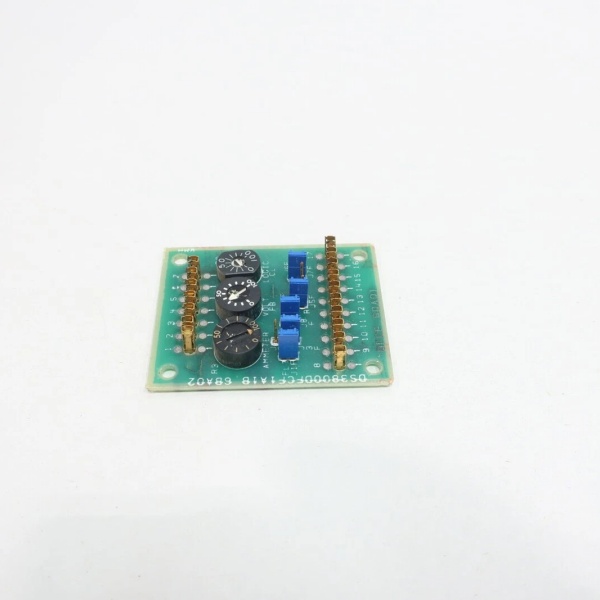
DS3800DFCF1A1B
Technical Deep Dive & Overview
DS3800DFCF1A1B is a six-channel gate pulse amplifier frozen in 1987 silicon. A 741 op-amp buffers the 0-10 V angle command; a 555 one-shot generates a 200 µs pulse; six gate-drive transformers step the pulse up to 30 V at 2 A peak. Each output has a 39 V MOV to clip inductive spikes and a 2 A PTC fuse that resets when the short clears. Because the transformers are 1:1:1, you can swap the card hot and the exciter never knows—just make sure you kill the 125 VDC field breaker first or you’ll arc-weld the gate leads. Think of it as a ruggedized ignition module for SCRs; treat the gate plugs like spark-plug wires and the bridge will keep the generator floating at exactly 13.8 kV for another thirty years
DS3800DFCF1A1B is a six-channel gate pulse amplifier frozen in 1987 silicon. A 741 op-amp buffers the 0-10 V angle command; a 555 one-shot generates a 200 µs pulse; six gate-drive transformers step the pulse up to 30 V at 2 A peak. Each output has a 39 V MOV to clip inductive spikes and a 2 A PTC fuse that resets when the short clears. Because the transformers are 1:1:1, you can swap the card hot and the exciter never knows—just make sure you kill the 125 VDC field breaker first or you’ll arc-weld the gate leads. Think of it as a ruggedized ignition module for SCRs; treat the gate plugs like spark-plug wires and the bridge will keep the generator floating at exactly 13.8 kV for another thirty years
.