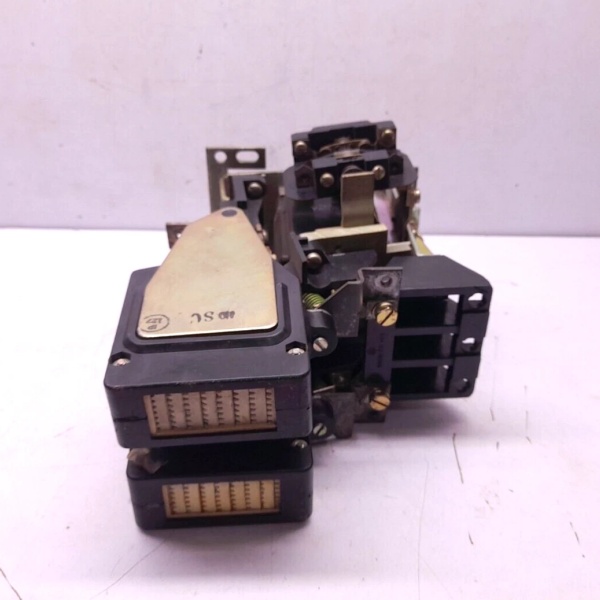
Description
Hard-Numbers: Technical Specifications
- Current Rating: 900A continuous / 1100A peak
- Voltage Rating: 600V DC max
- Coil Voltage: 250V DC nominal (230-250V range)
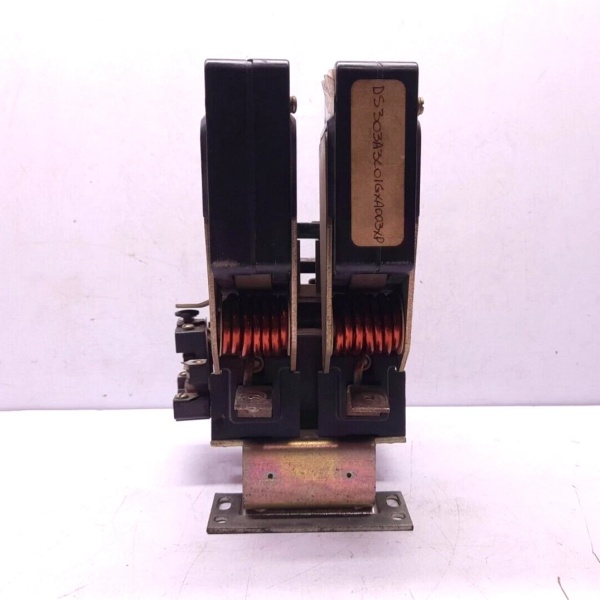
- Coil Cat. No.: 22D75G3A
- Main Contacts: 1NO (Normally Open), Silver alloy tips
- Interlock Contacts: 2NO (left-hand side), 1NO/1NC (right-hand side)
- Enclosure Rating: NEMA 6 (dust-tight, submersible)
- Operating Temp: -40°C to +70°C
- Pull-In Voltage: 75% of rated coil voltage
- Drop-Out Voltage: 15% of rated coil voltage
- Electrical Life: 500,000 operations at rated load
- Mechanical Life: 10 million operations
- Weight: 16.8 kg (37 lbs)
- Mounting: Bolt-mount with 4 mounting holes
- Terminal Type: Front-accessible stud terminals

GE DS303A3C01GXA003XP
The Real-World Problem It Solves
DC field circuits in excitation systems draw massive current—hundreds of amps at 600 volts. Standard contactors arc excessively, weld contacts, and fail within months. This unit is built to break DC arcs with magnetic arc chutes and oversized silver contacts, handling the inductive kick from field windings without destroying itself.
Where you’ll typically find it:
- GE EX2100e excitation system field breaker applications
- DC motor starter cabinets in steel mill rolling mills
- Mining hoist and traction drive DC switching
- Battery energy storage system DC bus switching
Bottom line: When you need to switch 900 amps of DC without the contacts welding together, this is the hammer you grab.
Hardware Architecture & Under-the-Hood Logic
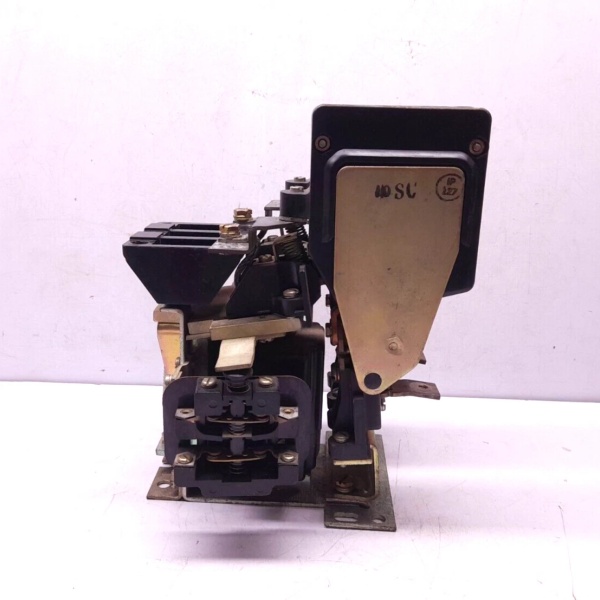
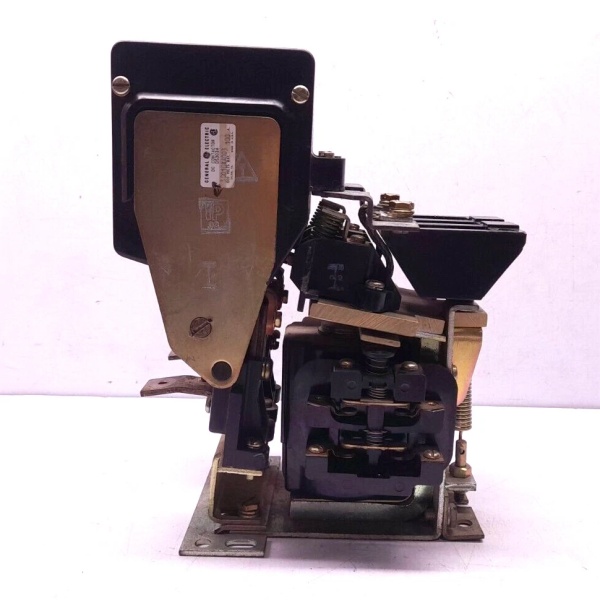
This is a pure electromagnetic contactor—no electronics, no control logic, just massive copper coils and steel. The interlock contacts are mechanically linked to the main contactor armature, providing auxiliary status signaling independent of the main contact state.
- Coil energizes, creating magnetic field that pulls armature closed
- Main contacts (1NO) make contact, closing the high-current DC circuit
- Magnetic arc chutes suppress arc formation during contact separation
- Interlock contacts (2NO left, 1NO/1NC right) operate simultaneously with main contacts
- Mechanical linkage ensures interlock position mirrors main contact position
- Arc splitter plates divide and extinguish DC arc during opening
- Silver-alloy main contact tips provide high-current carrying capacity
- Tension spring ensures rapid contact opening when coil de-energizes
GE DS303A3C01GXA003XP
Field Service Pitfalls: What Rookies Get Wrong
Over-Torquing the Main TerminalsI’ve seen techs crank down on the 900A terminals with a 3/4″ breaker bar until the stud snaps. Aluminum bus bars and copper terminals don’t need 200 ft-lbs—they need 70 ft-lbs and anti-oxidant compound.
- Field Rule: Torque main terminals to 70 ft-lbs with a calibrated torque wrench. Apply antioxidant compound (NO-OX-ID or equivalent) to aluminum-to-copper connections before assembly.
Ignoring Interlock Plunger ClearanceInstalling the side interlocks without checking plunger clearance. The contactor energizes, but the interlock plunger bottoms out against the operating arm and either shatters the mechanism or prevents the contacts from fully closing.
- Quick Fix: With the contactor de-energized, verify minimum 1/64″ clearance between interlock plunger and operating arm. When energized, the plunger should NOT bottom out—there should always be a small gap.
Running DC Coils on AC Control PowerWiring a 250V DC coil to 240V AC control power. The coil buzzes like an angry hornet, overheats within 30 seconds, and burns open. The inductive reactance kills the current, but the core laminations saturate and cook the insulation.
- Field Rule: Verify coil voltage and type before applying power. DC coils have solid steel cores—AC coils require laminated cores with shading coils. Never interchange them. If you only have AC control power, add a rectifier module.
Replacing Contacts Without Measuring Tip WipeDropping in new tips without checking wipe and overtravel. The contacts make, but they only engage on 20% of the surface area. Current density goes through the roof, and the tips weld together after 50 cycles.
- Field Rule: New tips should have minimum specified wipe (typically 0.020-0.040″). Measure with a feeler gauge. Replace tips when wear reaches 50% of the specified wipe distance—running worn tips until they’re flat causes contact welding.
Commercial Availability & Pricing Note
Please note: The listed price is for reference only and is not binding. Final pricing and terms are subject to negotiation based on current market conditions and availability.