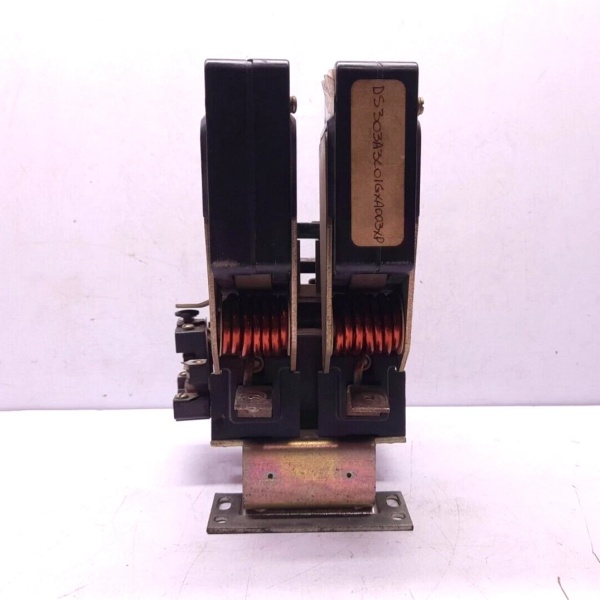
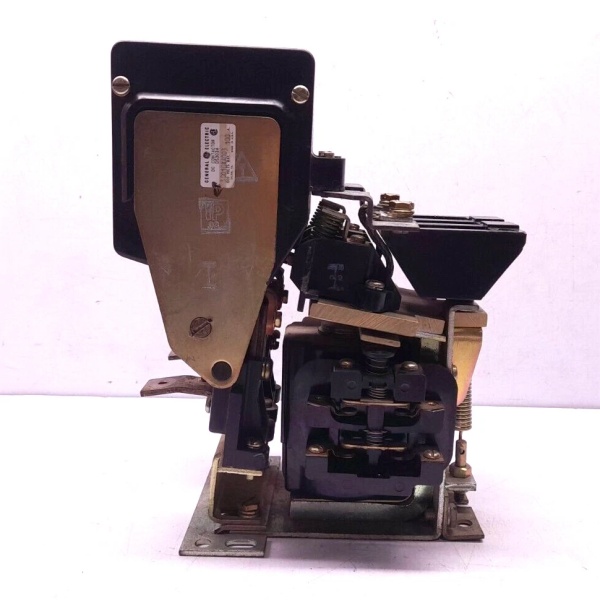
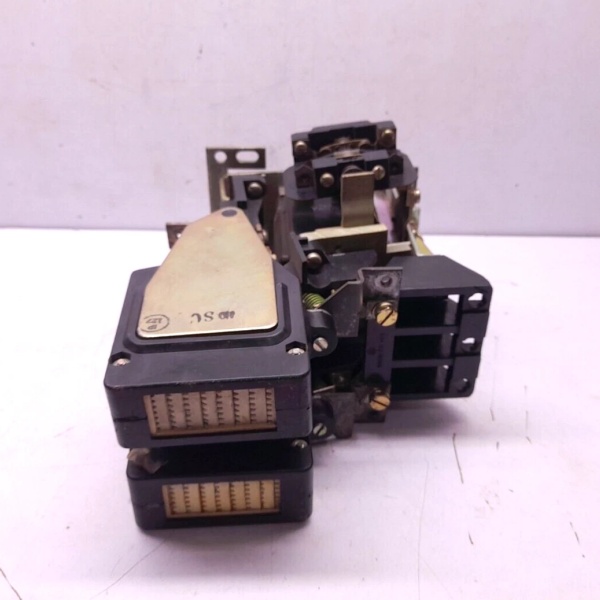
Description
Hard-Numbers: Technical Specifications
- Current Rating: 600A continuous / 750A peak
- Voltage Rating: 600V DC max
- Coil Voltage: 120V DC nominal (115-125V range)
- Coil Cat. No.: 22D75G2A
- Main Contacts: 1NO (Normally Open), Silver alloy tips
- Interlock Contacts: 2NO left-side, 1NO/1NC right-side
- Enclosure Rating: NEMA 4X (dust-tight, watertight, corrosion-resistant)
- Operating Temp: -40°C to +70°C
- Pull-In Voltage: 75% of rated coil voltage
- Drop-Out Voltage: 15% of rated coil voltage
- Electrical Life: 500,000 operations at rated load
- Mechanical Life: 10 million operations
- Weight: 15.2 kg (33.5 lbs)
- Mounting: Bolt-mount with 4 mounting holes
- Terminal Type: Front-accessible stud terminals

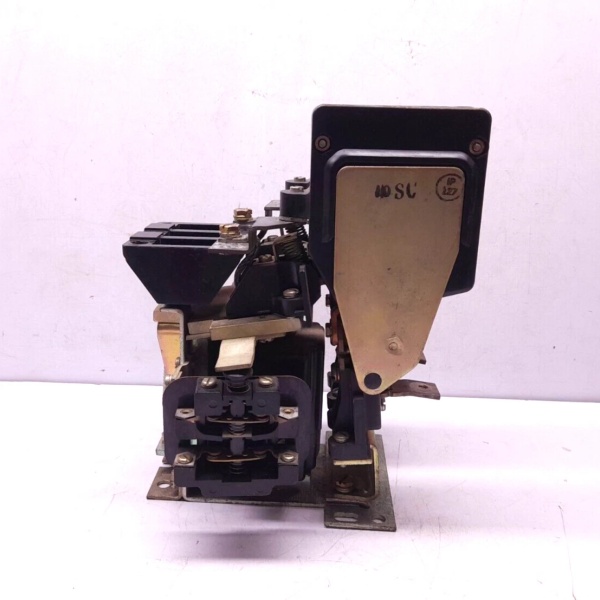
GE DS303A3C01GXA003XP
The Real-World Problem It Solves
When you’re running multiple contactors in parallel or need interlocking between field and exciter breakers, simple on/off signaling isn’t enough. The “C” variant gives you side-mounted interlocks on both sides—mechanically linked status contacts that provide positive feedback and interlock capability without adding external limit switches. The “XP” suffix adds corrosion resistance for coastal and offshore installations.
Where you’ll typically find it:
- Excitation systems with interlocked field and exciter breakers
- DC motor reversing applications requiring electrical interlocks
- Offshore platforms and coastal power plants with salt exposure
- Battery storage systems requiring contactor-to-contactor interlocking
Bottom line: 600A DC switching with dual-side mechanical interlocks and corrosion protection—built for harsh environments where salt and humidity kill standard contactors.
Hardware Architecture & Under-the-Hood Logic
Same electromagnetic core as the A3A variant, but with expanded interlock configuration. The “C” designation adds side-mounted auxiliary contacts on both left and right sides, driven by the main armature linkage. The “XP” suffix indicates NEMA 4X enclosure with corrosion-resistant materials and enhanced sealing.
- Coil energizes at 120V DC, pulling armature closed
- Main contact (1NO) makes, closing the 600A DC circuit
- Left-side interlocks (2NO) and right-side interlocks (1NO/1NC) operate simultaneously
- Magnetic arc chute suppresses DC arc during contact opening
- All interlocks are mechanically linked to main armature—no electrical delay
- Corrosion-resistant plating and enhanced sealing (XP) protect against salt spray
- Overcenter spring ensures rapid contact opening on coil de-energization
- Silver-alloy tips provide high-current carrying capacity
GE DS303A3C01GXA003XP
Field Service Pitfalls: What Rookies Get Wrong
Mixing XP and Non-XP Units in the Same CabinetReplacing an XP unit with a standard NEMA 4 unit “because that’s what we had in stock.” Six months later, the standard unit corrodes from salt spray while the XP units next to it are still running.
- Field Rule: Never downgrade XP to standard. If XP is unavailable, coat the replacement unit with marine-grade conformal coating and install it in a sealed sub-enclosure. Document the downgrade and plan for replacement with the correct XP unit.
Interlock Timing Mismatch Between ContactorsInstalling two contactors with different interlink arm settings. Contactor A closes, but Contactor B’s interlock doesn’t see the signal until 40ms later—too slow for the interlock logic, and the system trips on timing mismatch.
- Field Rule: Verify interlock timing with a millisecond timer when installing multiple contactors. All interlocks in the same interlock chain must switch within 10ms of each other. Adjust armature linkage if timing exceeds this window.
Cross-Wiring Left and Right InterlocksSwapping left and right interlock wiring because “it’s all NO contacts.” The left-side interlocks are designed for timing-critical signals, right-side for general status. Miswiring causes the interlock logic to see wrong sequencing data.
- Quick Fix: Label interlock cables at both ends during removal. Left side = J-series connectors (J1/J2), right side = K-series connectors (K1/K2). Never interchange—mechanical timing differs between sides.
Salt Creep into XP Enclosure Through GrommetsThe XP unit is rated NEMA 4X, but techs run conduit without sealing the grommet openings. Salt-laden air migrates through the conduit and condenses inside the enclosure, corroding the coil and interlink mechanism.
- Field Rule: Use sealed conduit fittings with O-rings on XP units. Apply marine-grade sealant around all conduit entrances. In coastal environments, pressurize the enclosure with dry nitrogen if possible—prevents salt ingress entirely.
Commercial Availability & Pricing Note
Please note: The listed price is for reference only and is not binding. Final pricing and terms are subject to negotiation based on current market conditions and availability.