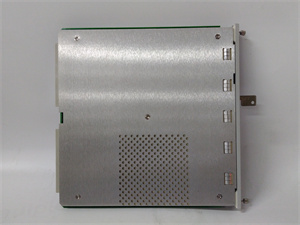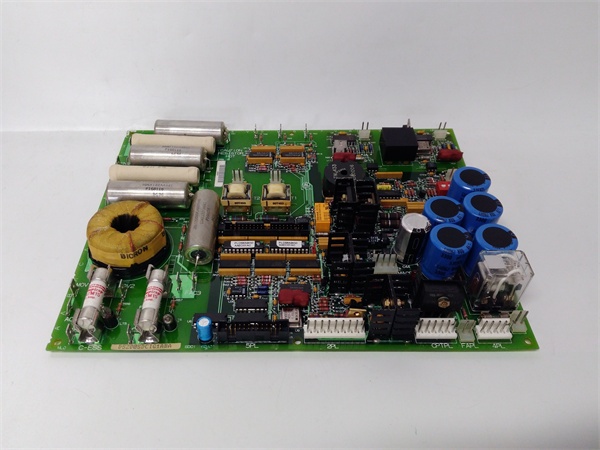
Description
Key Technical Specifications
-
Model Number: DS200TCQAG1BHE
-
Manufacturer: General Electric
-
Channels: 8 differential, software configured as input or output
-
Full-Scale Range: ±10 V (jumper-selectable ±5 V)
-
Accuracy: 0.1 % of span
-
Input Impedance: 1 MΩ min.
-
Isolation: 2500 Vrms channel-to-ground
-
Filter: 1 ms RC on each channel
-
Connectors: J1–J6 (4×34-pin, 2×40-pin) plug into Mark V back-plane
-
Field Terminals: 2×10⁷-point screw blocks, 0.8 N·m max torque
-
Power: +5 V, ±15 V supplied from rack; field loops self-powered
-
Temperature: –40 °C to +70 °C operating
-
Board Size: 203 × 61 × 25 mm, 0.25 kg

GE DS200SDCIG1A
Field Application & Problem Solved
In a peaker plant you don’t have panel space for three DIN rails of isolators, cold-junction boxes, and pull-down resistors. This card collapses all of that into one 6-inch slot. You land LVDTs from the governor valve, 4-20 mA from fuel pressure, TCs from exhaust spreads, and ±10 V servo commands on the same screw blocks—no external signal conditioning required. The eight channels are isolated, so a shorted servo coil won’t drag down your thermocouple readings. Because it’s pure hardware, you can swap it with the unit on turning gear and the Mark V picks up the exact counts; no re-cal, no download. That’s the real value: one hour of outage instead of a shift re-terminating wires.
In a peaker plant you don’t have panel space for three DIN rails of isolators, cold-junction boxes, and pull-down resistors. This card collapses all of that into one 6-inch slot. You land LVDTs from the governor valve, 4-20 mA from fuel pressure, TCs from exhaust spreads, and ±10 V servo commands on the same screw blocks—no external signal conditioning required. The eight channels are isolated, so a shorted servo coil won’t drag down your thermocouple readings. Because it’s pure hardware, you can swap it with the unit on turning gear and the Mark V picks up the exact counts; no re-cal, no download. That’s the real value: one hour of outage instead of a shift re-terminating wires.
Installation & Maintenance Pitfalls (Expert Tips)
Jumper side matters
Silk-screen is viewed from component side. Flip the board and the berg jumpers land on the wrong pads—your ±10 V channel becomes ±5 V and the DSP sees half-scale. Match the drawing in GEI-100161 before you torque anything.
Jumper side matters
Silk-screen is viewed from component side. Flip the board and the berg jumpers land on the wrong pads—your ±10 V channel becomes ±5 V and the DSP sees half-scale. Match the drawing in GEI-100161 before you torque anything.
Torque is 0.8 N·m—no hero moves
Over-tighten and the screw post cracks; under-tighten and vibration backs the wire out. Calibrate your driver and tug-test every conductor.
Over-tighten and the screw post cracks; under-tighten and vibration backs the wire out. Calibrate your driver and tug-test every conductor.
IP20 is not a suggestion
Leave the rack door open during wash-down and salt mist will wick up the screw posts. You’ll chase “signal bounce” faults that disappear when the sun warms the cabinet. Keep the door closed or bag the card during hose-off.
Leave the rack door open during wash-down and salt mist will wick up the screw posts. You’ll chase “signal bounce” faults that disappear when the sun warms the cabinet. Keep the door closed or bag the card during hose-off.
Dress the harness flat
214 wires in a 6-inch slot is tight. Let the bundle bow and the cabinet door pinches a conductor to ground—trips the entire Mark V rack. Lace the harness flat against the card stand-offs and strap it down.
214 wires in a 6-inch slot is tight. Let the bundle bow and the cabinet door pinches a conductor to ground—trips the entire Mark V rack. Lace the harness flat against the card stand-offs and strap it down.
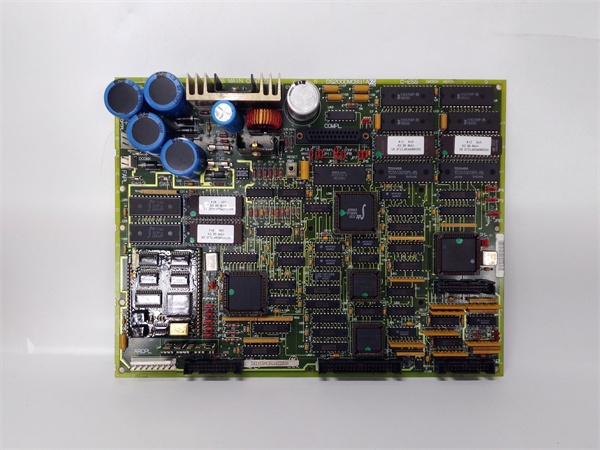
GE DS200SDCIG1A
Technical Deep Dive & Overview
Internally the board is nothing more than a passive signal highway. Each channel hits a precision divider network, a 1 ms RC filter, and a 2500 V opto-coupler, then exits through the 40-pin header to the TCQA processor card. No CPU, no firmware, no handshakes—just clean analog. Because it’s hardware only, hot-swap works: pull the old card, move the wires one-for-one, snap the connectors, and the DSP sees the exact voltage it saw five minutes earlier. That simplicity is why field guys like it; the only thing you can screw up is the jumpers or the torque.
Internally the board is nothing more than a passive signal highway. Each channel hits a precision divider network, a 1 ms RC filter, and a 2500 V opto-coupler, then exits through the 40-pin header to the TCQA processor card. No CPU, no firmware, no handshakes—just clean analog. Because it’s hardware only, hot-swap works: pull the old card, move the wires one-for-one, snap the connectors, and the DSP sees the exact voltage it saw five minutes earlier. That simplicity is why field guys like it; the only thing you can screw up is the jumpers or the torque.