Description
Hard-Numbers: Technical Specifications
- Functional Acronym: TCCB (Turbine Control Card Board)
- Group Number: G1 (Group 1 variant)
- Revision: B (Board Revision B)
- Core Location: Control Core (R> processor rack) – varies by system configuration
- Processor Type: Microprocessor-based governor control processor
- Control Algorithms: Speed control, load control, governor algorithms
- Memory: Program memory, data memory, configuration parameters
- Communication Interface: Communication with other Mark V boards and HMIs
- I/O Processing: Digital input/output processing, analog input/output processing
- Redundancy: Part of redundant R> processor architecture
- Operator Interface: HMI communication capability
- Diagnostic Features: Self-diagnostic capability, fault logging
- LED Indicators: Multiple LED indicators for status, faults, communication
- Power Requirements: Typically 24 V DC from control system power supply
- Dimensions: Standard Mark V board form factor (typically 3″ H × 11.5″ W)
- PCB Coating: Normal coating (non-conformal)
- Manual: GEH-6219 (Turbine Control Board Manual)

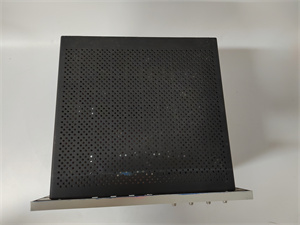
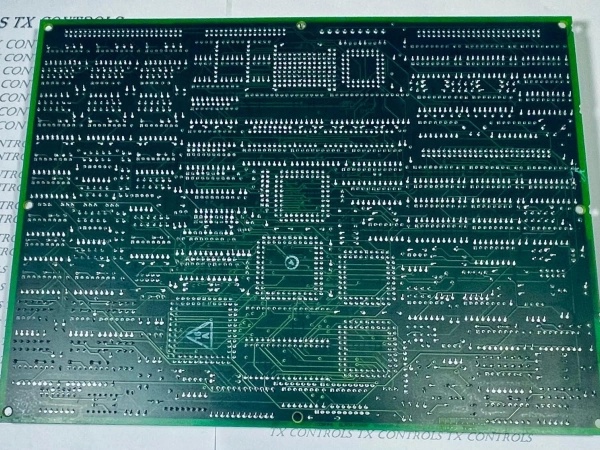
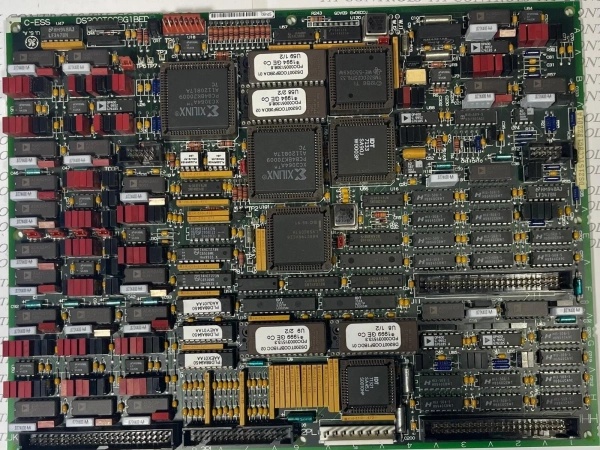
GE DS200TCCBG1B
The Real-World Problem It Solves
The Mark V control system requires a control processing board that executes governor control algorithms, regulates turbine speed and load, and coordinates turbine operation. The DS200TCCBG1B (Turbine Control Card Board – Group 1, Revision B) provides this control processing capability, implementing speed/load control algorithms, governor logic, and turbine coordination. This board processes inputs from speed sensors, pressure transmitters, temperature sensors, and other field devices, then generates control outputs to fuel valves, steam valves, and other actuators to maintain desired turbine operation. The revision B represents an evolved design that may include improvements in processing capability, algorithm accuracy, or additional features over revision A. Without this board, the Mark V control system would lack the control processing capability required for turbine governor control.
Where you’ll typically find it:
- Control Core (R> processor rack) – varies by system configuration
- Gas turbine control systems requiring governor control
- Steam turbine control systems with control requirements
- Applications requiring speed/load regulation and turbine coordination
- Systems with redundant R> processor architecture
- Turbines requiring revision B control processing capabilities
Bottom line: Governor control processing board—Group 1 variant, revision B configuration, implementing speed/load control algorithms and turbine coordination for turbine operation.
Hardware Architecture & Under-the-Hood Logic
The DS200TCCBG1B (Group 1, Revision B) is the turbine control card board for the Mark V control system, serving as a control processing board for governor control. The revision B design represents an evolution from earlier revisions, potentially incorporating improved processor performance, enhanced algorithm accuracy, or additional features based on GE engineering change orders. The board executes speed/load control algorithms, governor logic, and turbine coordination functions. Inputs from speed sensors, pressure transmitters, temperature sensors, and other field devices are processed through the board’s input conditioning circuits and converted to digital values for the governor algorithms. Control outputs are generated and routed through output conditioning circuits to drive fuel valves, steam valves, and other actuators. The board communicates with other Mark V boards, HMIs, and external systems for coordinated turbine operation.
Signal flow:
- Field device inputs (speed, pressure, temperature, status) route through terminal boards to TCCB
- Input conditioning circuitry filters and prepares signals for processing
- Analog-to-digital converters convert analog signals to digital values
- Governor algorithms (speed control, load control) execute on microprocessor
- Sequencer logic coordinates turbine startup, operation, and shutdown sequences
- Control outputs generated based on algorithm results and setpoints
- Output conditioning circuitry prepares control signals for actuation
- Control outputs route through interface boards to fuel valves, steam valves, actuators
- Communication with other Mark V boards (SIOB, SDCC, terminal boards)
- HMI communication provides operator interface and monitoring
- Self-diagnostic routines monitor board health and fault conditions
- Fault logging captures diagnostic information for troubleshooting
- LED indicators display status, faults, communication states
- Redundant R> processor architecture ensures reliability
- Revision B may include enhanced processing capabilities or features
GE DS200TCCBG1B
Field Service Pitfalls: What Rookies Get Wrong
Confusing TCCB with TCCA causes installation errorsMixing up TCCB and TCCA boards. I’ve seen technicians replacing TCCB with TCCA boards, causing incompatible interfaces and control failures.
- Field Rule: Clearly identify TCCB vs. TCCA. Both are turbine control processing boards but have different capabilities and configurations. TCCB may have different algorithm sets or I/O processing than TCCA. Check board label for “TCCB” designation. Never assume TCCA and TCCB are interchangeable—verify board type matches application requirements.
Forgetting to backup configuration parameters causes reconfiguration nightmareNot saving configuration before replacement. I’ve seen technicians replacing TCCB boards without backing up parameters, forcing complete reconfiguration from scratch.
- Field Rule: Always backup configuration parameters before TCCB replacement. Document all governor setpoints, sequencer steps, calibration values, and operational parameters. Use Mark V configuration tools to save parameter files. Photograph critical parameter screens. Never replace TCCB without backup—reconfiguring from scratch wastes hours and risks errors.
Skipping revision B compatibility verification causes installation failuresInstalling revision B without checking compatibility. I’ve seen technicians replacing earlier TCCB revisions with revision B boards without verifying compatibility, leading to configuration errors or processing failures.
- Field Rule: Verify revision B compatibility before installation. Revision B may require different software version or parameter formats. Check R> processor software version compatibility. Verify control algorithms in software match revision B capabilities. Consult GEH-6219 manual for revision compatibility requirements. Never assume revision B is drop-in compatible—verify compatibility first.
Neglecting redundancy coordination causes controller conflictsNot synchronizing redundant controllers. I’ve seen technicians replacing TCCB boards in redundant systems without coordinating with other R> processors, causing controller conflicts.
- Field Rule: Coordinate with redundant controllers during replacement. Verify redundant controller states before replacement. Follow proper controller takeover/standby procedures. Re-synchronize controllers after replacement. Test redundancy switchover function. Never replace TCCB in redundant system without considering other controllers—redundancy requires coordination.
Forgetting to test control algorithms after replacement causes latent faultsNot verifying governor operation. I’ve seen technicians installing TCCB boards but not testing speed/load control, discovering issues only during turbine startup.
- Field Rule: Always test governor control algorithms after TCCB installation. Verify speed control response with simulated speed changes. Test load control operation with simulated load changes. Verify sequencer logic executes correctly. Check all control outputs respond appropriately to commands. Use Mark V diagnostic tools to confirm algorithm execution. Never assume control algorithms work correctly—verify governor operation before placing in service.
Overlooking revision B enhancements causes missed capabilitiesNot utilizing revision B improvements. I’ve seen technicians installing revision B boards but not understanding enhanced features, failing to leverage improved capabilities.
- Field Rule: Learn revision B-specific enhancements. Revision B may include improved algorithms, additional diagnostic features, or enhanced performance capabilities. Check for additional parameter options or control modes. Use enhanced diagnostic capabilities for fault identification. Document revision B features compared to revision A. Never assume revision B is just an update—utilize all capabilities.
Improper LED interpretation causes misdiagnosisMisreading LED indication patterns. I’ve seen technicians misunderstanding revision B LED patterns, missing critical fault information.
- Field Rule: Learn revision B LED indication patterns. Revision B may have different LED flash patterns or additional indicators. Understand what each LED indicates (processor status, communication state, fault type). Use LED information for fault diagnosis. Never assume LED patterns match revision A—learn revision B-specific patterns.
Confusing TCCB with STCA or other control boards causes installation errorsMixing up TCCB and other control board types. I’ve seen technicians replacing TCCB with STCA or other boards, causing control failures.
- Field Rule: Clearly identify TCCB vs. other control boards. TCCB is Turbine Control Card Board—executes specific governor control functions. STCA is Simple Turbine Control Card—different functionality. Check board label for “TCCB” designation. Never assume all control boards are identical—TCCB provides specific governor control functions.
Commercial Availability & Pricing Note
Please note: The listed price is for reference only and is not binding. Final pricing and terms are subject to negotiation based on current market conditions and availability.