Description
DS200STBAG1ADC Product Overview
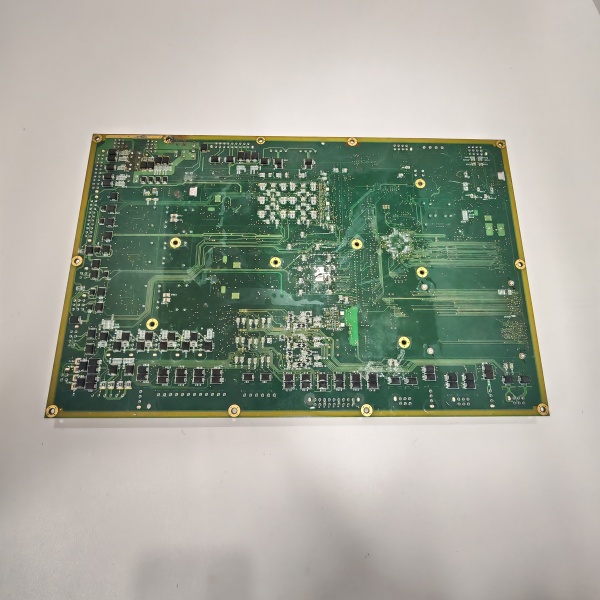
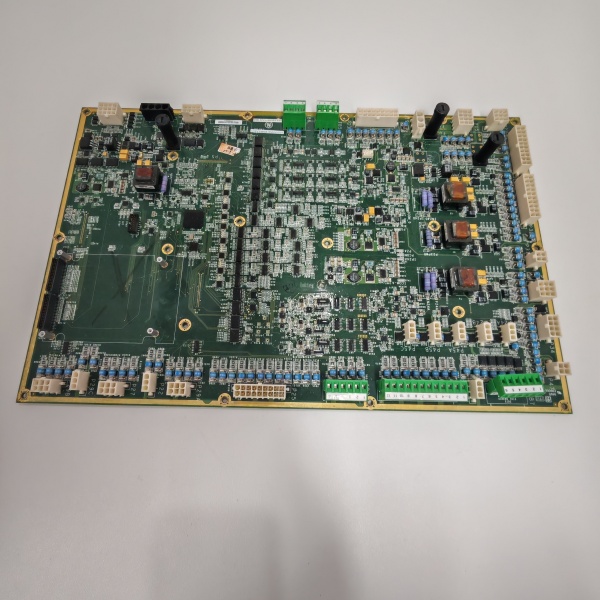
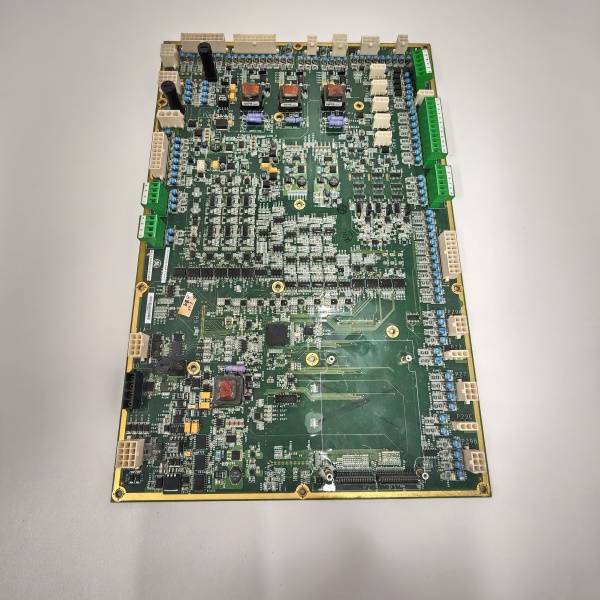
The DS200STBAG1ADC is an RST (Resistive Sensor Terminal) mixed-I/O termination board used inside GE Mark V Speedtronic turbine and compressor control cubicles. It occupies a double-slot VME position and provides 180 termination points for field sensors—primarily RTDs, thermocouples, and 4-20 mA transmitters—plus a limited number of discrete inputs/outputs.
The DS200STBAG1ADC is an RST (Resistive Sensor Terminal) mixed-I/O termination board used inside GE Mark V Speedtronic turbine and compressor control cubicles. It occupies a double-slot VME position and provides 180 termination points for field sensors—primarily RTDs, thermocouples, and 4-20 mA transmitters—plus a limited number of discrete inputs/outputs.
In the control hierarchy the board sits at the “field-signal interface” layer: it burdens current loops, excites 3-/4-wire RTDs, cold-junction-compensates thermocouples, and converts raw resistance or current into conditioned ±10 V or 0–10 V signals that the Mark V CPU digitizes. On-board trim-pots and jumper banks allow site-specific scaling without software downloads.
Because the card is passive (no processor) and carries conformal coating, it is accepted in safety-related turbine-compressor drives where “simple device” classification avoids additional software V&V.

GE IS200WETAH1AEC
Technical Specifications
-
Model Number: DS200STBAG1ADC
-
Manufacturer: General Electric
-
Product Type: RST Mixed-I/O Terminal Board
-
Termination Points: 180 screw-clamp terminals (RTD, mA, discrete)
-
Sensor Types: RTD (Pt100, Cu10, etc.), thermocouple (J, K, T, E), 4–20 mA, dry-contact discrete I/O
-
Signal Conditioning: On-board bridge completion, cold-junction compensation, 250 Ω burden resistors
-
Output to CPU: Conditioned ±10 V or 0–10 V per channel
-
Isolation: 1500 V channel-to-ground basic insulation
-
Logic Supply: 24 VDC derived from Mark V backplane
-
Temperature: –40 … +85 °C storage; 0–60 °C operational
-
Weight: ≈ 1.56 kg (3.4 lb)
-
Certifications: CE, UL, RoHS, Zone-2 ready
Core Features & Customer Value
180-point density – One board replaces multiple smaller terminal blocks, freeing Mark V slots and reducing marshalling cabinet footprint
180-point density – One board replaces multiple smaller terminal blocks, freeing Mark V slots and reducing marshalling cabinet footprint
.
Multi-sensor compatibility – Accepts RTDs, thermocouples, 4-20 mA transmitters, and discrete contacts without external signal conditioners, cutting installation cost
.
On-board signal conditioning – Bridge completion, cold-junction compensation, and 250 Ω burdens are factory-installed, ensuring <0.1 % accuracy without user calibration
.
Passive, simple-device design – No firmware or battery; changes are made with jumpers and trim-pots, qualifying the card for safety-related systems without additional software V&V.
Zone-2 / marine certified – Conformal-coated PCB is certified for Class I Div. 2 and offshore environments, allowing direct installation in hazardous-location turbine skids without additional purge systems
GE IS200WETAH1AEC
.
Typical Applications
In combined-cycle power plants the DS200STBAG1ADC is installed in Mark V racks that monitor gas-turbine exhaust temperature (type-K thermocouples), bearing-metal temperature (3-wire RTDs), and fuel-pressure transmitters (4-20 mA). The 180-point density keeps the temperature-protection loop responsive while the on-board CJC resolves 0.1 °C changes
In combined-cycle power plants the DS200STBAG1ADC is installed in Mark V racks that monitor gas-turbine exhaust temperature (type-K thermocouples), bearing-metal temperature (3-wire RTDs), and fuel-pressure transmitters (4-20 mA). The 180-point density keeps the temperature-protection loop responsive while the on-board CJC resolves 0.1 °C changes
.
In pipeline compressor stations the same board reads 4-20 mA from suction/discharge pressure transmitters and drives auxiliary 24 V contactors, using the high-density layout to minimise marshalling cabinet footprint
.
Because the board is certified for marine environments, it is also used on off-shore platforms for well-head temperature and subsea pressure feedback without needing additional isolation barriers
.