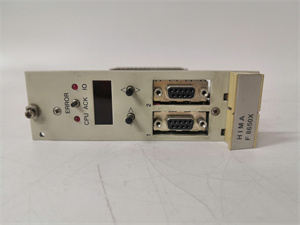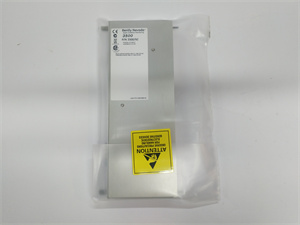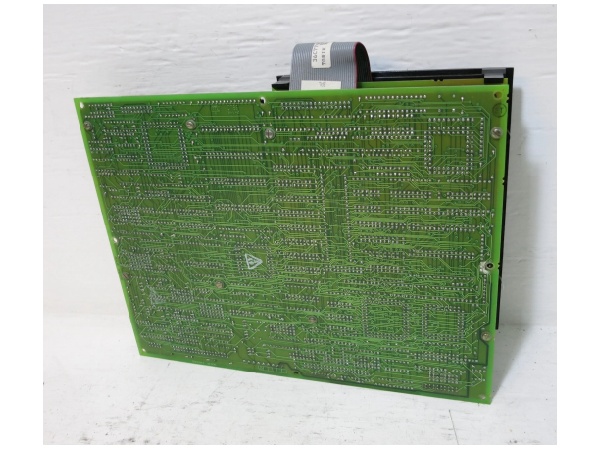
Description
Key Technical Specifications
-
Model Number: DS200SLCCG1ADC
-
Manufacturer: General Electric
-
Network Protocols: DLAN (drive LAN) & ARCNET token-pass, 2.5 Mbps
-
Processor: 40 MHz LAN Control Processor (LCP)
-
Memory: 2 × detachable EPROM sockets (64 k × 16), 8 k × 16 dual-port RAM
-
Isolation: 1500 Vdc port-to-port; 500 Vdc channel-to-ground
-
Connectors: P1 (DLAN coax), P2 (ARCNET coax), J1-J4 40-pin to SDCC back-plane
-
Power Draw: +5 V @ 1 A, +15 V @ 0.1 A from 2PL bus
-
Diagnostics: 6-status LED bank, alphanumeric keypad port
-
Operating Temperature: –20 °C to +70 °C
-
Board Size: 245 × 185 × 25 mm, 0.38 kg conformal-coated

DS200SLCCG1ADC
Field Application & Problem Solved
Plants that still run AC2000 or DC2000 drives need a way to get speed reference, current, and fault data up to the DCS without rebuilding the whole rack. This card is the bridge. It sits in slot 3, talks token-ring ARCNET to the Mark V turbine panel, and pumps DLAN frames down to the SDCC control card. With both isolated and non-isolated sides you can tie into a fiber ARCNET highway on the turbine side while keeping a copper DLAN stub local to the drive—no extra repeaters, no fiber converters that fail every summer. The LCP filters and checksums every frame so a noisy compressor VFD next door can’t corrupt your speed reference. End result: operators get real-time amps and RPM on their Ovation screens without touching legacy Genius buses.
Plants that still run AC2000 or DC2000 drives need a way to get speed reference, current, and fault data up to the DCS without rebuilding the whole rack. This card is the bridge. It sits in slot 3, talks token-ring ARCNET to the Mark V turbine panel, and pumps DLAN frames down to the SDCC control card. With both isolated and non-isolated sides you can tie into a fiber ARCNET highway on the turbine side while keeping a copper DLAN stub local to the drive—no extra repeaters, no fiber converters that fail every summer. The LCP filters and checksums every frame so a noisy compressor VFD next door can’t corrupt your speed reference. End result: operators get real-time amps and RPM on their Ovation screens without touching legacy Genius buses.
Installation & Maintenance Pitfalls (Expert Tips)
Coax is king—until it isn’t
DLAN coax uses BNC tees. One missing 75 Ω terminator and the whole ring collapses; the drive throws “LAN TIMEOUT” but the LED still blinks. Always pocket a BNC T and terminator when you walk out the door.
Coax is king—until it isn’t
DLAN coax uses BNC tees. One missing 75 Ω terminator and the whole ring collapses; the drive throws “LAN TIMEOUT” but the LED still blinks. Always pocket a BNC T and terminator when you walk out the door.
EPROMs walk off
The two EPROMs are in machined sockets. Vibration works them loose after ten years. Power-down reseat once per outage or you’ll chase phantom “bad LCP” faults.
The two EPROMs are in machined sockets. Vibration works them loose after ten years. Power-down reseat once per outage or you’ll chase phantom “bad LCP” faults.
Keypad cable is fragile
The 10-pin ribbon for the alpha keypad is not keyed. Reverse it and you short +5 V to frame ground—blown poly-fuse inside the LCP. Line up the red stripe to pin-1 arrow or order a new board.
The 10-pin ribbon for the alpha keypad is not keyed. Reverse it and you short +5 V to frame ground—blown poly-fuse inside the LCP. Line up the red stripe to pin-1 arrow or order a new board.
Fiber ARCNET polish matters
If the plant upgraded to fiber ARCNET, the ST connectors must be 0 dB reflection. A dirty polish scatters light, token timing drifts, and you get intermittent “ARCNET LOST TOKEN.” Clean and scope every ferrule before you click it in.
If the plant upgraded to fiber ARCNET, the ST connectors must be 0 dB reflection. A dirty polish scatters light, token timing drifts, and you get intermittent “ARCNET LOST TOKEN.” Clean and scope every ferrule before you click it in.
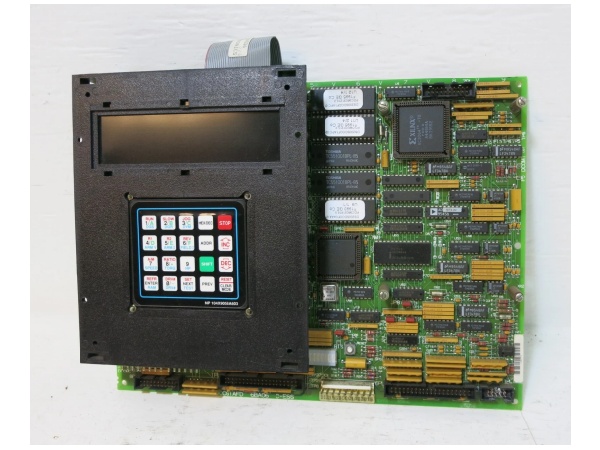
DS200SLCCG1ADC
Technical Deep Dive & Overview
The DS200SLCCG1ADC is basically a dedicated network coprocessor on a single Euro-card. The 40 MHz LCP runs a trimmed-down ARCNET stack in ROM; it receives token frames, strips the CRC, and shoves data into dual-port RAM that the SDCC master DSP reads during its 2 ms scan. DLAN side uses coax carrier-sense with bit-stuffing—old but deterministic, which is why GE kept it in steel mills where Ethernet collisions would kill you. Because all timing is done in hardware, you can swap the card with the drive spinning; the LCP re-acquires token in < 150 ms and the process never sees the hiccup.
The DS200SLCCG1ADC is basically a dedicated network coprocessor on a single Euro-card. The 40 MHz LCP runs a trimmed-down ARCNET stack in ROM; it receives token frames, strips the CRC, and shoves data into dual-port RAM that the SDCC master DSP reads during its 2 ms scan. DLAN side uses coax carrier-sense with bit-stuffing—old but deterministic, which is why GE kept it in steel mills where Ethernet collisions would kill you. Because all timing is done in hardware, you can swap the card with the drive spinning; the LCP re-acquires token in < 150 ms and the process never sees the hiccup.