Description
Product Introduction
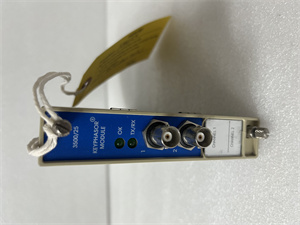
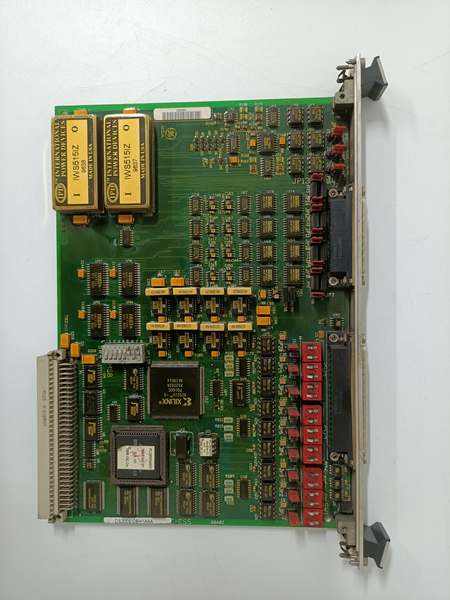
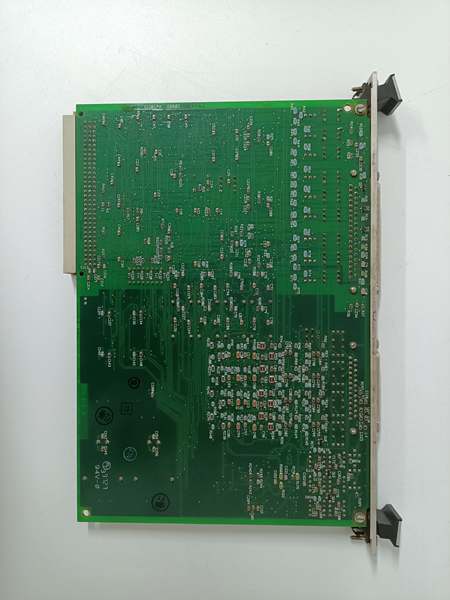
The is a Serial I/O board (part of the SIOB family) designed for the Mark V turbine control system. Unlike the earlier DS200SIOBH1ABA (which is often a basic 2-port slave-only unit), the “AAA” revision is a mid-tier “balanced performance” variant.
It is typically installed in the <R1>, <R2>, or <R3>I/O cores of a Mark V triple modular redundant (TMR) or simplex rack. Its primary job is to manage serial data exchange—handling protocols like Modbus RTU (Master or Slave) and connecting to HMI terminals, data recorders, or third-party smart sensors (e.g., flow meters, pressure scanners). It features 3 communication ports (1 RS-232 + 2 RS-485), supports auto-baud detection, and provides better noise filtering (1.5kV isolation) than base models, making it suitable for medium-scale turbine setups (100-300MW) or auxiliary loops requiring active data polling.
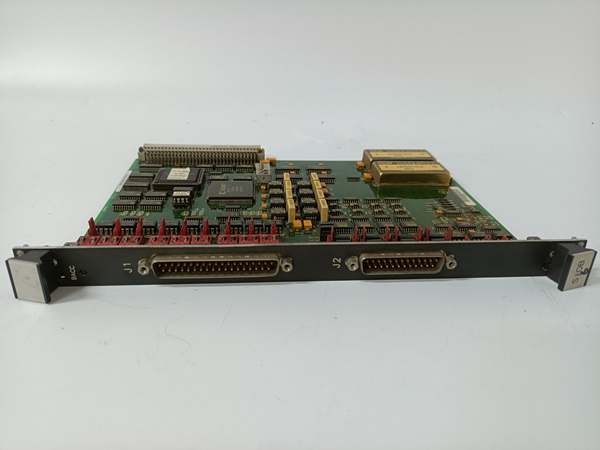
DS200SIOBH1AAA
Key Technical Specifications
- System Role: SIOB (Serial I/O Communication)
- Architecture: VME Bus Interface (Occupies 1 Slot in I/O Core)
- Power Requirement: +5 V DC (±5%, sourced from backplane)
- Communication Ports:
- Port 1: RS-232 (D-sub 9-pin, often for local HMI/Console)
- Port 2 & 3: RS-485 (Differential, for Multi-drop networks)
- Protocol Support: Modbus RTU (Master/Slave), GE Custom Serial
- Data Rates: 300 bps to 115.2 kbps (Auto-baud capable)
- Isolation: 1.5 kVrms (Port-to-Backplane/System)
- Configuration: Software Configurable (Toolbox/Master Controller)
- Indicators: 1x LED (Status/Heartbeat)
- Temp Range: 0 °C to +70 °C (Operational)
- Revision Note: “AAA” indicates Hardware Rev A, Artwork A, Firmware/Feature set A (Mid-spec).
Quality Control Process (Engineer’s Perspective)
- Incoming Verification: Match serial to manifest. Inspect the 96-pin VME fingers (P1) for carbon tracks (sign of backplane surges). Check the DB9 and RJ-style headers for bent serial port pins.
- Loopback Test: Rig in a Mark V core simulator with 5V DC. Run a Modbus Master polling loop targeting a simulator on Port 2 (RS-485). We verify packet integrity over 24 hrs; CRC errors must be zero to ensure turbine data logging is reliable.
- Electrical Parameter Test: Back-probe the 5V rail. Ripple shouldn’t exceed 50mV p-p. Megger the serial port shields to chassis at 500V; leakage >10MΩ prevents ground loop noise from corrupting Modbus data.
- Config Verification: Although software-driven, verify any onboard oscillators/crystals are seated. The “AAA” rev relies on stable clocking for 115.2k baud timing.
- Final QC & Packaging: Clean VME fingers with isopropanol. Bag in rigid ESD foam. Label “QC Passed – Comm Loopback OK”.
Replacement Pitfall Guide
❗ SIOB vs SIOS Confusion: This is an SIOB (General Serial). Do not install it in a slot addressed for SIOS (Servo) or SIOC (Carrier). While the hardware looks identical, the Mark V firmware maps specific memory addresses to these roles. Forcing an SIOB into a SIOS slot results in “Processor I/O Mismatch” and loss of servo control.
❗ Master vs Slave Mode (Critical): The supports Modbus RTU Master mode (polling sensors). If replacing an old DS200SIOBH1ABA(often Slave-only), you must update the Mark V software configuration (.cde/.tcf files) to enable Master mode; otherwise, the new board will sit idle waiting for a poll that never comes, causing “Data Timeout” alarms on your flow computers.
❗ Termination Resistors (RS-485): The RS-485 ports (Port 2/3) often require 120Ω termination resistors at the physical ends of the cable run. If this SIOB is the last deviceon the daisy chain and you forget to enable the onboard terminator (via software/DIP), signal reflections will cause intermittent byte errors.
❗ Port Mapping: The “AAA” has 1x RS-232 and 2x RS-485. Your site wiring might expect the HMI on Port 1 (RS-232). If the previous tech used a custom cable for an “ABA” (which might have different port layouts), pin-outs may not match. Always verify the wiring diagram against the SIOBH1AAAmanual (GEK-XXXX) before racking.
❗ VME Seating: The P1 connector is tight. “Half-seating” causes “Lost Communication” faults between the I/O core and the main controller (<R>, <S>, <T>). Apply even pressure until ejector levers lock.
Keep these in mind and you’ll cut 90% of rework time.
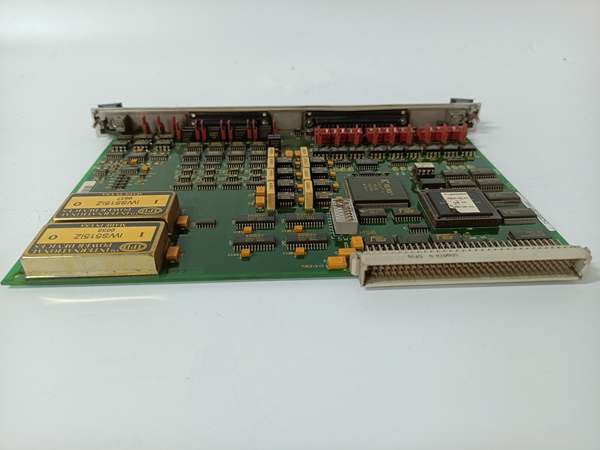
DS200SIOBH1AAA
Compatibility Matrix & Benchmarks
- → GE DS200SIOBH1ABA: Upgrade/Replacement— “AAA” is feature-richer (3 ports vs 2, Master mode, better isolation). Generally backward compatible if configured correctly in software, but do not treat as a direct “plug-and-play” swap without checking port assignments.
- → Mark V I/O Core (R1/R2/R3): Direct— Slides into standard VME slots designated for SIOB/TCQA.
- → Mark VIe (IS200 Series): Incompatible— Mark VIe uses Ethernet