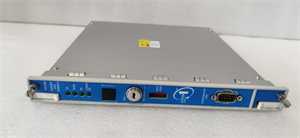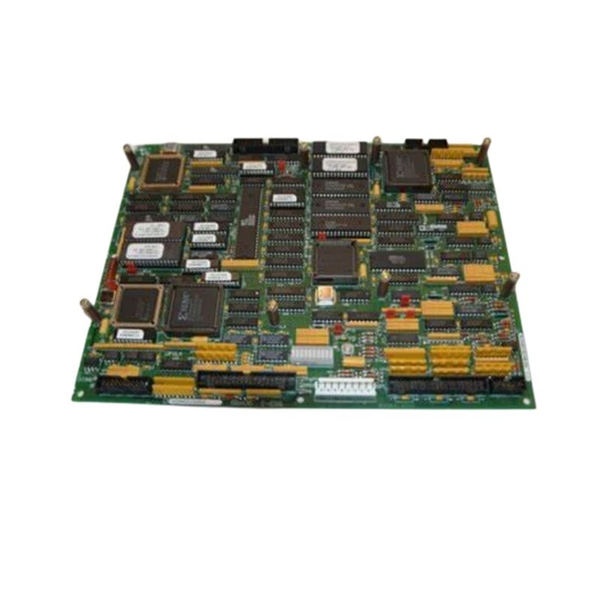
Description
Key Technical Specifications
-
Model Number: DS200SIOBG1AAA
-
Manufacturer: General Electric
-
Bus Interface: VME P1 96-pin, 16-bit data, standard I/O address modifiers
-
Field I/O: Two 40-pin connectors (J1, J2) for TBA/TBB screw-terminal boards
-
Configuration: 20 berg jumpers (pull-ups, polarity, filter delays), 18 rocker switches (site-specific enable/disable)
-
Power Demand: +5 V @ 1 A, +12 V @ 0.2 A supplied through VME back-plane
-
Diagnostics Port: 9-pin D-Shell RS-232 (TIMN) on face-plate for laptop access
-
Indicators: Single green “BOARD OK” LED (power & self-test)
-
Temperature Range: –40 °C to +85 °C operating
-
Board Size: 160 × 100 mm (6U VME form-factor), 0.44 kg
-
Mounting: Plug-in on VME rail; captive extractor handles

DS200IPCSG1ABB
Field Application & Problem Solved
In a peaker LM6000 skid the base SDCC only brings out 32 digital points—add the SIOB and you pick up another 64 without adding a second rack. You land fire-gas switches, torque-limit relays, and compartment fans on the TBA screw blocks; the board converts dry-contact closures into 5 V TTL the SDCC can read. Because every input is jumper-selectable for pull-up or pull-down, you can mix 24 Vdc and 125 Vdc circuits on the same card—no extra isolators. When a lightning strike blows a varistor you lose one channel, swap the card in two minutes, and the turbine is back to start permissive—no download, no re-cal.
In a peaker LM6000 skid the base SDCC only brings out 32 digital points—add the SIOB and you pick up another 64 without adding a second rack. You land fire-gas switches, torque-limit relays, and compartment fans on the TBA screw blocks; the board converts dry-contact closures into 5 V TTL the SDCC can read. Because every input is jumper-selectable for pull-up or pull-down, you can mix 24 Vdc and 125 Vdc circuits on the same card—no extra isolators. When a lightning strike blows a varistor you lose one channel, swap the card in two minutes, and the turbine is back to start permissive—no download, no re-cal.
Installation & Maintenance Pitfalls (Expert Tips)
Jumpers define the voltage personality
Default is pull-up to 5 V. If your site runs 125 Vdc fire-gas loops and you forget JP4-JP6, the SDCC sees every contact as closed. Match the jumper legend taped inside the cabinet door before you land wires.
Jumpers define the voltage personality
Default is pull-up to 5 V. If your site runs 125 Vdc fire-gas loops and you forget JP4-JP6, the SDCC sees every contact as closed. Match the jumper legend taped inside the cabinet door before you land wires.
Switch blocks love to migrate
Vibration rocks the 18 miniature switches; one creeps to “disable” and half your inputs disappear. After every major, press each rocker with a pen tip to be sure it’s fully seated.
Vibration rocks the 18 miniature switches; one creeps to “disable” and half your inputs disappear. After every major, press each rocker with a pen tip to be sure it’s fully seated.
TIMN port is live at 5 V
Plugging a grounded laptop into the 9-pin RS-232 can short +5 V to frame ground and blow the UART on the SDCC. Use an isolated USB-RS-232 dongle or power down before you plug in.
Plugging a grounded laptop into the 9-pin RS-232 can short +5 V to frame ground and blow the UART on the SDCC. Use an isolated USB-RS-232 dongle or power down before you plug in.
VME extractor handles break—use two hands
The plastic extractors snap if you reef on one side. Pull evenly with both handles until the board clears the P1 connector; otherwise you’ll drop the card on the power supply and short 5 V to 12 V.
The plastic extractors snap if you reef on one side. Pull evenly with both handles until the board clears the P1 connector; otherwise you’ll drop the card on the power supply and short 5 V to 12 V.
Technical Deep Dive & Overview
Internally the SIOB is a straight address-decode and buffer card. A GAL16V8 PAL decodes the VME address lines and drives 74ACT244 buffers for inputs and 74ACT374 latches for outputs. Field power is isolated through optos so you can mix voltages on the same board. Because there is no micro or firmware, you can hot-swap with the turbine running; the SDCC re-scans the new I/O map inside 50 ms and never loses a beat
Internally the SIOB is a straight address-decode and buffer card. A GAL16V8 PAL decodes the VME address lines and drives 74ACT244 buffers for inputs and 74ACT374 latches for outputs. Field power is isolated through optos so you can mix voltages on the same board. Because there is no micro or firmware, you can hot-swap with the turbine running; the SDCC re-scans the new I/O map inside 50 ms and never loses a beat
.