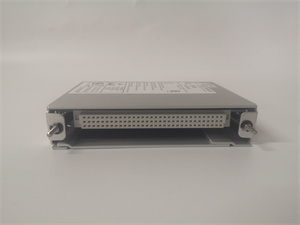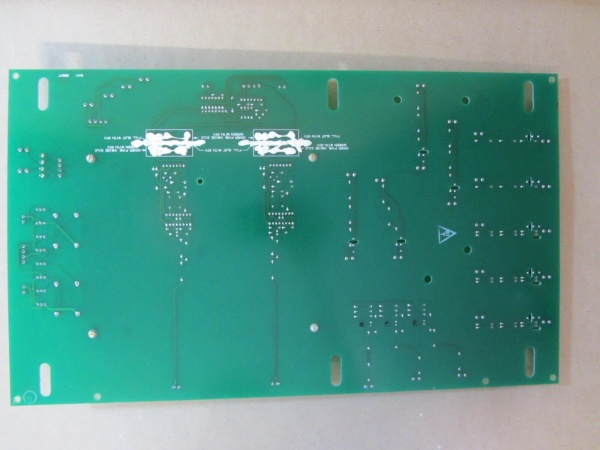
Description
Key Technical Specifications
-
Model Number: DS200SHVIG1B
-
Manufacturer: General Electric
-
System Voltage: ≤ 4500 Vpk SCR bridge
-
Signal Inputs: ±500 mV range, 10:1 current transformers, jumper-select attenuation
-
Isolation: 1500 Vdc card-to-ground, 2.5 kV optical on gate fibers
-
Gate Outputs: 6 × ST fiber ports, 15 mA @ 820 nm, 2 µs rise time
-
Jumpers: 17 berg jumpers (gain, attenuation, CT ratio, filter corner)
-
Connectors: J1–J4 40-pin to SDCC, P1–P6 HV bayonet, 6 × ST fiber
-
Power Draw: +5 V @ 0.6 A, +15 V @ 0.2 A from rack
-
Temperature: –20 °C to +70 °C operating
-
Board Size: 279 × 216 × 25 mm, 1.1 kg conformal-coated

DS200SHVIG1B
Field Application & Problem Solved
In a 7FA combined-cycle unit the exciter bridge sits at 2 400 Vdc. You can’t run copper straight to the SDCC—this card does the heavy lifting. It drops the 2 kV bridge voltage down to a ±500 mV signal the SDCC A/D can swallow, then turns the 5 V logic gate command into light pulses that fire the SCRs through fiber. If a device fails to commutate, the on-board dv/dt comparator flags “SHVI FAULT” inside 2 µs and blocks the next pulse—saving you from a diode blow-out and a week-long outage. Bottom line: without the SHVI you can’t safely close the kilovolt gap between silicon and software.
In a 7FA combined-cycle unit the exciter bridge sits at 2 400 Vdc. You can’t run copper straight to the SDCC—this card does the heavy lifting. It drops the 2 kV bridge voltage down to a ±500 mV signal the SDCC A/D can swallow, then turns the 5 V logic gate command into light pulses that fire the SCRs through fiber. If a device fails to commutate, the on-board dv/dt comparator flags “SHVI FAULT” inside 2 µs and blocks the next pulse—saving you from a diode blow-out and a week-long outage. Bottom line: without the SHVI you can’t safely close the kilovolt gap between silicon and software.
Installation & Maintenance Pitfalls (Expert Tips)
Jumpers are NOT set-and-forget
Factory default is 10:1 CT ratio. If your plant upgraded to 20:5 CTs and you don’t move JP4-JP6, the SDCC sees half the current and will over-fire the bridge—expect melted SCRs inside a week. Match the jumper table to the as-built CT drawing before you torque anything.
Jumpers are NOT set-and-forget
Factory default is 10:1 CT ratio. If your plant upgraded to 20:5 CTs and you don’t move JP4-JP6, the SDCC sees half the current and will over-fire the bridge—expect melted SCRs inside a week. Match the jumper table to the as-built CT drawing before you torque anything.
Fiber bend radius is 1.5 in—no exceptions
Sharp kinks add 3 dB loss; the gate driver sees 8 mA instead of 15 and misfires. Use the orange plastic guide riveted to the bulkhead and zip-tie every 6 in.
Sharp kinks add 3 dB loss; the gate driver sees 8 mA instead of 15 and misfires. Use the orange plastic guide riveted to the bulkhead and zip-tie every 6 in.
Bayonet HV connectors must click twice
These carry 3 kV. A half-latch arcs, carbon-tracks the insulator, and you’ll chase “SHVI OVER-V” trips that clear when you open the door. Twist until you feel the second detent, then tug-test.
These carry 3 kV. A half-latch arcs, carbon-tracks the insulator, and you’ll chase “SHVI OVER-V” trips that clear when you open the door. Twist until you feel the second detent, then tug-test.
Differential feedback screws love to back out
Vibration loosens the 4-40 screws on J3/J4; resistance climbs, feedback droops, and the SDCC thinks current is low—so it over-fires and cooks the motor. Hit every screw 10 in-lb and re-torque after the first thermal cycle.
Vibration loosens the 4-40 screws on J3/J4; resistance climbs, feedback droops, and the SDCC thinks current is low—so it over-fires and cooks the motor. Hit every screw 10 in-lb and re-torque after the first thermal cycle.
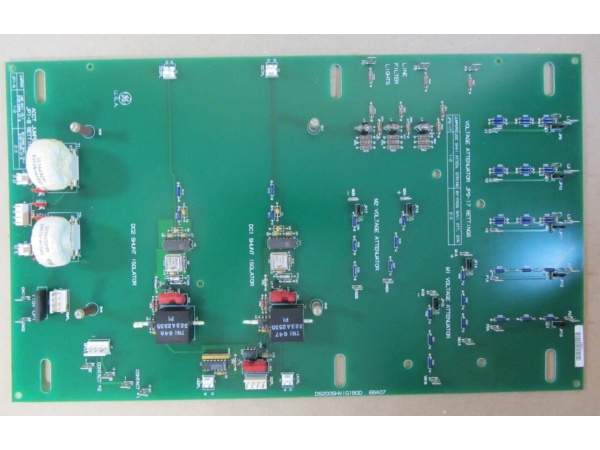
DS200SHVIG1B
Technical Deep Dive & Overview
DS200SHVIG1B is a passive-optical hybrid. Six Avago HFBR-1522 transmitters convert 5 V CMOS from the SDCC into 820 nm light pulses; receivers on each SCR gate-quench convert back to 15 V gate current. High-voltage feedback is scaled through precision 0.1 % dividers and delivered differentially to the SDCC A/D. RC snubbers (0.1 µF / 100 Ω) across each bridge arm limit dv/dt to <500 V/µs. No processor on-board—everything is hardware—so you can hot-swap with the bridge powered; the SDCC re-syncs gate pulses within 50 ms
DS200SHVIG1B is a passive-optical hybrid. Six Avago HFBR-1522 transmitters convert 5 V CMOS from the SDCC into 820 nm light pulses; receivers on each SCR gate-quench convert back to 15 V gate current. High-voltage feedback is scaled through precision 0.1 % dividers and delivered differentially to the SDCC A/D. RC snubbers (0.1 µF / 100 Ω) across each bridge arm limit dv/dt to <500 V/µs. No processor on-board—everything is hardware—so you can hot-swap with the bridge powered; the SDCC re-syncs gate pulses within 50 ms
.