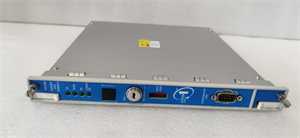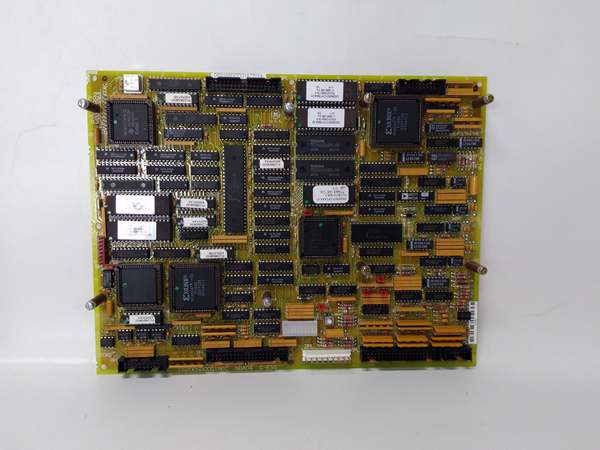
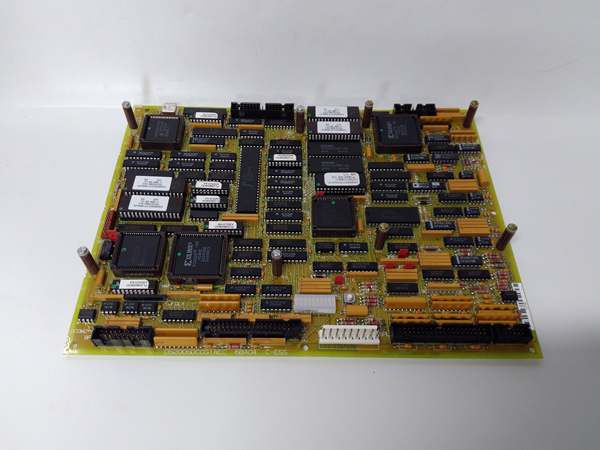
Description
Key Technical Specifications
-
Model Number: DS200SDCCG1AEC
-
Manufacturer: General Electric
-
Architecture: Triple Modular Redundant (TMR) – 2-out-of-3 hardware voting
-
Processors: 3 × 16-bit TMS320C25 DSPs (master, comms, I/O)
-
Memory: 128 kB dual-port RAM shared between CPUs; 256 kB EPROM firmware
-
Analog Output: 12-bit isolated, ±10 V, 5 mA load
-
Servo Outputs: 2 channels, jumper-select 10-120 mA coil current
-
LVDT Interface: 6 differential inputs, 3- or 4-wire selectable
-
Digital I/O: 64 opto-isolated inputs, 32 relay outputs via back-plane
-
Communication: DLAN & ARCNET token-pass to SLCC; RS-232 TIMN port on face-plate
-
Power Demand: +5 V @ 6 A, +15 V @ 0.5 A, +24 V @ 0.2 A from VME back-plane
-
Isolation: 1500 Vdc field-to-logic; 2.5 kV optical on gate fibers
-
Operating Temperature: 0 – 60 °C board rating (system –28 °C to +55 °C)
-
Board Size: 6U VME (160 × 233 mm), 0.96 kg
-
Repairability: EPROM, DC-DC caps, and varistors serviceable; CPU sockets re-seatable

DS200SDCCG1AEC
Field Application & Problem Solved
In a 7FA combined-cycle unit this card is the brain. It sits in SLOT-0 of the Mark V TMR rack, runs the same control algorithm in lock-step on three CPUs, and votes the results. You get speed reference from the DCS, LVDT position from the fuel valve, and current feedback from the exciter—everything funnels into this board. It crunches the numbers every 2 ms, spits out a 12-bit servo current command, and fires the SCR/IGBT bridges through fiber. Lose one CPU and the rack keeps running; lose two and it trips safely—no single-point failure. That’s why every peaker crate keeps a spare bolted inside the door.
In a 7FA combined-cycle unit this card is the brain. It sits in SLOT-0 of the Mark V TMR rack, runs the same control algorithm in lock-step on three CPUs, and votes the results. You get speed reference from the DCS, LVDT position from the fuel valve, and current feedback from the exciter—everything funnels into this board. It crunches the numbers every 2 ms, spits out a 12-bit servo current command, and fires the SCR/IGBT bridges through fiber. Lose one CPU and the rack keeps running; lose two and it trips safely—no single-point failure. That’s why every peaker crate keeps a spare bolted inside the door.
Installation & Maintenance Pitfalls (Expert Tips)
EPROMs walk off their sockets
The two firmware EPROMs are in machined sockets. Vibration works them loose after 50 k hours; the CPU crashes and you get “SDCC FAIL.” Power-down, re-seat, and hot-glue the corners every major outage.
EPROMs walk off their sockets
The two firmware EPROMs are in machined sockets. Vibration works them loose after 50 k hours; the CPU crashes and you get “SDCC FAIL.” Power-down, re-seat, and hot-glue the corners every major outage.
DC-DC caps dry out at 55 °C
The on-board 47 µF, 35 V tantalums hit 50 °C inside an IP-54 cabinet. ESR doubles every 10 °C. After 40 k hours the 5 V rail sags and you’ll chase random “SDCC UNDER-V.” Replace all four during the outage—five minutes of SMD work beats a forced outage.
The on-board 47 µF, 35 V tantalums hit 50 °C inside an IP-54 cabinet. ESR doubles every 10 °C. After 40 k hours the 5 V rail sags and you’ll chase random “SDCC UNDER-V.” Replace all four during the outage—five minutes of SMD work beats a forced outage.
Servo coil jumpers are NOT set-and-forget
Factory default is 40 mA. If your EHC valve needs 80 mA and you forget JP3, the actuator barely cracks open and you’ll chase “LOW FUEL FLOW” trips for a week. Photograph the old board before you pull it.
Factory default is 40 mA. If your EHC valve needs 80 mA and you forget JP3, the actuator barely cracks open and you’ll chase “LOW FUEL FLOW” trips for a week. Photograph the old board before you pull it.
TIMN port is live at 5 V referenced
The 9-pin RS-232 shield is tied to board 0 V. Plug in a grounded laptop and you’ll short 5 V through the cable—blown UART on the SDCC. Use an isolated USB-RS-232 dongle or kill power before you plug in.
The 9-pin RS-232 shield is tied to board 0 V. Plug in a grounded laptop and you’ll short 5 V through the cable—blown UART on the SDCC. Use an isolated USB-RS-232 dongle or kill power before you plug in.
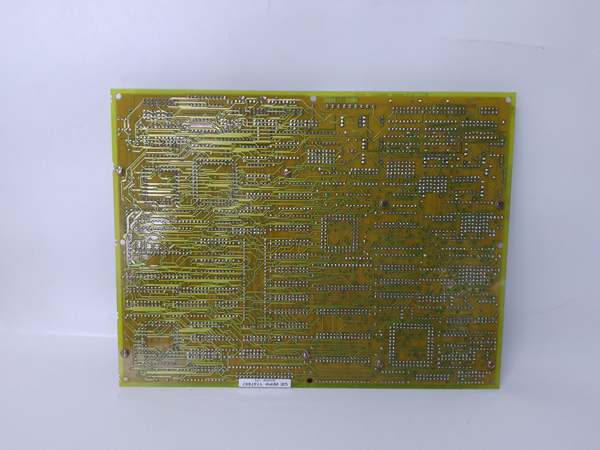
DS200SDCCG1AEC
Technical Deep Dive & Overview
DS200SDCCG1AEC is the “simplified digital core controller” on a 6U VME Euro-card. Three TMS320C25 DSPs share a 128 kB dual-port RAM; one owns the speed loop, one handles DLAN/ARCNET comms, one services I/O. A 12-bit DAC provides the precision analog reference; two constant-current drivers deliver 10-120 mA into 24 V servo coils; six differential amps buffer LVDT signals. All timing is hardware-interlocked—no firmware on the power path—so you can hot-swap with the turbine on turning gear; the rack re-votes and re-syncs inside 100 ms
DS200SDCCG1AEC is the “simplified digital core controller” on a 6U VME Euro-card. Three TMS320C25 DSPs share a 128 kB dual-port RAM; one owns the speed loop, one handles DLAN/ARCNET comms, one services I/O. A 12-bit DAC provides the precision analog reference; two constant-current drivers deliver 10-120 mA into 24 V servo coils; six differential amps buffer LVDT signals. All timing is hardware-interlocked—no firmware on the power path—so you can hot-swap with the turbine on turning gear; the rack re-votes and re-syncs inside 100 ms
.