Description
Key Technical Specifications
-
Model Number: DS200PCCAG7ACB
-
Manufacturer: General Electric
-
System Voltage: <600 V rms AC
-
Snubbers: Both AC-side (RC) and DC-side (RCD) networks
-
Frame Styles: C or G style power frames
-
Line Fuses: On-board ferrule fuses for armature & field bridges
-
Reactors: Bus-tie reactors integrated in copper path
-
Bus Options: Separate or common bus transformer compatibility
-
Power Supply Interface: SDCI board compatibility via 40-pin ribbon
-
Isolation: 1500 V card-to-ground on snubber nets
-
Board Dimensions: 11 × 8.5 in (279 × 216 mm)
-
Coating: Normal conformal coat; non-repairable construction

DS200PCCAG7ACB
Field Application & Problem Solved
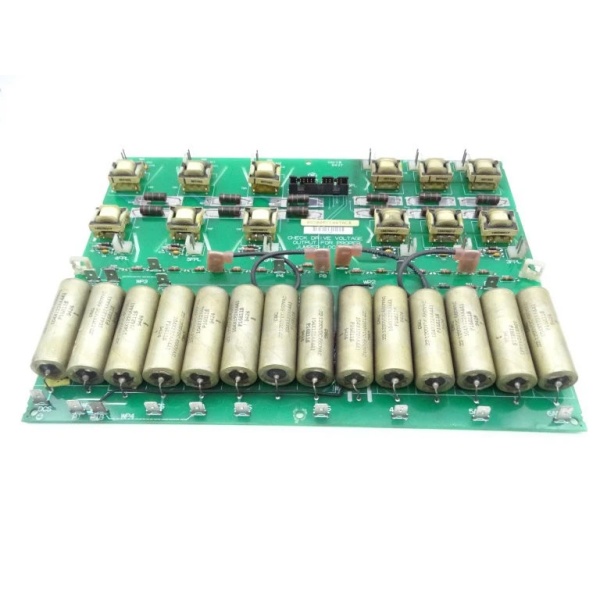
In a DC2000 stack the SCR bridge dumps 600 A into a 400 VDC motor. Every time a device turns off you get a 1200 V/µs spike. Without this board that spike rides straight back into the SDCI gate drivers and cracks the 2500 V optos. The PCCA sits between the bridge and control rack, clamps the spike with RC/RCD snubbers, and gives the line fuses a place to blow safely. It also carries the bus reactors so you don’t have to mount them in a separate box. When a fuse blows you see it instantly—no digging through bus bars. Swap the card, slap in new fuses, and you’re back online; outage time drops from four hours to forty minutes.
In a DC2000 stack the SCR bridge dumps 600 A into a 400 VDC motor. Every time a device turns off you get a 1200 V/µs spike. Without this board that spike rides straight back into the SDCI gate drivers and cracks the 2500 V optos. The PCCA sits between the bridge and control rack, clamps the spike with RC/RCD snubbers, and gives the line fuses a place to blow safely. It also carries the bus reactors so you don’t have to mount them in a separate box. When a fuse blows you see it instantly—no digging through bus bars. Swap the card, slap in new fuses, and you’re back online; outage time drops from four hours to forty minutes.
Installation & Maintenance Pitfalls (Expert Tips)
Snubber caps age in the heat
The 0.1 µF 1000 V caps dry out after 50 k hours at 55 °C. ESR doubles, spike climbs, and you’ll blow SDCI boards every six months. Replace all snubber caps during major—five minutes of work beats a $4 k gate driver.
Snubber caps age in the heat
The 0.1 µF 1000 V caps dry out after 50 k hours at 55 °C. ESR doubles, spike climbs, and you’ll blow SDCI boards every six months. Replace all snubber caps during major—five minutes of work beats a $4 k gate driver.
Fuse clips loosen
The clips are brass; heat cycles relax the spring. A loose clip arcs, welds, and takes out the copper trace underneath. Tug-test every clip yearly; if it doesn’t bite the fuse tight, replace the clip.
The clips are brass; heat cycles relax the spring. A loose clip arcs, welds, and takes out the copper trace underneath. Tug-test every clip yearly; if it doesn’t bite the fuse tight, replace the clip.
Reactor bolts must be 18 in-lb
The bus reactors are mounted with ¼-20 screws. Under-torque and you get hot joints; over-torque and you crack the ceramic stand-off. Use a calibrated wrench and hit them again after first thermal cycle.
The bus reactors are mounted with ¼-20 screws. Under-torque and you get hot joints; over-torque and you crack the ceramic stand-off. Use a calibrated wrench and hit them again after first thermal cycle.
Card is NOT repairable—don’t even try
GE epoxy-potted the snubber resistors and sealed the fuses. If you see burnt traces, order a new board; attempting repair voids the UL listing and you’ll fight the same fault next month
GE epoxy-potted the snubber resistors and sealed the fuses. If you see burnt traces, order a new board; attempting repair voids the UL listing and you’ll fight the same fault next month
.
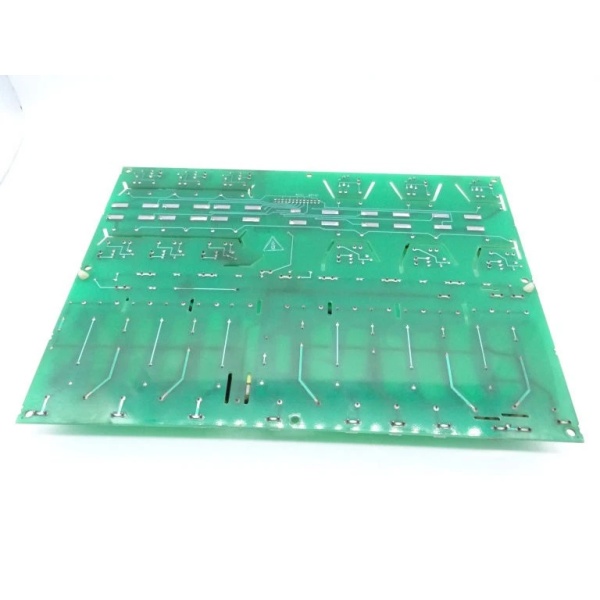
DS200PCCAG7ACB
Technical Deep Dive & Overview
DS200PCCAG7ACB is a passive power-interface board—no micro, no firmware. Copper planes carry armature and field current through fuses and reactors; RC networks on both AC and DC rails clamp dv/dt. A 40-pin ribbon to the SDCI board reports fuse status and lets the drive block firing if a fuse opens. Because everything is hardware, you can swap it live: pull the old card, transfer fuses, seat the new one, and the Mark V acknowledges “PCCA OK” without a download.
DS200PCCAG7ACB is a passive power-interface board—no micro, no firmware. Copper planes carry armature and field current through fuses and reactors; RC networks on both AC and DC rails clamp dv/dt. A 40-pin ribbon to the SDCI board reports fuse status and lets the drive block firing if a fuse opens. Because everything is hardware, you can swap it live: pull the old card, transfer fuses, seat the new one, and the Mark V acknowledges “PCCA OK” without a download.