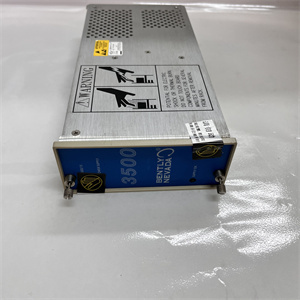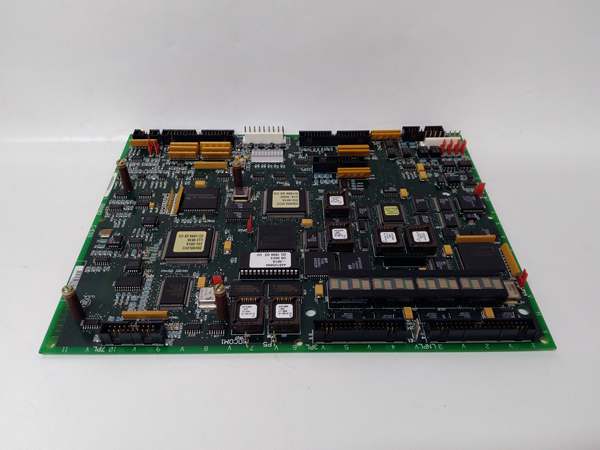
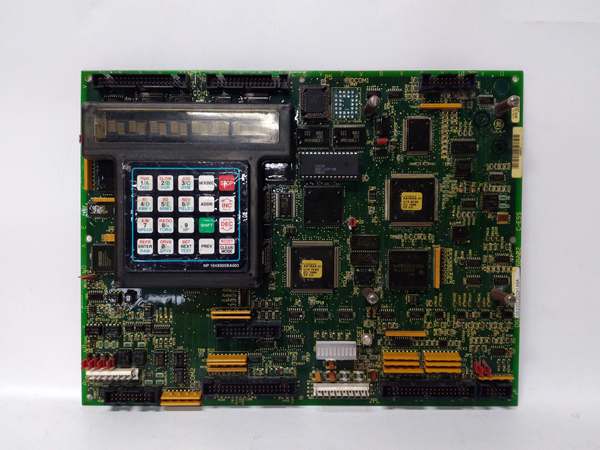
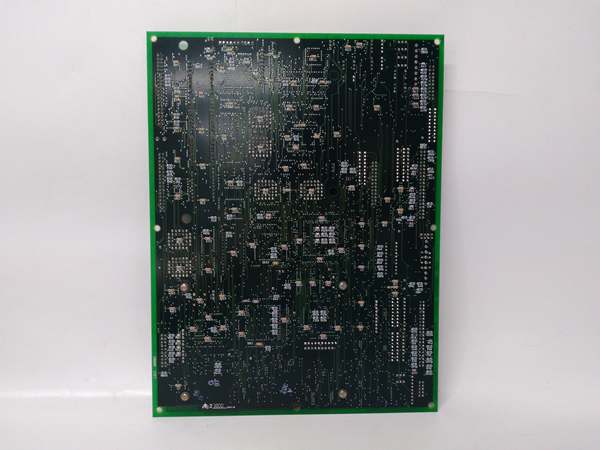
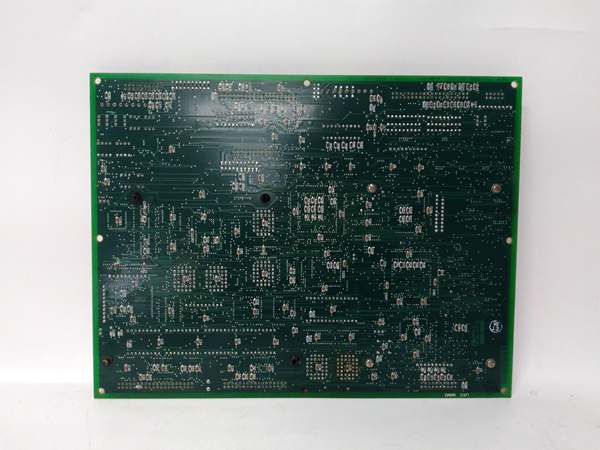
Description
Hard-Numbers: Technical Specifications
- Bus Architecture: MARK IV/QDII bus architecture
- Processor Type: Dedicated CPU for drive control applications
- Revision Indicator: LA suffix indicates specific revision level compatibility requirements
- Onboard Memory: NVRAM for program storage and configuration retention
- Communication Interfaces: QDII bus for board-to-board communication
- Diagnostics: Front panel indicators for power, status, and fault conditions
- Input Voltage: 24V DC bus power input
- Operating Temperature: 0°C to 50°C (32°F to 122°F)
- Storage Temperature: -40°C to +85°C (-40°F to +185°F)
- Board Dimensions: Standard GE control card form factor
- Update Capability: Firmware updates via QDII bus
- Backup Requirements: Battery-backed memory for parameter retention
- Related Boards: Interfaces with SDCC (Signal Distribution) and FDCA (Data Acquisition) boards
- Parts Manual: GEH-XXXX (consult GE documentation)
- Series Manual: GEH-XXXX Mark IV Maintenance Manual
- Revision Tracking: LA revision indicates compatibility requirements

GE DS200LDCCH1A
The Real-World Problem It Solves
LCI systems require precise real-time control coordination for starting large motors and turbine applications. The DS200LDCCH1ALA serves as the brain of the Mark IV LCI system, executing complex motor control algorithms, managing SCR firing angles, and coordinating with auxiliary boards to ensure reliable static starter operation. The LA revision provides specific firmware compatibility and feature sets optimized for certain LCI configurations.
Where you’ll typically find it:
- GE Mark IV LCI static starter control cabinets
- Large motor starting systems (pumps, fans, compressors)
- Turbine starting applications requiring precise torque control
- Industrial drive systems with LCI power converters
Bottom line: LA variant of the central control processor for Mark IV LCI systems.
Hardware Architecture & Under-the-Hood Logic
The DS200LDCCH1ALA shares the same core architecture as the base DS200LDCCH1A, executing drive control algorithms and coordinating peripheral boards through the QDII bus. The LA revision may include firmware enhancements, memory capacity changes, or compatibility updates that differentiate it from earlier revisions. This board remains the central decision-making component, calculating SCR firing angles, executing protection logic, and managing system diagnostics. The revision-specific characteristics ensure optimal performance with particular LCI system configurations and peripheral board combinations.
Signal flow:
- Power applied to 24V DC bus input
- CPU initialization sequence loads firmware from NVRAM
- QDII bus communication established with peripheral boards
- LA revision specific initialization routines execute
- Motor feedback signals received through QDII bus interface
- CPU calculates optimal SCR firing angles based on speed/torque requirements
- Firing commands transmitted to gate drive boards via QDII bus
- Status monitoring inputs processed continuously for fault detection
- Protection logic executed if abnormal conditions detected
- Fault logging stored to NVRAM for post-trip analysis
- System status indicators updated on front panel display
- Communication maintained with HMI or external control systems
- LA revision specific features activated based on system configuration
GE DS200LDCCH1A
Field Service Pitfalls: What Rookies Get Wrong
Assuming LA revision is backward compatible with base boards causes system failuresUsing DS200LDCCH1ALA to replace DS200LDCCH1A without verification. I’ve seen technicians swapping LA revision boards into systems configured for base revision, resulting in firmware incompatibility and communication failures.
- Field Rule: Always match the exact part number including revision suffix. The LA suffix indicates a specific revision level with compatibility requirements. Cross-reference the replacement board with the system configuration documentation. Verify firmware compatibility before installation. Never assume backward compatibility—check the parts manual. Document the exact part number in your maintenance records. If upgrading to LA revision, consult GE for compatibility assessment.
Forgetting to transfer NVRAM parameters during LA revision upgrade causes configuration lossNo parameter transfer between revisions. I’ve seen technicians upgrading to the LA revision board without transferring system parameters, resulting in lost tuning settings and extended start-up time.
- Field Rule: Always back up NVRAM parameters from the existing board before any replacement. If upgrading revisions, verify the parameter file is compatible with the LA revision firmware. Use the approved GE utility for parameter transfer. Test parameter loading on the LA revision board before full system commissioning. Document the parameter transfer process and verification steps. Never install an LA revision board without confirming parameter compatibility.
Ignoring LA revision specific DIP switch settings causes boot failuresSwitch configuration differs from base revision. I’ve seen technicians using DIP switch settings from a base DS200LDCCH1A board on an LA revision, causing the CPU to boot into an incorrect operational mode.
- Field Rule: Verify DIP switch settings for the LA revision before power-up. Compare the switch configuration with the LA revision documentation—settings may differ from base boards. Document all switch positions on the replacement board before removal. Never assume LA revision switch settings match base revision. If uncertain, consult the LA revision specific manual. Always confirm DIP configuration matches the system requirements.
Misinterpreting LA revision LED status sequences causes diagnostic errorsLED behavior differs from base revision. I’ve seen technicians replacing good LA revision boards because the LED status sequence didn’t match their experience with base revision boards.
- Field Rule: Learn the LA revision specific LED status codes before troubleshooting. The LA revision may have different blink patterns or status indications compared to base boards. Keep the LA revision manual accessible during fault diagnosis. Document LED sequences during normal operation for reference. Never assume LED behavior matches other revisions—verify against LA revision documentation.
Improper firmware update procedure bricks LA revision boardWrong firmware for LA variant. I’ve seen technicians applying base revision firmware to LA revision boards, causing permanent firmware corruption and requiring board replacement.
- Field Rule: Verify firmware compatibility with the LA revision before any update. The LA revision may require specific firmware versions different from base boards. Download the firmware file specifically designed for DS200LDCCH1ALA. Use the recommended update procedure for LA revision boards. Always back up the existing firmware before any update. Never force incompatible firmware onto LA revision boards.
Overlooking LA revision memory capacity differences causes parameter overloadExceeding memory limits during parameter transfer. I’ve seen technicians overloading the LA revision NVRAM with parameters from base revision systems, causing data corruption and system instability.
- Field Rule: Verify NVRAM capacity when transferring parameters between revisions. The LA revision may have different memory limits compared to base boards. Check parameter file size against available memory capacity. Perform a trial load before committing to full transfer. Document successful parameter transfer to avoid data loss. Never assume LA revision memory matches base revision capacity.
Improper bus termination causes communication errors on LA revision boardsTermination requirements differ from base boards. I’ve seen technicians using standard termination settings on LA revision boards, resulting in QDII bus communication errors and intermittent faults.
- Field Rule: Verify QDII bus termination requirements for the LA revision. The LA revision may require specific termination resistors or configurations. Check the system documentation for LA revision specific termination settings. Measure bus signal integrity after installation. Document termination settings in your maintenance log. Never assume LA revision termination matches base revision requirements.
Missing LA revision specific protection features causes equipment damageEnhanced protection logic not activated. I’ve seen technicians failing to enable LA revision specific protection features, resulting in equipment damage during fault conditions.
- Field Rule: Verify all LA revision specific protection features are configured correctly. The LA revision may include enhanced protection algorithms not present in base boards. Check system configuration for LA revision feature enablement. Test protection functionality during commissioning. Document all enabled protection features and their settings. Never operate an LA revision board without confirming all protection logic is active.
Ignoring battery backup compatibility issues causes NVRAM data lossBattery type differs from base revision. I’ve seen technicians installing standard lithium batteries in LA revision boards requiring different battery specifications, resulting in NVRAM data loss.
- Field Rule: Verify battery specifications for the LA revision before replacement. The LA revision may require different battery types or voltage ratings. Use only approved battery types specified for DS200LDCCH1ALA. Document battery replacement dates and test NVRAM retention after replacement. Never install incompatible battery types in LA revision boards.
Failing to clear LA revision specific fault latches causes persistent trip conditionsAdditional fault codes not recognized. I’ve seen technicians clearing standard fault codes but missing LA revision specific latches, causing the system to trip repeatedly on startup.
- Field Rule: Learn the LA revision specific fault codes and latch-clearing procedures. The LA revision may include additional fault types not present in base boards. Use the approved LA revision fault reset procedure. Verify all fault codes are cleared by checking the LA revision fault history log. Document all cleared faults for troubleshooting analysis. Never restart the system without confirming LA revision specific fault latches are reset.
Commercial Availability & Pricing Note
Please note: The listed price is for reference only and is not binding. Final pricing and terms are subject to negotiation based on current market conditions and availability.