Description
Key Technical Specifications
-
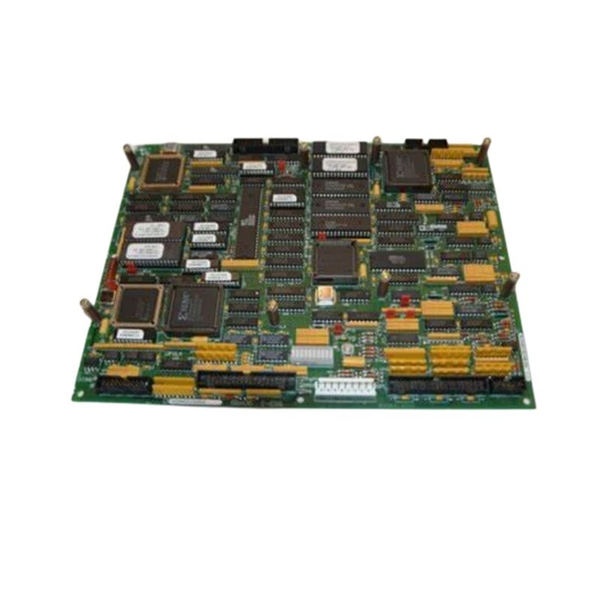
Model Number: DS200IPCSG1ABB
-
Manufacturer: General Electric
-
IGBT Partner: Mitsubishi CM300DY-24H (standard footprint)
-
Input Voltage: 24 Vdc ±10 %
-
On-Board Fuses: 8 × 5 × 20 mm (gate, arm, field, logic rails)
-
Gate Drive Outputs: ±15 V isolated, 2 A peak per IGBT leg via ST fiber
-
Snubbers: DC-bus RC network 0.1 µF / 100 Ω, 1 kW pulse rating
-
Isolation: 1500 Vdc input-to-output, 2.5 kV optical on fibers
-
Connectors: 1PL 40-pin to SDCC, two 3-pin Mate-N-Lock 24 V, 6 × ST fiber, IGBT screw terminals
-
Power Consumption: 12 W typical
-
Operating Temperature: –20 °C to +70 °C
-
Board Size: 279 × 216 × 25 mm, 1.2 kg conformal-coated

DS200IPCSG1ABB
Field Application & Problem Solved
Steel-mill coiler drives switch 600 A at 650 Vdc—every IGBT turn-off punches a 1 000 V spike back into the DC link. Without this card you cook modules every quarter. The IPCS sits between the SDCC control rack and the Mitsubishi bricks: it eats the spike with its RC snubber, delivers clean ±15 V gate pulses down plastic fiber, and gives you eight fuses so a shorted shooter blows a 50-cent fuse instead of a $900 IGBT. When a fuse pops the LED goes dark—one glance and you know which leg is hurt. Swap time is under five minutes; every maintenance truck keeps a spare bolted to the roof.
Steel-mill coiler drives switch 600 A at 650 Vdc—every IGBT turn-off punches a 1 000 V spike back into the DC link. Without this card you cook modules every quarter. The IPCS sits between the SDCC control rack and the Mitsubishi bricks: it eats the spike with its RC snubber, delivers clean ±15 V gate pulses down plastic fiber, and gives you eight fuses so a shorted shooter blows a 50-cent fuse instead of a $900 IGBT. When a fuse pops the LED goes dark—one glance and you know which leg is hurt. Swap time is under five minutes; every maintenance truck keeps a spare bolted to the roof.
Installation & Maintenance Pitfalls (Expert Tips)
Fuse clips walk loose
Vibration backs the 5 × 20 clips off the fuse ends; you get random “GATE UNDER-V” that clears when you open the cabinet. Tug-test every fuse once a quarter; if the clip doesn’t bite, replace it.
Fuse clips walk loose
Vibration backs the 5 × 20 clips off the fuse ends; you get random “GATE UNDER-V” that clears when you open the cabinet. Tug-test every fuse once a quarter; if the clip doesn’t bite, replace it.
ST fiber must click & tug
A half-seated ST gives 6 dB loss—gate driver sees 7 mA instead of 15 and misfires. Push until you feel the detent, then tug-test. Dust caps off, clean ferrule with IPA every outage.
A half-seated ST gives 6 dB loss—gate driver sees 7 mA instead of 15 and misfires. Push until you feel the detent, then tug-test. Dust caps off, clean ferrule with IPA every outage.
Snubber resistor runs 150 °C—don’t touch
The 100 Ω / 50 W ceramic block is live at DC-bus potential. Let the board cool five minutes before you swap it or you’ll get a kilovolt surprise through the wrist-strap.
The 100 Ω / 50 W ceramic block is live at DC-bus potential. Let the board cool five minutes before you swap it or you’ll get a kilovolt surprise through the wrist-strap.
24 V ripple kills the DC-DC
Battery chargers on gensets can push 3 Vpp ripple. The on-board converter runs hot, folds back, and you chase intermittent “GATE FAIL.” Meter ripple at the Mate-N-Lock; if >1 % add an external 10 000 µF, 50 V cap across the input.
Battery chargers on gensets can push 3 Vpp ripple. The on-board converter runs hot, folds back, and you chase intermittent “GATE FAIL.” Meter ripple at the Mate-N-Lock; if >1 % add an external 10 000 µF, 50 V cap across the input.
Technical Deep Dive & Overview
Internally the board is a triple-output forward converter plus snubber matrix. A 250 kHz switcher generates ±15 V and +5 V; each rail feeds its own fuse before exiting through ST fibers or screw terminals. The RC snubber network clamps DC-bus dv/dt to <500 V/µs. Because everything is hardware you can hot-swap with the bridge powered—pull the old card, move fibers one-for-one, snap 1PL, and the SDCC re-acquires gate feedback inside 100 ms. No processor, no firmware, no download—just copper, caps, and light.
Internally the board is a triple-output forward converter plus snubber matrix. A 250 kHz switcher generates ±15 V and +5 V; each rail feeds its own fuse before exiting through ST fibers or screw terminals. The RC snubber network clamps DC-bus dv/dt to <500 V/µs. Because everything is hardware you can hot-swap with the bridge powered—pull the old card, move fibers one-for-one, snap 1PL, and the SDCC re-acquires gate feedback inside 100 ms. No processor, no firmware, no download—just copper, caps, and light.