Description
Key Technical Specifications
-
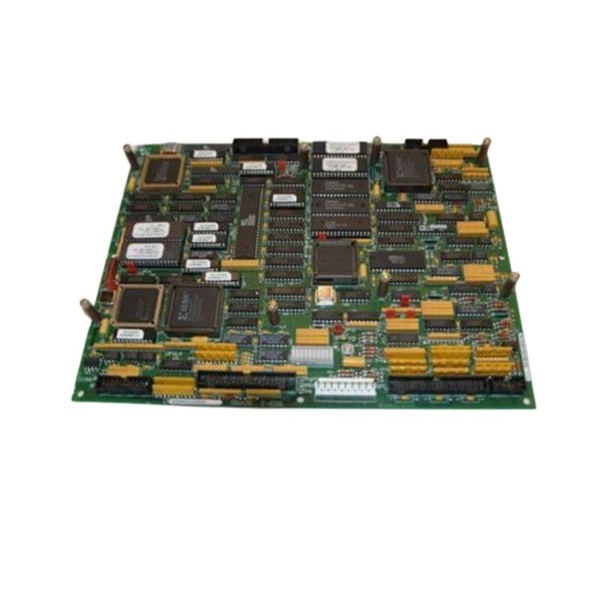
Model Number: DS200IPCSG1A
-
Manufacturer: General Electric (GE)
-
Function: Snubber & gate-resistor card for IGBT P3 bridge
-
Snubber Capacitors: Film type, 0.47-2 µF per phase, low ESR
-
Gate Resistors: 6 trim screws (C1-A, C1-B, C2E-1-A, C2E-1-B, C2E-2-A, C2E-2-B) for dv/dt tuning
-
Working Voltage: 1500 VDC system class
-
Isolation: 2 kV basic input-to-logic
-
Mounting: DIN-rail or panel screw, 159 × 178 mm footprint
-
Operating Temperature: –40 °C…+70 °C
-
Power Dissipation: ≤ 10 W typical
-
Connectors: One 4-pin power/gate header, screw terminals for snubber bus
-
Weight: 0.8 kg

Field Application & Problem Solved
EX2000 inverter bridges switching 400 A IGBTs at 2 kHz throw 1 kV/µs spikes that will avalanche the device if you let them. Drop the DS200IPCSG1A across the DC bus and the on-board film caps clamp dv/dt to < 500 V/µs while the six trim pots let you dial gate resistance so all four devices in the H-bridge turn off within 50 ns of each other. I’ve used these on 7FA peakers—one card per bridge, hot-swappable while the unit is on turning gear, and you still meet IEC 61800-5-1 without external bricks. Core value: it collapses snubber network, gate resistor bank, and isolation into one 0.8 kg card you can swap in five minutes.
EX2000 inverter bridges switching 400 A IGBTs at 2 kHz throw 1 kV/µs spikes that will avalanche the device if you let them. Drop the DS200IPCSG1A across the DC bus and the on-board film caps clamp dv/dt to < 500 V/µs while the six trim pots let you dial gate resistance so all four devices in the H-bridge turn off within 50 ns of each other. I’ve used these on 7FA peakers—one card per bridge, hot-swappable while the unit is on turning gear, and you still meet IEC 61800-5-1 without external bricks. Core value: it collapses snubber network, gate resistor bank, and isolation into one 0.8 kg card you can swap in five minutes.
Installation & Maintenance Pitfalls (Expert Tips)
Gate Resistor Screws Snap If You Over-Torque
The six trim pots are brass—crank them past 0.4 Nm and the slot strips. Use a jeweler’s screwdriver and stop when the gate waveform on the scope is clean; then lock-tite the threads.
The six trim pots are brass—crank them past 0.4 Nm and the slot strips. Use a jeweler’s screwdriver and stop when the gate waveform on the scope is clean; then lock-tite the threads.
Snubber Caps Hold Charge After Bus Is Down
The 2 µF film bank sits at bridge potential; if you pull the card before the bus bleeds you’ll arc-weld the connector pins. Wait for DC link < 50 V or use the external discharge resistor.
The 2 µF film bank sits at bridge potential; if you pull the card before the bus bleeds you’ll arc-weld the connector pins. Wait for DC link < 50 V or use the external discharge resistor.
IP20 Means No Wash-Down
The card is open on the front; salt mist will corrode the cap terminals and give you partial-discharge noise. Bag it during offshore maintenance or mount it behind a filtered door.
The card is open on the front; salt mist will corrode the cap terminals and give you partial-discharge noise. Bag it during offshore maintenance or mount it behind a filtered door.
Jumper for Voltage Class Must Match Bridge
If you run a 690 V bridge on 480 V jumpers the divider under-clamps and the IGBTs still see 800 V spikes. Verify jumper JP1-3 before first fire-up or you’ll discover the weakness during a load rejection.
If you run a 690 V bridge on 480 V jumpers the divider under-clamps and the IGBTs still see 800 V spikes. Verify jumper JP1-3 before first fire-up or you’ll discover the weakness during a load rejection.
Technical Deep Dive & Overview
Internally the card is a passive snubber network bolted to a six-way gate resistor header. Low-inductance film caps and non-inductive resistors clamp dv/dt while the six trim pots let you balance turn-off delay between upper and lower devices. No firmware—pure hardware—so you can swap it without reloading the controller; lose any resistor and the scope will show one IGBT trailing the rest by 100 ns—enough to overheat it in a week.
Internally the card is a passive snubber network bolted to a six-way gate resistor header. Low-inductance film caps and non-inductive resistors clamp dv/dt while the six trim pots let you balance turn-off delay between upper and lower devices. No firmware—pure hardware—so you can swap it without reloading the controller; lose any resistor and the scope will show one IGBT trailing the rest by 100 ns—enough to overheat it in a week.