Description
Key Technical Specifications
-
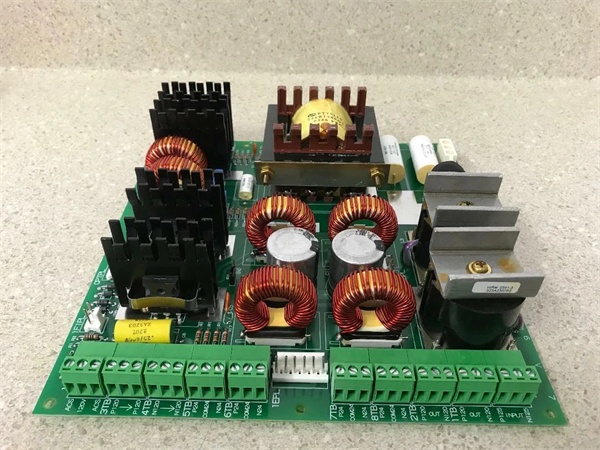
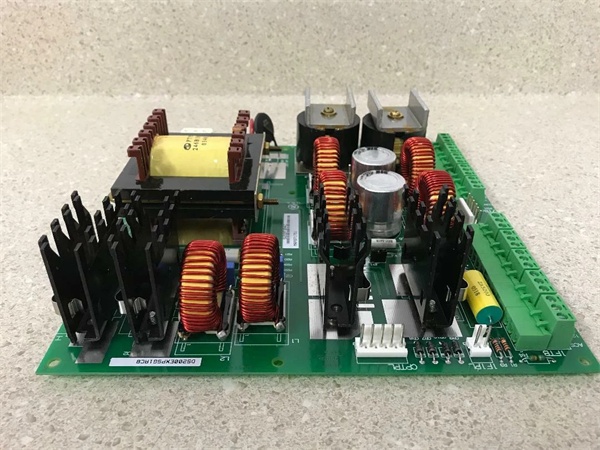
Model Number: DS200GSNAG1A
-
Manufacturer: General Electric (GE) – Boards & Turbine Control
-
Function: GTO snubber & gate-lead interface for 6-pulse bridges
-
Voltage Class: 400-690 VAC system (jumper-selected)
-
Isolation: 2 kV basic gate-to-logic; pulse-transformer coupling to GTO gates
-
Snubber Network: Film capacitors + low-inductance resistors per phase (values selected by jumpers)
-
Connectors: 96-pin DIN 41612 to VME back-plane; screw terminals for bus & gate leads
-
Operating Temperature: –40 °C…+70 °C
-
Dimensions / Weight: 159 × 178 mm, 0.7 kg typical
-
Protection Degree: IP20 rack-mount
- Status: Factory discontinued – new & tested spares available through automation vendors

Field Application & Problem Solved
Medium-voltage EX2000 / AC2000 drives use giant GTO thyristors that throw 1 kV/µs spikes when they turn off. The biggest headache is stopping those spikes from avalanche the device and still getting a clean gate pulse to each of the six devices. Drop the DS200GSNAG1A across the DC bus: the on-board snubber caps absorb the transient, the pulse transformers deliver the 15 V gate pulse, and the 2 kV isolator keeps the 690 V bridge away from the 5 V logic. You’ll typically find one card per six-pulse bridge on Frame-7/9 peakers—swap time is five minutes with the unit on turning gear. Core value: it collapses six individual snubber bricks, a gate-distribution harness, and a high-voltage isolator into one plug-in card you can carry in your shirt pocket
Medium-voltage EX2000 / AC2000 drives use giant GTO thyristors that throw 1 kV/µs spikes when they turn off. The biggest headache is stopping those spikes from avalanche the device and still getting a clean gate pulse to each of the six devices. Drop the DS200GSNAG1A across the DC bus: the on-board snubber caps absorb the transient, the pulse transformers deliver the 15 V gate pulse, and the 2 kV isolator keeps the 690 V bridge away from the 5 V logic. You’ll typically find one card per six-pulse bridge on Frame-7/9 peakers—swap time is five minutes with the unit on turning gear. Core value: it collapses six individual snubber bricks, a gate-distribution harness, and a high-voltage isolator into one plug-in card you can carry in your shirt pocket
.
Installation & Maintenance Pitfalls (Expert Tips)
Bus Bars Float at Bridge Potential – Short Them Last
The DC+ and DC– lugs sit at 690 V. If you land the cables while the bus is hot you’ll arc-weld the 2 kV isolator. De-energize, wait for bus < 50 V, then torque lugs to 0.8 Nm or vibration will walk them out.
The DC+ and DC– lugs sit at 690 V. If you land the cables while the bus is hot you’ll arc-weld the 2 kV isolator. De-energize, wait for bus < 50 V, then torque lugs to 0.8 Nm or vibration will walk them out.
Snubber Caps Hold Charge After Bus Is Down
The 2 µF film bank sits at bridge potential; if you pull the card before the bus bleeds you’ll arc-weld the connector pins. Wait for DC link < 50 V or use the external discharge resistor.
The 2 µF film bank sits at bridge potential; if you pull the card before the bus bleeds you’ll arc-weld the connector pins. Wait for DC link < 50 V or use the external discharge resistor.
Gate Leads Must Be Twisted Pair – No Exceptions
The output is a 15 V, 6 A pulse. Run the leads untwisted and the dv/dt couples into the 5 V logic, giving you random “gate fault” trips every time the bridge fires. Use 18 AWG shielded twisted pair, ground the shield at the card end only, and keep the run under 1 m.
The output is a 15 V, 6 A pulse. Run the leads untwisted and the dv/dt couples into the 5 V logic, giving you random “gate fault” trips every time the bridge fires. Use 18 AWG shielded twisted pair, ground the shield at the card end only, and keep the run under 1 m.
Card Is Discontinued – Verify Spare Before You Need It
Factory stock is gone; new & tested spares are available but lead-time can be 6-8 weeks. Keep one on the shelf or you’ll discover the weakness when the only spare on-site is a cracked snubber cap
.
Factory stock is gone; new & tested spares are available but lead-time can be 6-8 weeks. Keep one on the shelf or you’ll discover the weakness when the only spare on-site is a cracked snubber cap
.
Technical Deep Dive & Overview
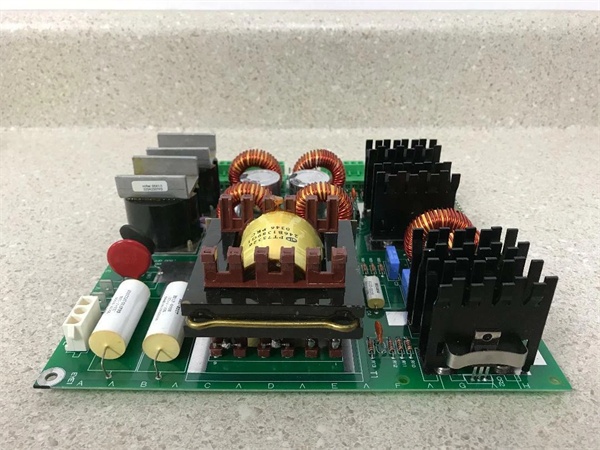
Internally the card is a set of six low-inductance film snubber caps bolted to a pulse-transformer array. Each phase gets an RC network to clamp dv/dt while the transformer delivers the gate pulse; the whole assembly floats at bridge potential and talks to the DSP through 2 kV opto-couplers. No firmware—pure hardware—so you can swap it without reloading parameters; just remember to torque the bus bars or the DC link will arc on the first pulse .
Internally the card is a set of six low-inductance film snubber caps bolted to a pulse-transformer array. Each phase gets an RC network to clamp dv/dt while the transformer delivers the gate pulse; the whole assembly floats at bridge potential and talks to the DSP through 2 kV opto-couplers. No firmware—pure hardware—so you can swap it without reloading parameters; just remember to torque the bus bars or the DC link will arc on the first pulse .