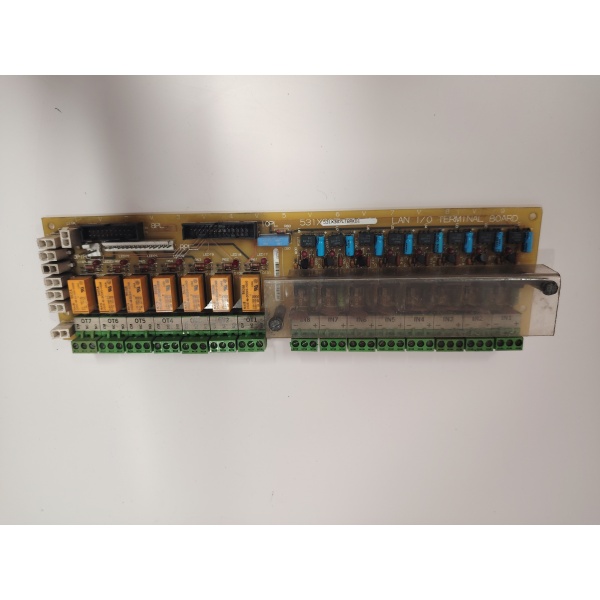
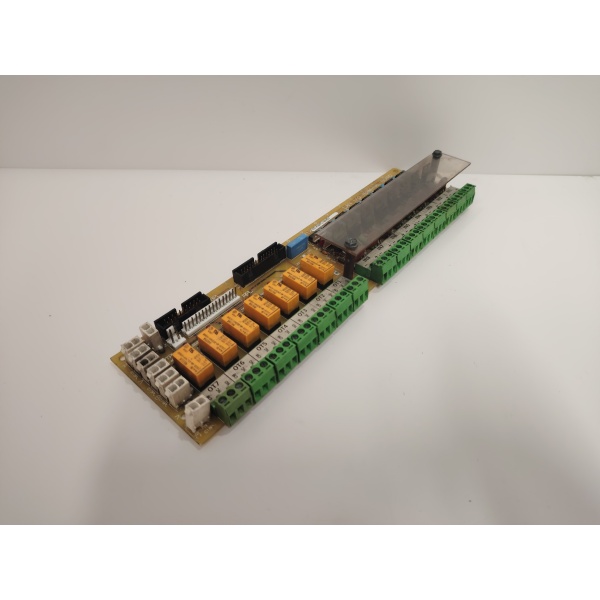
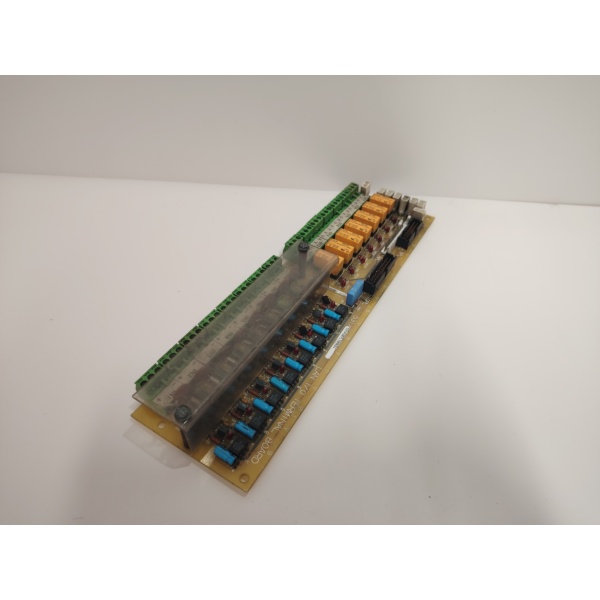
Description
Key Technical Specifications
-
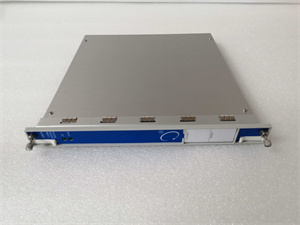
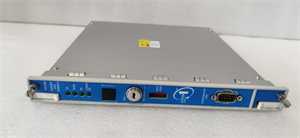
Model Number: 531X307LTBAKG1
-
Manufacturer: GE Power (General Electric)
-
Control Processor: High-speed DSP + FPGA, ≤ 1 ms control loop
-
Input Signals: 3-phase PT voltage, stator CT current, rotor current feedback
-
Output Signals: 6/12-pulse SCR gate pulses, alarm relays, Modbus-TCP status
-
Communication: 10/100 Mbps Ethernet (Modbus/TCP)
-
Protection Functions: Over-excitation limiter (OEL), under-excitation limiter (UEL), V/Hz limiter, low-frequency protection (LFP), PSS
-
Redundancy: Dual-channel hot-swap support; < 10 ms switch-over
-
Power Supply: +5 VDC / ±15 VDC from EX2100e rack
-
Operating Temperature: 0 °C to +60 °C
-
Standards: IEEE 421.5, IEC 61508, EMC IEC 61000-4
-
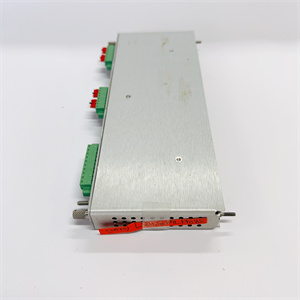
Dimensions: Standard EX2100e 6U card; hot-swap rails
-
Status: Factory discontinued – new & tested spares available

GE 531X307LTBAKG1
Field Application & Problem Solved
In combined-cycle plants the biggest headache is keeping a 300 MW generator on-line when the grid throws a 15 % voltage dip. The board lives in the EX2100e rack—samples PT/CT every millisecond, fires SCR gates to shove extra field current into the rotor, and damps the swing with on-board PSS. You’ll typically find one per exciter cubicle on 9F peakers—swap time is under ten seconds with the unit at turning gear. Core value: it collapses AVR, protection, and PSS into one hot-swap card you can change without dropping the unit
In combined-cycle plants the biggest headache is keeping a 300 MW generator on-line when the grid throws a 15 % voltage dip. The board lives in the EX2100e rack—samples PT/CT every millisecond, fires SCR gates to shove extra field current into the rotor, and damps the swing with on-board PSS. You’ll typically find one per exciter cubicle on 9F peakers—swap time is under ten seconds with the unit at turning gear. Core value: it collapses AVR, protection, and PSS into one hot-swap card you can change without dropping the unit
.
Installation & Maintenance Pitfalls (Expert Tips)
Ethernet Port Lives at Bridge Potential – Use Isolated Laptop
The RJ-45 is tied to the same ground as the 690 V SCR bridge. If you plug in a grounded laptop you’ll short the shield and fry the PHY. Use a battery laptop or an isolated USB-Ethernet dongle.
The RJ-45 is tied to the same ground as the 690 V SCR bridge. If you plug in a grounded laptop you’ll short the shield and fry the PHY. Use a battery laptop or an isolated USB-Ethernet dongle.
Hot-Swap Only with Dual Channel Enabled
The card will pull out live only if the redundant LTB is healthy. If you yank it on a simplex rack the exciter trips and you lose the generator. Confirm “Redundant OK” LED before you twist the latch.
The card will pull out live only if the redundant LTB is healthy. If you yank it on a simplex rack the exciter trips and you lose the generator. Confirm “Redundant OK” LED before you twist the latch.
DSP Clock Drifts with Heat – Re-Calibrate Every Major
After five summers at 55 °C the crystal drifts 20 ppm and the PSS phase shifts 3°. Run the built-in cal routine in ToolboxST or you’ll chase low-damp oscillations that look like grid instability.
After five summers at 55 °C the crystal drifts 20 ppm and the PSS phase shifts 3°. Run the built-in cal routine in ToolboxST or you’ll chase low-damp oscillations that look like grid instability.
Spare Lead-Time Is 6-8 Weeks – Keep One on the Shelf
Factory stock is gone; new & tested spares are available but not overnight. If you crack a layer or burn the RJ-45 you’ll be down until the part arrives—keep one in stores or you’ll discover the weakness during the next grid event
Factory stock is gone; new & tested spares are available but not overnight. If you crack a layer or burn the RJ-45 you’ll be down until the part arrives—keep one in stores or you’ll discover the weakness during the next grid event
.
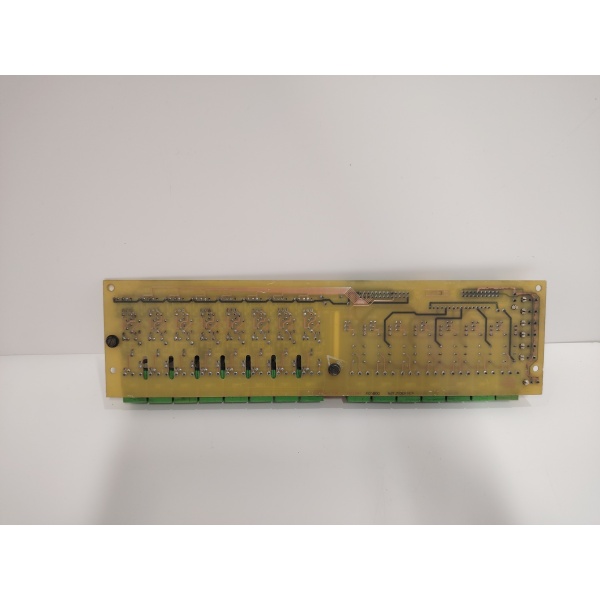
GE 531X307LTBAKG1
Technical Deep Dive & Overview
Internally the card is a DSP + FPGA on a 6-layer board. The DSP closes the AVR loop every millisecond while the FPGA shapes the 6-pulse SCR pattern; both talk to the Mark VIe over Modbus-TCP. Lose the 5 V rail and the card shuts down, drops gate pulses, and throws “LTB FAIL” within 50 ms. No fan—heat-sink is bonded to the card frame; block airflow and the thermal sensor throttles the loop at 70 °C. Swap takes ten seconds: twist the latch, pull the old card, slide the new one in until the rails seat, and the exciter comes back on-line—no software reload required .
Internally the card is a DSP + FPGA on a 6-layer board. The DSP closes the AVR loop every millisecond while the FPGA shapes the 6-pulse SCR pattern; both talk to the Mark VIe over Modbus-TCP. Lose the 5 V rail and the card shuts down, drops gate pulses, and throws “LTB FAIL” within 50 ms. No fan—heat-sink is bonded to the card frame; block airflow and the thermal sensor throttles the loop at 70 °C. Swap takes ten seconds: twist the latch, pull the old card, slide the new one in until the rails seat, and the exciter comes back on-line—no software reload required .