Description
Hard-Numbers: Technical Specifications
- Pressure Range: 0-100 psid (0-6.9 bar)
- Setpoint Accuracy: ±1.5% of full scale
- Deadband: 5-15% of setpoint (adjustable)
- Switch Type: Dual SPDT form C contacts
- Contact Rating: 10 A @ 250 VAC resistive; 5 A @ 125 VDC
- Process Connection: 1/4″ NPT female
- Process Material: 316 Stainless Steel
- Enclosure Rating: NEMA 4X (IP66) polycarbonate
- Operating Temperature: -40°C to 85°C (-40°F to 185°F)
- Maximum Static Pressure: 500 psig (34.5 bar)
- Adjustment Type: External dial with fine-tuning screw
- Weight: 2.5 lbs (1.1 kg)
- Certifications: UL, CSA, CE, ATEX

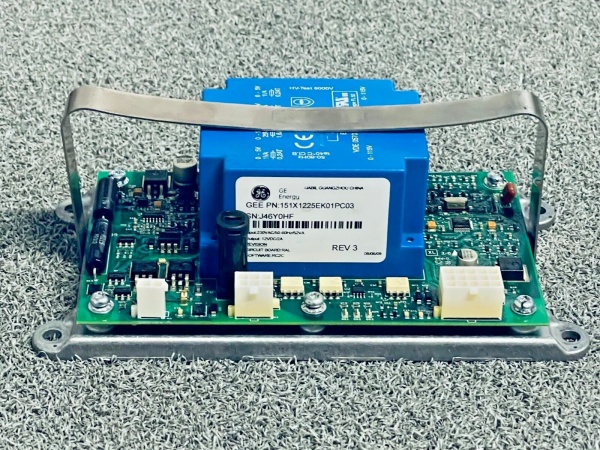
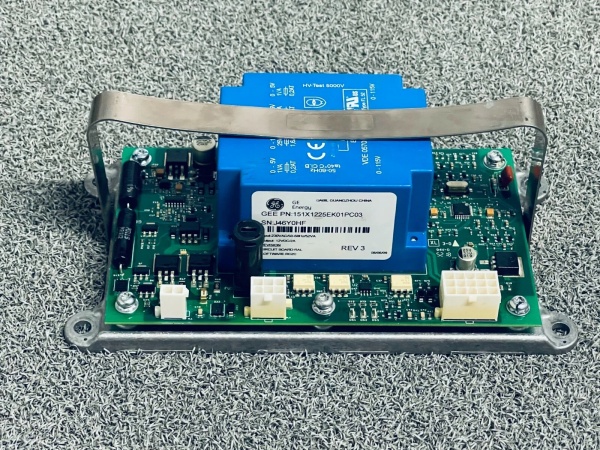
GE 151X1225EK01PC03
The Real-World Problem It Solves
Filter clogging causes equipment damage and process shutdowns. The 151X1225EK01PC03 monitors differential pressure across filters and heat exchangers, triggering alarms before damage occurs.
Where you’ll typically find it:
- Baghouse and dust collector filters
- Pump suction/discharge differential monitoring
- Heat exchanger fouling detection
Bottom line: Mechanical pressure switch provides reliable differential pressure monitoring without external power.
Hardware Architecture & Under-the-Hood Logic
This switch uses a dual-diaphragm sensing element that responds to pressure difference between high and low pressure ports. Diaphragm deflection is transferred via linkage mechanism to the snap-action switch. Differential pressure moves the diaphragm against a calibrated spring; when differential pressure exceeds setpoint, the mechanism trips the SPDT contacts. Deadband adjustment determines pressure required to reset contacts.
Signal flow:
- Differential pressure applied across high and low pressure ports
- Diaphragms deflect proportionally to pressure difference
- Diaphragm movement transmitted through linkage to switch mechanism
- Spring force resists diaphragm movement until setpoint reached
- Snap-action mechanism trips when pressure overcomes spring force
- SPDT contacts change state (common to normally open or normally closed)
- Deadband adjustment determines reset point
- Contacts provide discrete signal to control system or directly to load
Field Service Pitfalls: What Rookies Get Wrong
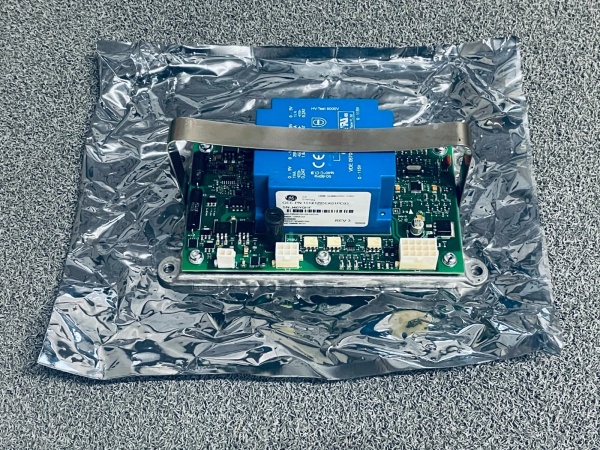
GE 151X1225EK01PC03
Connecting single pressure instead of differentialThese switches require both high and low pressure ports. I’ve seen technicians plumb both ports to the same pressure, causing the switch to never actuate.
- Field Rule: Identify high pressure (upstream) and low pressure (downstream) ports. Connect high side to upstream side of monitored device (e.g., filter inlet), low side to downstream. Label both connections clearly during installation. Verify operation by blocking downstream flow and monitoring switch actuation.
Overtorquing damages process connectionsThe 1/4″ NPT threads are precision machined. I’ve seen technicians overtighten with pipe wrenches, cracking the stainless steel body.
- Field Rule: Use proper thread sealant (PTFE tape or pipe dope). Torque to 15-20 ft-lbs maximum. For high-pressure applications, use a backup wrench on the body. Never use a cheater bar on the wrench. If leaks occur, do not over-tighten—check thread alignment and sealant.
Incorrect deadband causes rapid cyclingDeadband too small causes contact chatter. I’ve seen rapid cycling destroy contacts and PLC input modules within days.
- Field Rule: Set deadband to minimum 5-10% of setpoint or greater if system fluctuates. Test operation by slowly varying differential pressure—contacts should change state cleanly without bouncing. Monitor contact operation with an indicator lamp. For noisy signals, consider adding a small time delay in your PLC logic.
Ignoring wetted material compatibilitySwitch internals see process fluid. I’ve seen corrosive fluids attack internal seals and diaphragms, causing calibration drift and failure.
- Field Rule: Verify wetted materials (316 SS diaphragm, Viton seals) are compatible with process fluid. Check chemical compatibility charts. For aggressive chemicals, specify alternate wetted materials. Install isolation valves for maintenance without process drainage.
Mounting orientation affects calibrationGravity affects switch mechanism on some models. I’ve seen vertical mounting causing setpoint errors up to 5%.
- Field Rule: Mount the switch with the adjustment knob accessible and visible. Refer to manufacturer’s orientation guidelines—most models can be mounted in any orientation, but vertical up or horizontal is preferred. Avoid mounting with process connections pointing down where fluid can accumulate. Document actual mounting orientation in your calibration records.
Forgotten to test operation during commissioningNew switches are rarely verified. I’ve found switches shipped with setpoints at factory defaults, not application values.
- Field Rule: Test switch operation using a calibrated pressure source and indicator. Gradually increase differential pressure until contacts trip—record this value. Decrease pressure and record reset point. Adjust setpoint and deadband as needed. Document final values in your commissioning report. Re-test annually or per plant maintenance schedule.
Commercial Availability & Pricing Note
Please note: The listed price is for reference only and is not binding. Final pricing and terms are subject to negotiation based on current market conditions and availability.