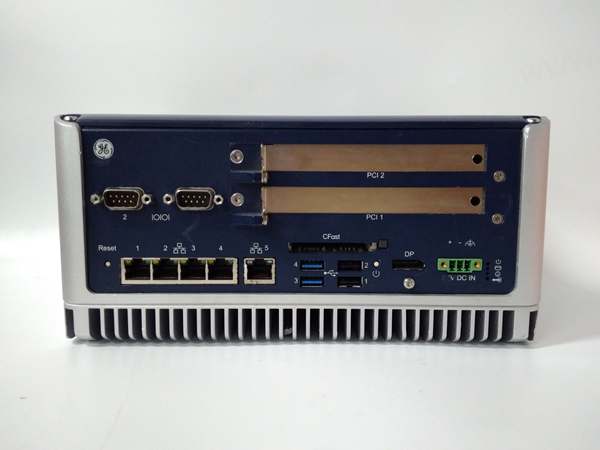
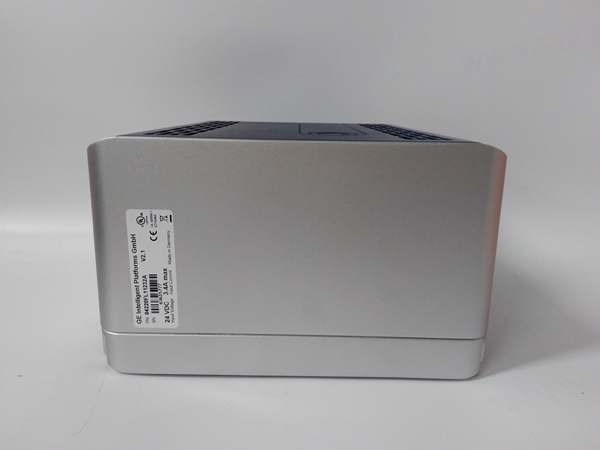
Description
Hard-Numbers: Technical Specifications
- Protocol Support: Modbus RTU/TCP, Ethernet/IP (varies by series), VME/PCI backplane bus communication
- Port Count: 32 input channels (digital input variant) / built-in RS-232 programming port (CPU variant)
- Baud/Data Rate: Up to 38,400 bps serial communication
- Operating Temperature: -40°C to +70°C (wide temperature industrial design)
- Isolation Rating: Group isolation (8 channels per group typical)
- Power Draw: 24V DC nominal for CPU variant / Backplane-powered for digital input modules
- Input Voltage Range: 12-132V AC/DC and 17-150V AC/DC (universal input type)
- Storage Temperature: -55°C to +85°C (Mark VIe variant specification)
- Humidity Range: 0-95% non-condensing
- Protection Class: IP20 standard, IP66 available for specific food industry RXi variants
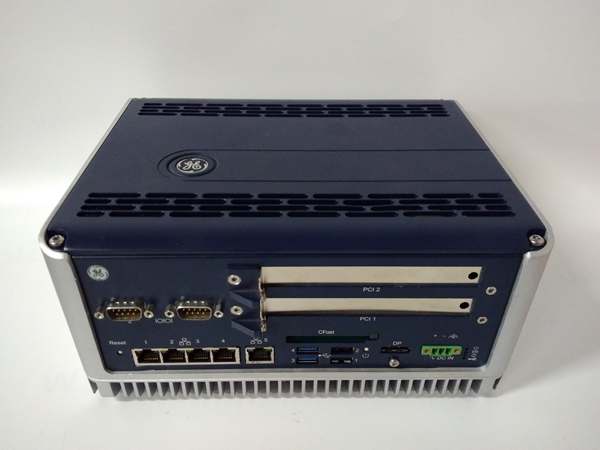
- Dimensions: 59mm × 185mm × 127.5mm (Series 90-30 form factor) / 80mm × 186mm × 47mm (RXi variant)
- Weight: 200g-700g (variant-dependent)
- Certification: cULus, CE, ATEX (explosion-proof versions available)

GE 04220FL11232A
The Real-World Problem It Solves
Legacy GE systems don’t die—they just keep running in power plants, paper mills, and water treatment facilities. The 04220FL11232A is the bridge component that keeps these systems talking to modern control networks. Whether it’s serving as the CPU brain in a Series 90-30 rack or handling 32 channels of mixed AC/DC discrete inputs in a turbine control cabinet, this module addresses the universal headache of voltage compatibility and harsh environment survivability.
Where you’ll typically find it:
- Gas and steam turbine control cabinets (Mark VIe systems) where mixed 24V DC and 120V AC signals need to be monitored
- Legacy Series 90-30 PLC retrofits in manufacturing plants where the original CPU failed but the I/O rack is still functional
- Pulp and paper mill distributed I/O stations where vibration and corrosion kill lesser modules
- Food and beverage production lines using RXi controllers with IP66-rated variants for washdown environments
When you need to integrate legacy GE hardware with current systems or simply keep an old turbine running until the next scheduled outage, this is the module that does the work.
Hardware Architecture & Under-the-Hood Logic
The 04220FL11232A exists in multiple hardware implementations depending on the GE family. In its Mark VIe/PACSystems digital input form, it features 32 channels with group isolation—typically 8 channels per optocoupler group. The module uses VME or PCI backplane bus for high-speed communication with the host controller. Input circuitry incorporates precision signal conditioning that automatically adapts to AC or DC voltage sources without manual configuration. In CPU form (Series 90-30), it contains the microprocessor core, user memory, and real-time clock that executes ladder logic and manages I/O scanning.
Internal signal flow (Digital Input variant):
- Field Input Reception: 32 input channels receive AC or DC signals from field devices (12-240V range)
- Signal Conditioning: Input filters and rectification circuits normalize signals, distinguishing AC from DC
- Optical Isolation: Signals pass through optocouplers in group-isolated banks (8 channels typically per group)
- Threshold Detection: Comparator circuits determine logic state (ON/OFF) based on configurable voltage thresholds
- Backpack Communication: Processed data transmitted via VME or PCI backplane to host controller
- LED Status: Front-panel LEDs reflect real-time channel state for field troubleshooting
- Diagnostics: Module monitors wire-break detection, overvoltage conditions, and internal faults
GE 04220FL11232A
Field Service Pitfalls: What Rookies Get Wrong
Assuming 04220FL11232A is a single product
This part number shows up across GE Series 90-30, Mark VIe, PACSystems RX3i, and RXi product lines. I’ve seen technicians order a “replacement” module based solely on the part number only to discover it’s the wrong form factor for their rack. The CPU variant has different dimensions, power requirements, and pinouts than the digital input module variant. Vendors often cross-reference these parts without explaining the difference.
- Field Rule: Always verify the GE product family (90-30, Mark VIe, PACSystems, RXi) and cabinet location before ordering. If you’re replacing a CPU module, the part number may be 04220FL11232A but the hardware will be a processor unit. If you’re in a turbine control cabinet, it’s likely the 32-channel digital input variant (IS200TBAIH1B). Check the label on the module you’re removing for the actual catalog number and series designation.
Mixing AC and DC on the same isolation group
The universal input capability is great—until it isn’t. While the 32-channel module accepts both AC and DC signals across its entire range, the group isolation architecture (typically 8 channels per group) means you shouldn’t mix voltage levels or types carelessly. I’ve seen a 24V DC proximity sensor and a 120V AC limit switch wired to adjacent channels in the same isolation group, and the AC coupling caused erratic readings on the DC channel.
- Field Rule: Keep similar voltage types and levels within each isolation group. If you must mix 24V DC and 120V AC signals, separate them across different isolation groups on the module. Refer to the faceplate labeling or manual for the exact group boundaries—usually indicated by spacing between LED indicators or terminal block separators.
Ignoring the wide temperature specification during storage
This module is rated for -40°C to +70°C operation, but I’ve seen spares stored in unconditioned warehouses sitting at -20°C and then installed directly into a running 55°C cabinet. The thermal shock can cause condensation inside the unit or stress solder joints. The Mark VIe variants particularly are sensitive to rapid temperature changes during power-up.
- Field Rule: Let temperature-sensitive modules acclimate to cabinet temperature for at least 30 minutes before applying power. If you’re pulling from cold storage, wrap the unit in a static-shielding bag and let it reach room temperature gradually. Never apply power to a cold module in a hot cabinet—wait until the faceplate feels approximately ambient temperature to the touch.
Commercial Availability & Pricing Note
Please note: The listed price is for reference only and is not binding. Final pricing and terms are subject to negotiation based on current market conditions and availability.