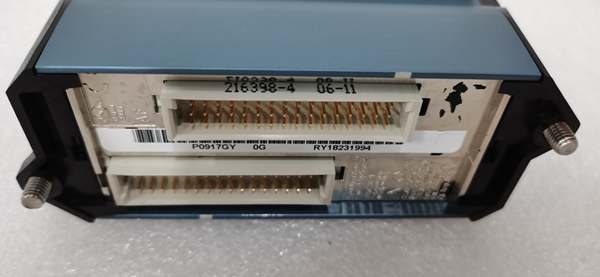
Description
Component Snapshot At-a-Glance
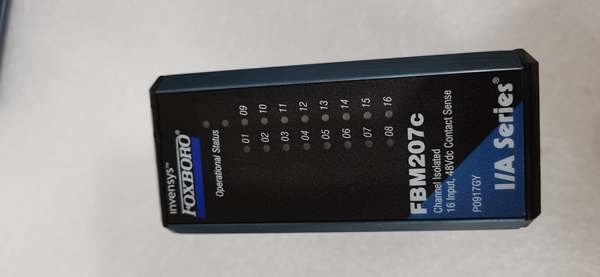
- Model: FBM207C
- Alt. P/N: RH917GY (matching termination assembly), P0917GY
- Product Series: Foxboro I/A Series DCS, 200 Series I/O Platform
- Hardware Type: 16-channel isolated dry contact digital input module
- Key Feature: Integrated 48VDC wetting voltage for high-resistance contact circuits
- Primary Field Use: Monitor breaker status, valve limit switches and relay contacts in power plants and refineries.
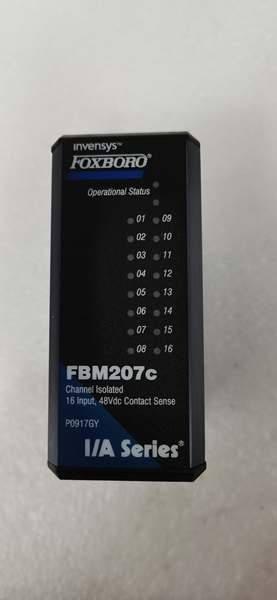
FBM207C
Hard-Numbers: Technical Specifications
- Protocol Support: I/A Series proprietary backplane bus
- Port Count: 16 independent galvanically isolated input channels
- Wetting Voltage: 48 VDC nominal, internally sourced per channel
- Isolation Rating: 250 VAC channel-to-channel and channel-to-ground
- Operating Temperature: 0 °C to +60 °C
- Power Draw: 7.5 W typical, powered from 24 VDC backplane
- Debounce Settings: 0 ms, 4 ms, 8 ms, 16 ms, 32 ms configurable
- On-Resistance Threshold: ≤ 1 kΩ for closed contact detection
- Off-Resistance Threshold: ≥ 100 kΩ for open contact detection
- Response Time: Matches selected debounce value
- Status Indicators: 16 channel LED lamps, RUN green LED, FAULT red LED
The Real-World Problem It Solves
Oxidized or corroded field contacts create high resistance. Standard 24VDC input modules fail to detect closed contacts under these conditions.
Where you’ll typically find it:
- Main MCC rooms for circuit breaker and motor run status monitoring
- Process unit valve banks with limit switches in refineries and chemical plants
- Boiler and turbine auxiliary interlock circuits in thermal power facilities
This module uses higher wetting voltage to cut through contact resistance and maintain reliable discrete input readings.
Hardware Architecture & Under-the-Hood Logic
This is a slave I/O card with no local microprocessor. It relies fully on the main FCP controller and uses opto-couplers for full galvanic isolation across all channels.
- Internal circuit generates stable 48VDC wetting voltage and routes power to each field contact.
- Closed contact completes the loop, current activates the onboard opto-isolator for that channel.
- Opto output converts field signal to logic level for backplane transmission.
- Configurable debounce filter suppresses transient noise before data transmission.
- All 16 channel states transfer to FCP over backplane bus; LEDs activate to reflect real-time status.
Field Service Pitfalls: What Rookies Get Wrong
Mixing FBM207B and Hardware
Many technicians swap FBM207B (24VDC) and (48VDC) directly. Mismatched voltage causes missed contact states or accelerated contact wear.
- Field Rule: Verify part number before installation. Use only for 48V wetting circuits; never cross-install termination assemblies between variants.
Incorrect Debounce for Long Cable Runs
Default 4ms debounce works for short wiring. Long cable runs pick up induced noise and trigger flickering channel states.
- Quick Fix: Set debounce to 16 ms or 32 ms for cable lengths over 300 meters. Separate signal cables from high-current power wiring.
Improper Grounding of Return Lines
Routing contact return lines to plant protective ground creates ground loops. These loops produce random false input activations during normal operation.
- Field Rule: Keep all contact return lines floating at the field end. Perform single-point grounding only at the termination assembly cabinet.
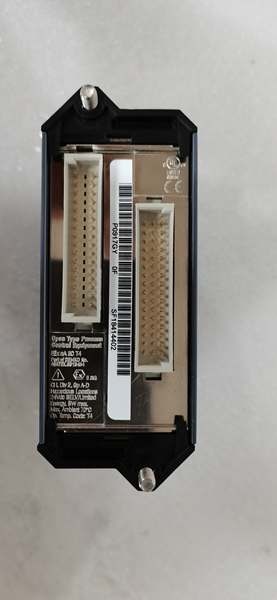
FBM207C
Commercial Availability & Pricing Note
Please note: The listed price is for reference only and is not binding. Final pricing and terms are subject to negotiation based on current market conditions and availability.