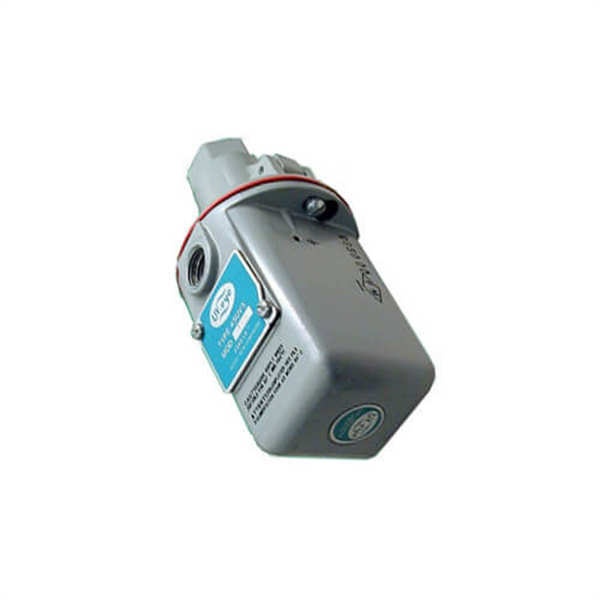
Description
Hard-Numbers: Technical Specifications
-
Detection Method: Ultraviolet (UV) sensor, 185-260 nm spectral response
-
Self-Check Cycle: Shutter closes every 4-6 seconds for 0.8-1.2 seconds to verify signal drop
-
Response Time: 2-4 seconds flame failure (typical), 3.5 seconds max per NFPA
-
Operating Temperature: -40°F to +150°F (-40°C to +65°C) at housing base
-
Supply Voltage: 120 VAC (+10%/-15%), 50/60 Hz
-
Power Draw: 6 VA max
-
Output Contacts: SPDT relay, 10A @ 120/240 VAC resistive
-
Conduit Entry: Two 3/4″ NPT (top and bottom), cast aluminum housing
-
Enclosure Rating: NEMA 4/4X (weatherproof, corrosion-resistant)
-
Wiring: 14 AWG max, terminal block accepts 2.5 mm²
-
Viewing Angle: 90° cone (approximate), target 3:1 length-to-diameter sighting tube ratio

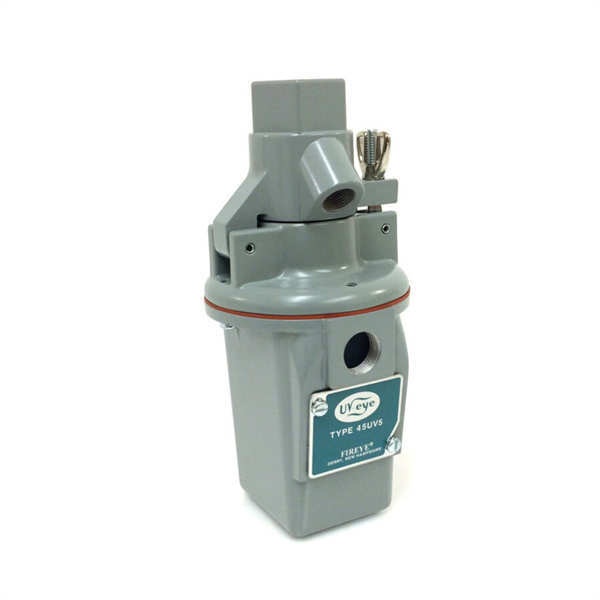
Fireye 45UV5-1101
The Real-World Problem It Solves
Burner management systems trip on phantom flame signals or miss actual flameouts—either mistake costs you a forced outage or a dangerous fuel-rich light-off. The 45UV5-1101 solves this with a mechanical shutter that physically blocks the UV sensor periodically, proving the electronics haven’t latched up or drifted into a false “flame proven” state.
Where you’ll typically find it:
-
Package boilers and watertube steam generators running natural gas or #2 oil
-
Multi-burner process heaters in refineries where adjacent burner UV can cross-talk
-
Solid-fuel overfire air systems needing positive flame confirmation for permissive logic
Bottom line: It keeps your BMS honest about what’s actually in the firebox, not what the electronics think is there.
Hardware Architecture & Under-the-Hood Logic
The 45UV5-1101 isn’t just a UV photodiode—it’s a self-monitoring subsystem. The 120 VAC input drives both the UV sensor amplifier and a synchronous motor that cycles the shutter blade. No external “test” command needed; the scanner checks itself continuously. The internal relay drops out if the shutter test fails or if UV signal disappears for longer than the dropout timer.
Internal signal flow:
-
UV Detection: Photodiode converts 185-260 nm UV to current signal; preamp boosts to usable voltage
-
Shutter Test: Motor-driven flag interrupts optical path every 4-6 seconds—if signal doesn’t drop to near-zero, amplifier is suspect, relay opens
-
Flame Relay Logic: Comparator checks UV level against threshold (field-adjustable via potentiometer on older versions, fixed on -1101); energizes SPDT output when flame proven
-
Safety Shutdown: Loss of UV for >3.5 seconds or shutter test failure forces relay to de-energize (fail-safe)
Fireye 45UV5-1101
Field Service Pitfalls: What Rookies Get Wrong
Sighting Tube Too Short or Wrong Material Plastic sight pipes melt. Black iron rusts and flakes onto the lens. I’ve seen techs use PVC because it’s cheap—then wonder why the scanner loses flame signal after six months. The 45UV5-1101 needs a clean optical path; any haze or distortion scatters UV and drops signal margin.
-
Field Rule: Use 316 stainless sight tubes minimum 3x the burner throat diameter in length. Keep the lens clean with a Q-tip and isopropyl alcohol—no solvents, they’ll cloud the quartz window.
Ignoring the Shutter Motor Current Draw The self-check motor pulls steady current. If your 120 VAC supply sags or shares a circuit with heavy loads, the shutter stalls. Scanner faults “flame failure” when it’s really a power quality issue.
-
Quick Fix: Measure voltage at the terminal block under load, not open-circuit. If you see <108 VAC during the shutter cycle, run a dedicated circuit or upsize the transformer. Check motor current draw (typically 30-50 mA)—if it’s zero, the motor’s dead, replace the scanner.
Wiring the Relay Backwards for BMS Logic The 45UV5-1101 has Form C contacts (SPDT). Rookies wire to the normally closed terminal thinking “flame on = contacts closed”—but the relay energizes with flame, so NC opens. Your BMS sees flame failure at the exact wrong time.
-
Field Rule: Wire to the normally open (NO) terminal for “flame proven” logic. Verify with a meter: de-energized = open, flame present = closed. Test by blocking the lens—relay should drop within 4 seconds.