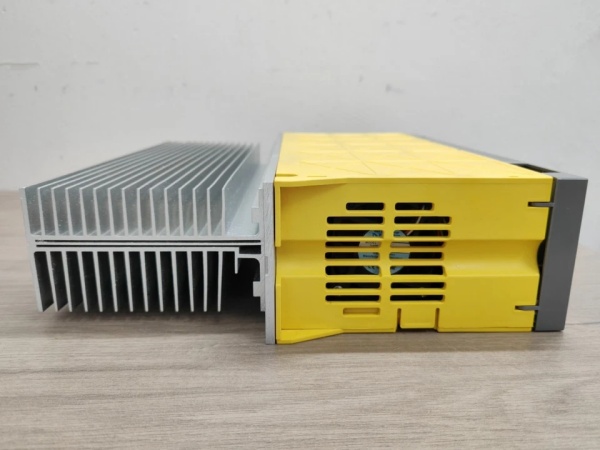
Description
Hard-Numbers: Technical Specifications
- Series: αi (Alpha i Series)
- Axis Control: 2 axes
- Continuous Current: 40A per axis
- Peak Current: 80A per axis
- Max Motor Speed: 3000-5000 RPM (motor dependent)
- Input Voltage: 200-240V AC, 3-phase
- Power Supply: 200-240V AC input with built-in DC link
- Power Draw: 15kW typical
- Operating Temperature: 0°C to +55°C
- Storage Temperature: -20°C to +60°C
- Relative Humidity: 10% to 90% non-condensing
- Certifications: CE, UL, CSA, RoHS
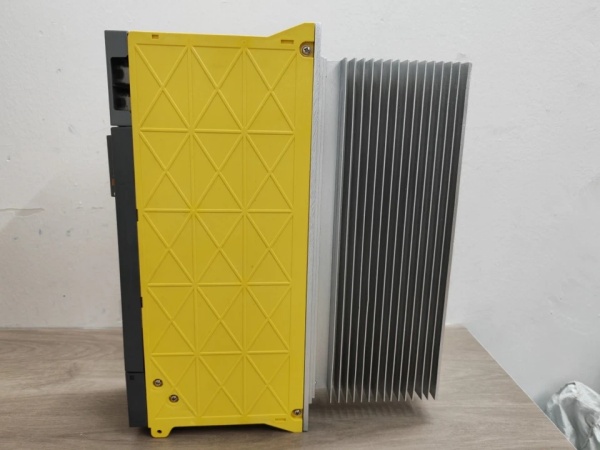
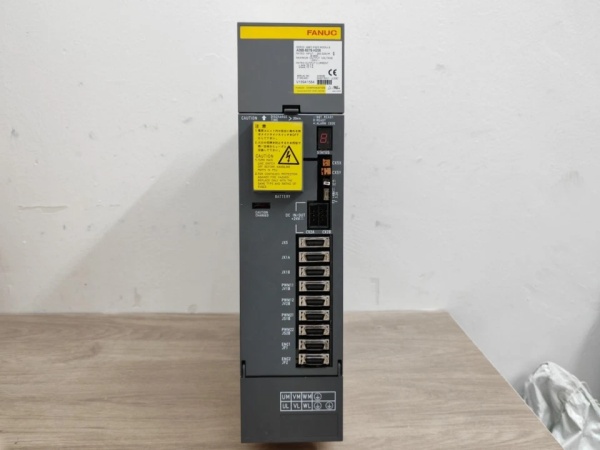
Fanuc A06B-6079-H208
The Real-World Problem It Solves
High-performance CNC machines need robust servo drives to handle heavy cuts, rapid traverse, and tight tolerances. Underpowered amps stall during heavy machining, causing scrapped parts and tool damage. The A06B-6079-H208 delivers high-current output with precise feedback, enabling aggressive material removal rates while maintaining accuracy and providing clear fault diagnostics when issues arise.
Where you’ll typically find it:
- High-speed CNC machining centers controlling main axes
- Large CNC lathes driving heavy-duty slides and turrets
- 5-axis CNC machines requiring precise multi-axis coordination
- Horizontal boring mills with high-torque requirements
Bottom line: It powers demanding CNC applications with high-current servo control.
Hardware Architecture & Under-the-Hood Logic
This αi series servo amplifier contains a 3-phase AC input rectifier, DC bus with high-capacity capacitors, and IGBT inverter stages for each axis. The module includes a high-performance DSP executing multi-loop control (current, speed, position) with encoder feedback for closed-loop precision. Integrated safety circuits and diagnostics monitor system health.
- 3-phase AC input power enters the amplifier and is rectified to DC bus voltage (approx. 300V DC).
- DC bus capacitors filter and store energy, providing stable DC voltage for the inverters.
- The DSP receives motion commands from the CNC controller and generates PWM signals based on control loop calculations.
- IGBT inverters convert DC bus voltage to variable-frequency 3-phase AC for each servo motor.
- Encoder feedback from each motor returns real-time position and velocity data to the amplifier.
- The DSP adjusts PWM output in real-time based on feedback, maintaining precise motion control even under load.
- Protection circuits monitor overcurrent, overvoltage, overtemperature, and encoder loss, triggering alarms and safe shutdowns.

Fanuc A06B-6079-H208
Field Service Pitfalls: What Rookies Get Wrong
Inadequate Cabinet CoolingRookies mount high-power αi amps in crowded cabinets without proper ventilation. Heat builds up, triggering thermal alarms or causing premature component failure. I’ve seen 40A amps run hot enough to cook electronics within hours.
- Field Rule: Calculate cabinet heat dissipation (15kW for this amp). Install forced air cooling with filtered intake and exhaust fans. Maintain cabinet internal temperature below 45°C.
Ignoring Grounding and BondingTechnicians connect servo amps without proper grounding to machine frame. Noise pickup causes erratic motion, encoder errors, and intermittent faults that are impossible to diagnose.
- Field Rule: Bond the amplifier chassis to the machine frame using 6mm² (4 AWG) ground strap. Verify grounding resistance is less than 1 ohm. Star-point ground at the main cabinet ground bus.
Incorrect Parameter Settings After ReplacementNew engineers replace the amplifier but fail to transfer motor parameters and tuning data. The motor runs poorly, hunts, or stalls because the amp doesn’t match the motor characteristics.
- Quick Fix: Back up all parameters from the old amplifier using FANUC parameter backup procedures. After replacement, restore parameters and verify motor identification data matches the installed motors.
Loose DC Bus ConnectionsHigh-current DC bus connections work loose from thermal cycling and vibration. Arcing occurs at terminals, causing voltage spikes that damage IGBTs and capacitors.
- Field Rule: Torque DC bus terminals to specification (typically 8-10 N·m) during installation. Recheck torque during scheduled maintenance, especially after high-load applications.
Please note: The listed price is for reference only and is not binding. Final pricing and terms are subject to negotiation based on current market conditions and availability.