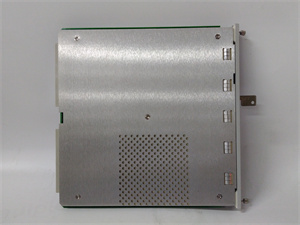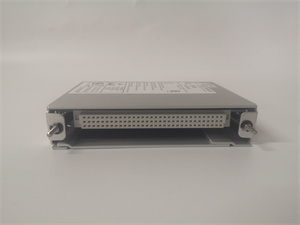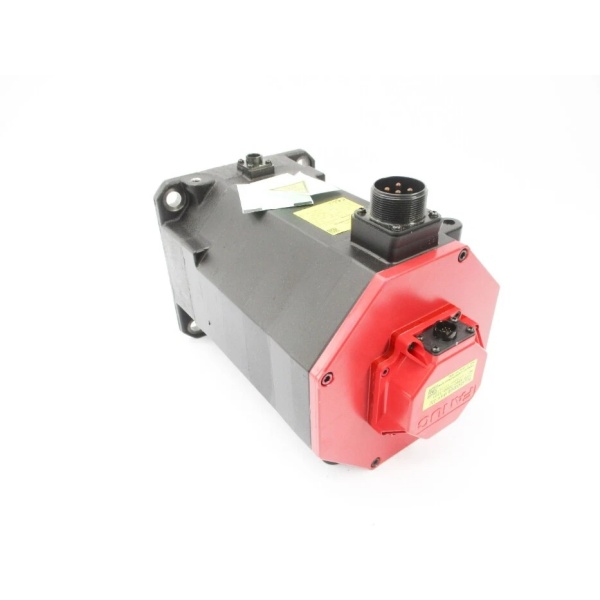
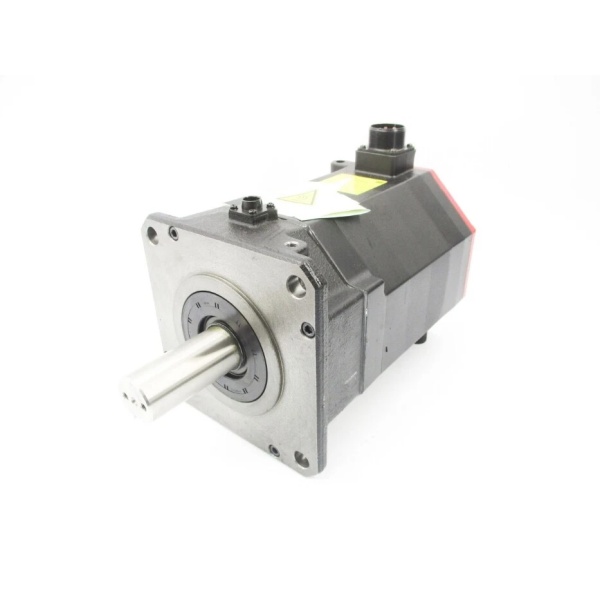
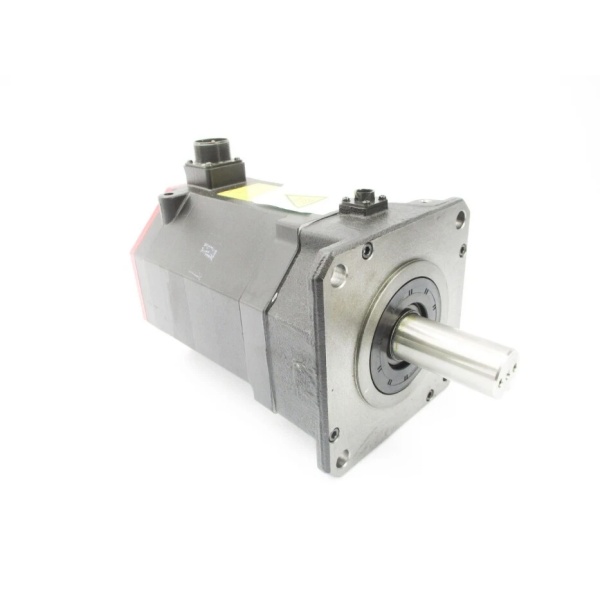
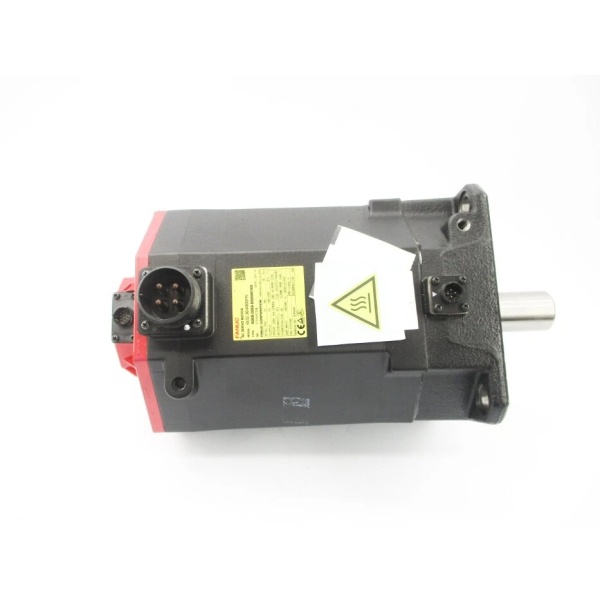
Description
Hard-Numbers: Technical Specifications
- Series: βiS (Beta i Series)
- Axis Control: 2 axes
- Continuous Current: 8A per axis
- Peak Current: 24A per axis
- Max Motor Speed: 4000 RPM
- Input Voltage: 200-240V AC, 3-phase
- Power Supply: Built-in 24V DC control power
- Power Draw: 2.5kW typical
- Operating Temperature: 0°C to +55°C
- Storage Temperature: -20°C to +60°C
- Relative Humidity: 10% to 90% non-condensing
- Certifications: CE, UL, CSA, RoHS
-

A06B-0269-B500
The Real-World Problem It Solves
CNC machines need precise, responsive servo control to cut accurate parts and maintain throughput. Old analog drives lack feedback and diagnostics, making troubleshooting a nightmare. The βiS amp provides digital servo control with integrated diagnostics, overcurrent protection, and direct encoder feedback, giving you tight motion control and clear fault codes when things go wrong.
Where you’ll typically find it:
- CNC machining centers controlling X and Y axes
- CNC lathes driving cross-slide and turret axes
- Milling machines controlling feed axes
- Robotic cells requiring precision positioning
Bottom line: It delivers precise 2-axis servo control with built-in diagnostics for CNC machines.
Hardware Architecture & Under-the-Hood Logic
This servo amplifier contains a 3-phase AC input rectifier, DC bus capacitors, and IGBT inverter stages for each axis. The module includes a digital signal processor (DSP) that executes current, speed, and position control loops. Encoder feedback from the servo motors closes the control loops and enables precise motion control.
- 3-phase AC input power enters the amplifier and is rectified to DC bus voltage.
- DC bus capacitors filter and smooth the DC voltage.
- The DSP generates PWM signals based on position, velocity, and current commands from the CNC controller.
- IGBT inverters convert DC bus voltage back to variable-frequency 3-phase AC for each servo motor.
- Encoder feedback from each motor returns position and velocity data to the amplifier.
- The DSP adjusts PWM output in real-time based on feedback to maintain precise motion control.
- Fault detection circuits monitor overcurrent, overvoltage, and encoder loss, triggering alarms and shutting down safely.
-
A06B-0269-B500
Field Service Pitfalls: What Rookies Get Wrong
Ignoring DC Bus Precharge TimeTechnicians power up the amplifier and immediately attempt to jog axes. The DC bus capacitors haven’t fully charged, causing inrush current that can blow fuses or damage the rectifier.
- Field Rule: Wait at least 30 seconds after applying power before enabling the amplifier. Verify the DC bus voltage has reached nominal (around 300V DC for 240V AC input) before jogging.
Incorrect Motor Phase WiringRookies swap U, V, W motor phases during replacement. The motor runs in the wrong direction, causing crashes and mechanical damage during first operation.
- Quick Fix: Verify motor phase wiring (U-U, V-V, W-W) matches the motor nameplate and amplifier labels. Perform a low-speed jog test in the correct direction before putting the machine into production.
Overlooking Regenerative Resistor SizingTechnicians install the amp without checking if the machine has a regenerative resistor for braking. During rapid deceleration, the DC bus overcharges and triggers overvoltage alarms or damages the amplifier.
- Field Rule: Calculate braking energy based on axis mass and deceleration rate. Install a properly sized regenerative resistor if the application requires frequent rapid 终止s. Verify the resistor is securely mounted with adequate heat dissipation.
Loose Power Terminal ConnectionsHigh-current motor connections loosen over time from vibration. Arcing at the terminals causes voltage drops, erratic motor behavior, and eventually burns the terminal block.
- Quick Fix: Torque all power terminals to specification (typically 4-5 N·m) during installation. Recheck torque during scheduled maintenance, especially after high-vibration applications.
Please note: The listed price is for reference only and is not binding. Final pricing and terms are subject to negotiation based on current market conditions and availability.