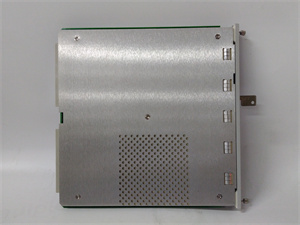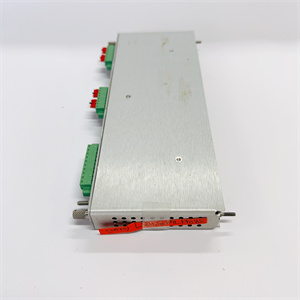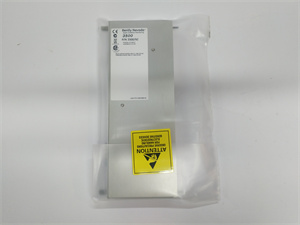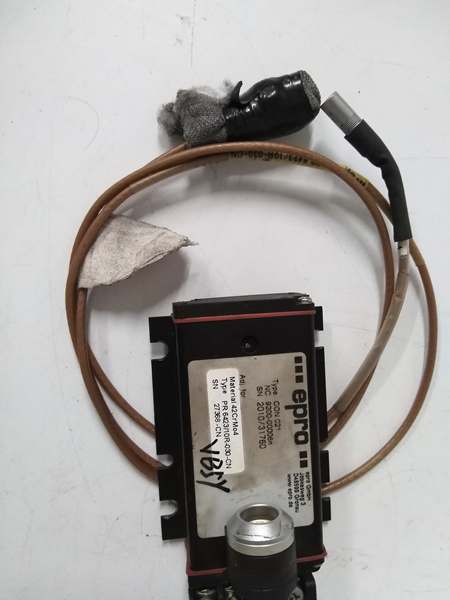
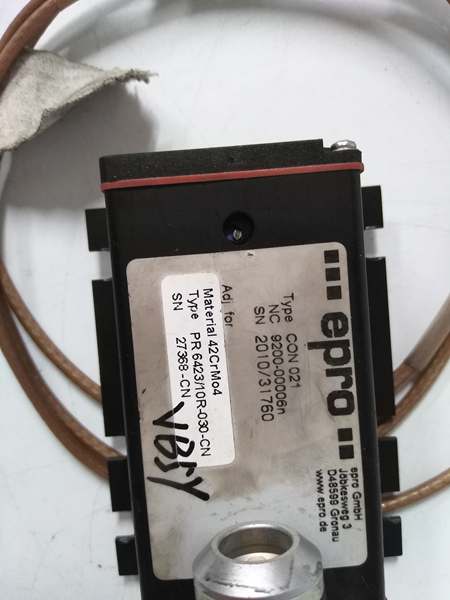
Description
Hard-Numbers: Technical Specifications
- Standard: DIN EN 60079-0, IEC 61000-6-2/6-4
- Probe Diameter: 8mm
- Measuring Range: 2mm (0.08 inches)
- Linear Range: 0.2 to 1.8mm (0.008 to 0.071 inches)
- Output: 4V/mm (200 mV/mil)
- DC Voltage: -24V to -32V supply (nominal -28V)
- Operating Temperature: -50°C to +175°C (probe only), -25°C to +85°C (extension cable)
- Storage Temperature: -50°C to +200°C
- Isolation Rating: 1500 VDC insulation resistance
- Power Draw: 40mA maximum
- Mounting: 8mm M8 threaded probe with stainless steel housing
- Certifications: ATEX, IECEx, FM, CSA
The Real-World Problem It Solves
Turbines, motors, and pumps fail from unseen rotor vibration and shaft misalignment. The PR6423/006-131 lets you measure vibration down to the micron level before it causes catastrophic failure. Eddy current technology works in harsh environments—high temperatures, oil mist, pressure—and doesn’t require contact with the rotating shaft.
Where you’ll typically find it:
- Gas turbine rotor vibration monitoring in power plants
- Pump shaft position measurement in refineries
- Steam turbine casing expansion measurement in utilities
- Compressor health monitoring in natural gas processing plants
Bottom line: It detects early-stage vibration and shaft misalignment to prevent catastrophic machinery failure.
Hardware Architecture & Under-the-Hood Logic
This eddy current probe contains a coil assembly that generates a high-frequency electromagnetic field. When the probe is near a conductive target (shaft), eddy currents are induced, altering the coil’s inductance. The probe processes this change and outputs a DC voltage proportional to the distance to the target.
- The probe’s coil generates a high-frequency (approx. 1MHz) electromagnetic field.
- Eddy currents are induced in the conductive target (shaft) when the probe is within 2mm.
- The eddy currents create a secondary magnetic field that opposes the original field, reducing the coil’s inductance.
- The probe’s electronics convert the inductance change to a DC voltage signal (4V/mm output sensitivity).
- The output signal is sent through the extension cable to a monitoring system or vibration analyzer.
- The system uses the voltage signal to calculate shaft position, vibration, and eccentricity.
Field Service Pitfalls: What Rookies Get Wrong
Improper Probe CalibrationRookies skip calibration or use incorrect gap settings. The probe’s output voltage isn’t zero at the target distance, leading to false readings. A 0.1mm gap error can throw off vibration measurements by 400mV—enough to cause unnecessary shutdowns or miss real faults.
- Field Rule: Always calibrate the probe with a target of the same material as the shaft. Set the probe gap to 1.0mm (mid-range) to maximize linear measurement range.
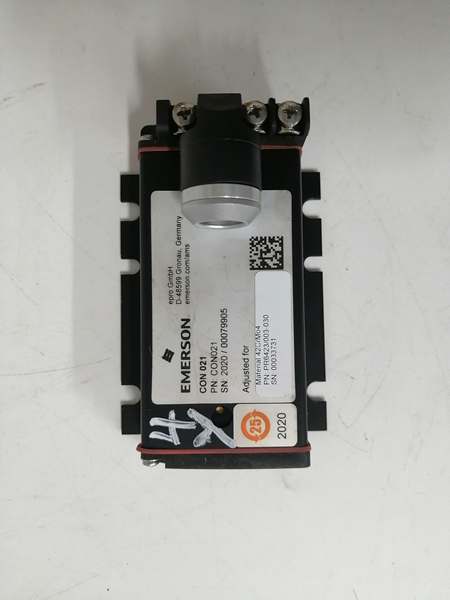
Low-Quality Extension CablesTechnicians use standard coaxial cables instead of specified EPRO CON021 cables. Signal noise and cable capacitance cause measurement errors. I once had a 10-meter generic cable throw off shaft position readings by 0.3mm, causing a false shutdown.
- Quick Fix: Use only EPRO-supplied CON021 extension cables. Verify cable length matches the probe and monitor requirements. Replace damaged cables immediately.
Loose Probe MountingProbes work best when rigidly mounted to the machine housing. Rookies mount them with cheap hardware that comes loose from vibration, increasing probe gap and skewing readings.
- Field Rule: Use a stainless steel probe holder with lock nut to secure the probe. Apply thread locker to the mounting threads to prevent loosening over time. Check mounting torque periodically (10-12 N·m).
Please note: The listed price is for reference only and is not binding. Final pricing and terms are subject to negotiation based on current market conditions and availability.