Description
Product Core Brief
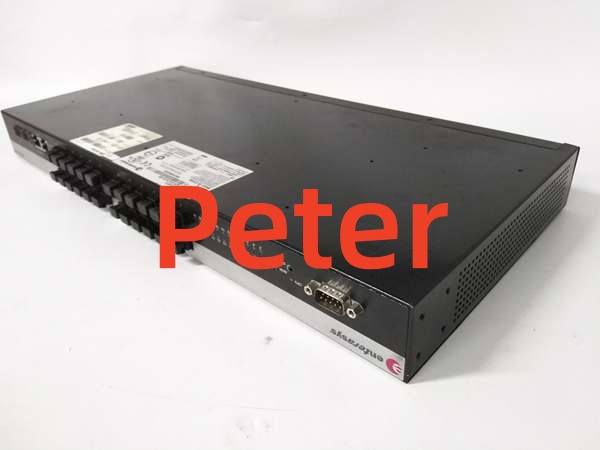
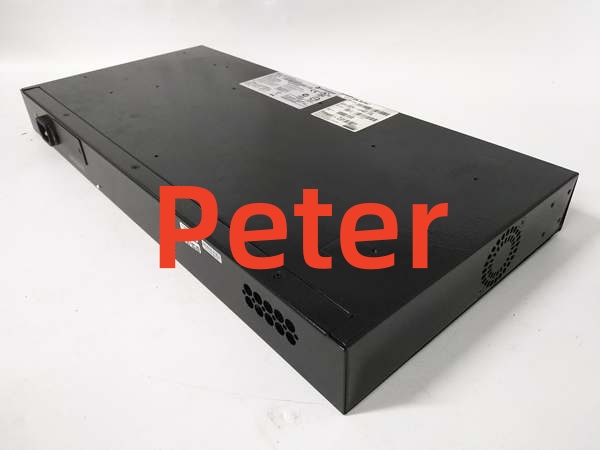
- Model: A4H124-24FX P0973JN
- Brand: Enterasys Networks
- Series: A-Series Fast Ethernet Edge
- Core Function: Provides scalable line-speed performance and multi-layer packet classification for bandwidth-intensive edge network applications.
- Product Type: L2/L3 Stackable Edge Switch
- Key Specs: 24-Port Fast Ethernet | 17.6 Gbps Capacity | Up to 8-Unit Stack
- Condition: New Original (New Surplus) | Factory Sealed
Key Technical Specifications
| Parameter | Value |
|---|---|
| Module Type | L2/L3 Fast Ethernet Edge Switch |
| System Platform | Enterasys A-Series Network |
| Port Configuration | 24x 10/100 Ethernet + 4x Gigabit Uplinks |
| Switching Capacity | 17.6 Gbps (104.8 Mpps) |
| Stack Capacity | Up to 8 units (140.8 Gbps virtual capacity) |
| MAC Address Table | 16,000 Entries |
| QoS Support | Multi-layer Packet Classification & Priority Queuing |
| Management | In-band (Telnet/NetSight) & Out-of-band (DB9 Console) |
| Redundancy | Supports STK-RPS-150PS Redundant Power Supply |
| Condition | New Original (New Surplus) |
| Warranty | 1-Year Functional Warranty |
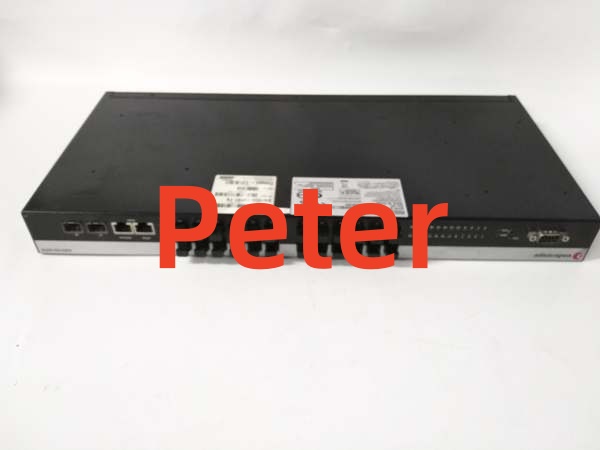
ENTERASYS A4H124-24FX P0973JN
Product Introduction
Maintaining reliable edge connectivity in demanding industrial and enterprise environments requires hardware that can handle both high port density and low-latency traffic. The is a highly reliable Fast Ethernet edge switch engineered to deliver scalable line-speed performance for delay-sensitive applications like IP voice and video.
This unit provides 24 10/100 ports alongside 4 Gigabit uplinks, all backed by a 17.6 Gbps switching fabric. When deployed in a stack of up to eight units, the creates a single virtual switch with 140.8 Gbps capacity and 384 ports, drastically simplifying network management while ensuring seamless application performance.
Key Selling Points & Differentiators
- High-Density Stacking: Supports stacking up to 8 units via standard Cat5 UTP cables in a closed-loop topology, providing redundancy against single-point failures and expanding port capacity to 384 ports.
- Advanced QoS Engine: Features multi-layer packet classification and priority queuing to guarantee bandwidth for mission-critical multimedia and VoIP traffic over standard data flows.
- Verified Functionality: Every undergoes a 24-hour live load test on a dedicated network test rack before shipping, complete with a signed test report.
- Not Recommended For: Do not deploy this switch in environments requiring 10/100/1000 Base-T end-device connections; it is strictly a 10/100 edge switch with Gigabit uplinks only.
- Stock Availability: Current inventory is factory-sealed new surplus with traceable lot numbers; typically ships within 48 hours of order confirmation.
- Warranty Backed: Includes a 1-year functional warranty covering manufacturing defects and DOA conditions, with no restocking fees for verified failures.
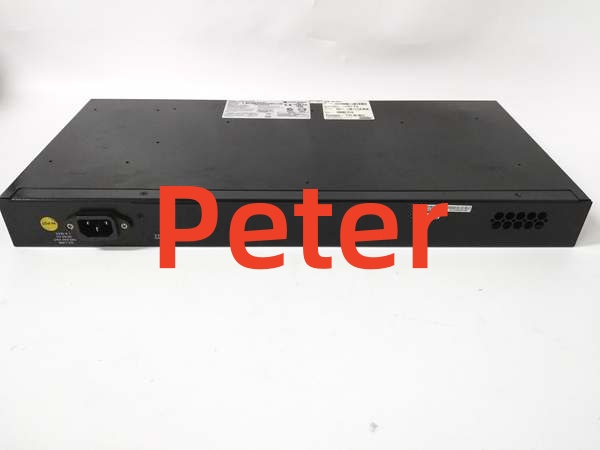
ENTERASYS A4H124-24FX P0973JN
FAQ
Yes. All units in stock have passed our 24-hour live bench test and include a signed test report. We ship same-day for orders placed before 2 PM EST, so you’ll have tracking before end of day.
Is this switch compatible with older Enterasys A2 series switches in a stack?
The is designed for the A4 series stack. While it uses standard Cat5 stacking cables, mixing A2 and A4 series hardware in the same stack can cause firmware and backplane communication issues. We recommend keeping the stack homogeneous. Send us your current stack configuration, and we’ll confirm compatibility within 30 minutes.
What’s the difference between this and the A4H124-24TX?
The suffix indicates the uplink and port media type. The FX variant features SFP-based fiber uplinks, whereas the TX variant uses RJ45 copper Gigabit uplinks. If your backbone relies on fiber optics, the FX is the required choice.
Do I need to reconfigure the switch after installation?
No. The does not retain active network configurations when powered off. You will need to apply your standard configuration via CLI, WebView, or NetSight after installation. However, the default IP and console settings are factory-standard for immediate out-of-band access.
What if the module fails within the warranty period?
We offer a no-questions-asked replacement for any verified manufacturing defect. Ship the failed unit back with your RMA number, and we’ll send a replacement within 24 hours of receipt. We also provide a loaner program for critical network infrastructure to minimize downtime.
Can this switch handle redundant power?
Yes. The supports the optional STK-RPS-150PS external redundant power supply. If the internal power supply fails, the RPS automatically assumes the load without interrupting network traffic, ensuring continuous uptime.
Is this a refurbished or new surplus unit?
This is New Original (New Surplus) – factory sealed, never installed, with full traceability to the original manufacturing lot. It is not refurbished, repaired, or pulled from a decommissioned network. We provide the original manufacturer’s lot code upon request for your quality records.
Quality Transparency SOP
- Incoming Verification: Source traceability confirmed via lot code; anti-counterfeit visual inspection; serial number cross-referenced with OEM records; accessories and stacking cables verified.
- Live Bench Test: Dedicated network test rack; power-on self-check; port link-up validation; stacking handshake test; 24-hour continuous traffic load test; signed test report generated.
- Electrical Tests: Insulation resistance verified; ground continuity confirmed; power supply voltage stability validated under load.
- Firmware Verification: Firmware version recorded; default configuration backed up and documented.
- Final QC & Packaging: QC sign-off; anti-static seal applied; shock protection installed; QC Passed label affixed with date and inspector ID.
Test photos and video available upon request. We never claim “100% failure-free” – we provide verified, tested units with documented performance.
Technical Risk Avoidance
- Stack Topology Errors: Risk: Loss of stack connectivity. Prevention: Always use a closed-loop stack topology rather than a daisy chain to eliminate single points of failure. Field Note: We’ve seen entire stacks go offline because a single Cat5 cable was bumped. Close the loop.
- Fiber Transceiver Mismatch: Risk: Uplink link failure. Prevention: Verify the SFP modules match the fiber type (single-mode vs. multi-mode) and wavelength. Field Note: A mismatched transceiver caused a 4-hour outage. Check the dB loss specs before plugging in.
- Console Access Loss: Risk: Inability to configure the switch. Prevention: Always configure a management IP and Telnet/SSH access before deploying to the rack. Field Note: Technicians often forget to set the IP and end up needing a physical VT100 terminal at the console port.
- Power Budget Miscalculation: Risk: Switch reboot under load. Prevention: Verify the internal power supply can handle the connected SFP modules and PoE (if applicable to the specific sub-model). Field Note: Adding high-draw SFPs to an under-specced PSU caused random reboots. Do the math first.
- ESD Damage: Risk: Silent port controller failure. Prevention: Use grounded wrist strap and anti-static mat during handling. Field Note: We’ve tested switches that passed power-on but had dead ports due to ESD. Handle with care.