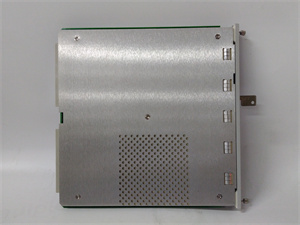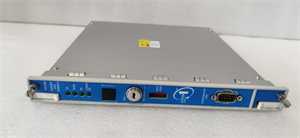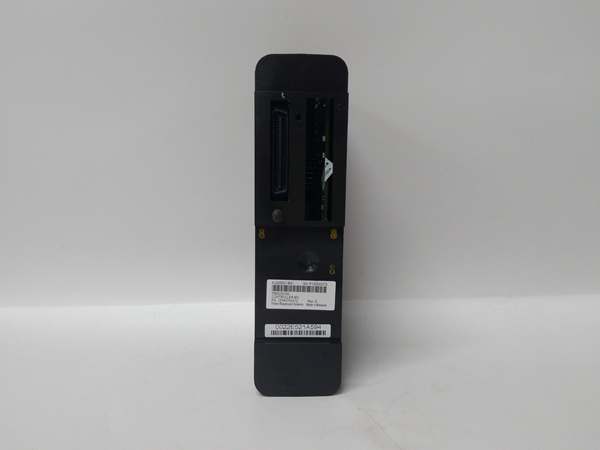
Description
Key Technical Specifications
-
Model Number: VE3007 (12P4375X012)
-
Manufacturer: Emerson Automation Solutions
-
Channel Count: 4 independent speed monitoring channels
-
Speed Range: 0-10,000 RPM (configurable up to 20,000 RPM via software)
-
Input Type: Magnetic pickup (MPU), proximity probe (eddy current)
-
Accuracy: ±0.1% of measured speed (100-10,000 RPM range)
-
Operating Temperature: -20°C to 65°C (-4°F to 149°F); -40°C to 75°C for VE3007-01
-
Response Time: <5ms for overspeed detection
-
Isolation Rating: 1500V AC (channel to channel, channel to ground)
-
Output Signals: 4-20mA, Modbus RTU, Ovation backplane interface
-
Overspeed Protection: Configurable trip setpoints (105-120% of rated speed)
-
Status Indicators: Module OK (green), Channel Active (green), Overspeed Alarm (red) per channel
-
Form Factor: 3U rack-mount, Ovation DCS I/O rack compatible
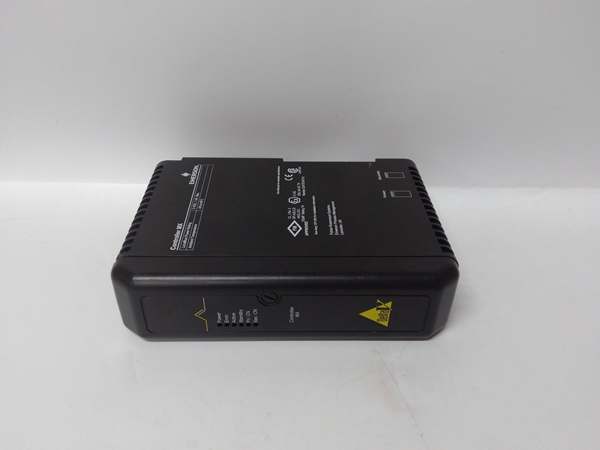
EMERSON VE3007 12P4375X012
Field Application & Problem Solved
In turbine control systems, inaccurate speed monitoring or delayed overspeed detection leads to catastrophic failures. I responded to a Midwest power plant in 2022 where a steam turbine overspeed event damaged the rotor—costing $1.8M in repairs and 10 days of downtime. The root cause? An outdated speed module that lagged 20ms in detecting the speed spike and had a 1% accuracy drift. The VE3007 12P4375X012 solves this: it delivers precise, real-time speed data and triggers overspeed trips in under 5ms, stopping turbines before damage occurs.
You’ll find this module at the heart of turbine control systems—power plant steam turbines, refinery gas turbines, and petrochemical compressor drivers. At a Gulf Coast LNG terminal, we installed 8 VE3007 modules to monitor their refrigeration compressors. One module detected a 12% speed surge within 3ms, triggering a controlled shutdown that prevented a seal failure (a $250k repair). Unlike older modules, it integrates seamlessly with Ovation DCS, so operators get speed trends alongside process data—no more switching between systems to diagnose issues.
Its core value is “speed certainty.” Turbine speed is the most critical parameter—too slow and efficiency drops, too fast and the rotor fails. The VE3007’s ±0.1% accuracy means operators trust the data to optimize performance, while its fast response time ensures safety. For maintenance teams, it eliminates “phantom” speed fluctuations caused by module drift—no more wasting hours troubleshooting non-issues. It’s not just a monitor; it’s the link between turbine safety and operational efficiency, which is why it’s a staple in ASME B11.0 compliant systems.
Installation & Maintenance Pitfalls (Expert Tips)
MPU Alignment: Gap Matters More Than You Think
Rookies set magnetic pickup (MPU) gap by eye, leading to erratic speed readings. A Colorado power plant had this issue—their turbine speed would jump 5% randomly because the MPU gap was 2mm instead of the specified 0.8-1.2mm. Use a feeler gauge to set the gap exactly to Emerson’s specs (varies by MPU model: 0.8mm for 3300 series, 1.0mm for 6300 series). After setting, rotate the turbine by hand— the module should register a smooth speed signal. If it’s erratic, check for MPU damage or shaft runout exceeding 0.2mm.
Overspeed Setpoints: Don’t Copy-Paste from Old Modules
Copying overspeed setpoints from outdated modules risks setting them too high (unsafe) or too low (unnecessary trips). A Texas refinery copied a 120% setpoint from a 1990s module to the VE3007— the turbine’s safe limit was 110%, per the manufacturer’s updated specs. Always cross-verify setpoints with the turbine OEM’s latest manual, not old DCS configurations. The VE3007 lets you set two levels: a 105% warning and 110% trip for most steam turbines. Test the trip logic quarterly with a signal generator—inject 110% speed and confirm the turbine shuts down within 1 second.
Grounding: Isolate MPU Wires from Power Cables
Running MPU signal wires in the same conduit as 120V AC power cables induces noise, causing false speed spikes. I saw this at a Pennsylvania chemical plant— the VE3007 registered a 8% speed surge that wasn’t real, triggering a false shutdown. MPU wires are low-voltage (0-5V) and sensitive—run them in dedicated galvanized conduit, at least 30cm away from power cables. Use twisted-pair shielded wire, and ground the shield only at the module’s shield terminal (not at the MPU). After wiring, use an oscilloscope to check for noise—signal variation should be less than 0.1V.
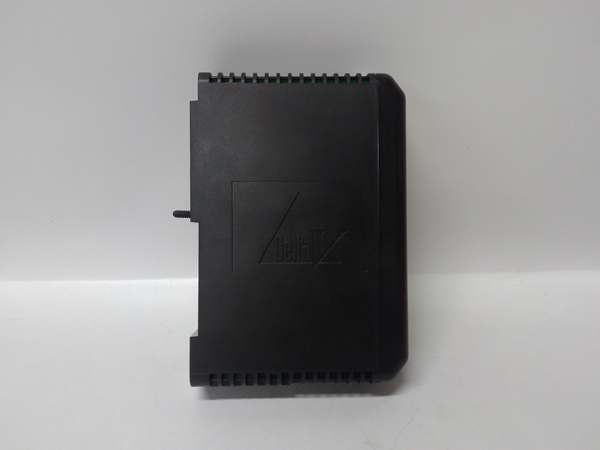
EMERSON VE3007 12P4375X012
Technical Deep Dive & Overview
The VE3007 12P4375X012 is a precision speed processing module, not just a signal converter. Each channel has a dedicated signal conditioner and microprocessor: the MPU or proximity probe sends a frequency signal (proportional to speed) to the module, which filters out electrical noise, converts the frequency to RPM via a high-speed counter, and compares it to the configured setpoints. The module’s FPGA-based logic ensures overspeed detection is deterministic—no software lag, just instant response.
Its isolation design is critical for turbine environments, where electrical noise from VFDs and generator excitors is common. Each channel’s 1500V AC isolation prevents ground loops from corrupting speed data, while the surge protection (±2kV) handles voltage transients from lightning or motor starts. The module stores 30 days of speed trend data—even if the DCS goes down—so you can diagnose post-shutdown what caused a speed surge. It communicates with the Ovation controller via the backplane, sending real-time RPM, trend data, and diagnostic alerts (e.g., MPU signal loss).
Hot-swappable capability is a game-changer for 24/7 turbine operations—you can replace a faulty module without shutting down the turbine (critical for base-load power plants). The per-channel LEDs let you troubleshoot quickly: steady green means normal, flashing green means low signal (check MPU gap), red means overspeed. Unlike legacy modules, it integrates with Emerson’s AMS Machinery Health Manager, so you can trend speed alongside vibration data—this lets you spot issues like rotor unbalance before they cause speed fluctuations. It’s built for the harshest turbine environments, and it delivers the precision and reliability that keep plants running safely.